
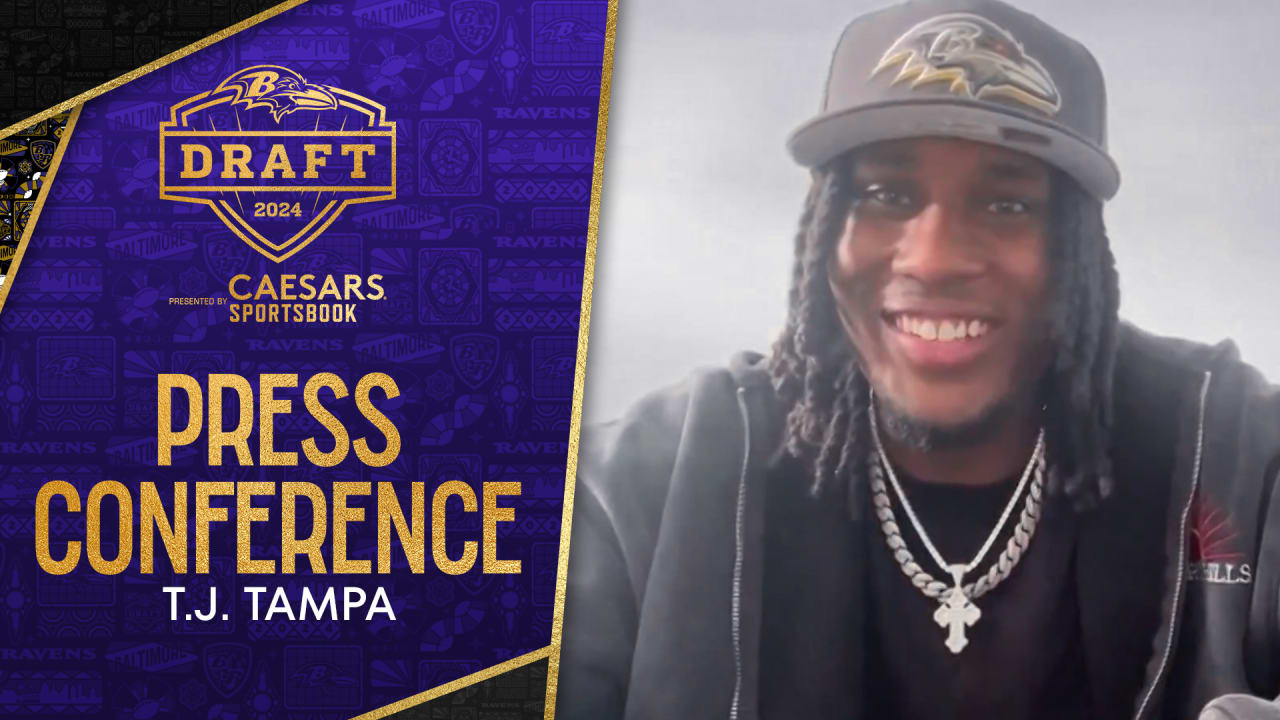
Ravens draft leaves T.J. Tampa in same backup corner role
The Ravens’ draft strategy this year focused on reinforcing their core rather than addressing every positional need. The decision to pass on immediate solutions at key positions indicates a belief in the players already on the roster.
The Calculated Silence on Cornerback
T.J. Tampa remains the Ravens’ No. 4 cornerback, a role that typically limits playing time behind Marlon Humphrey and Nate Wiggins. The team did not select an outside cornerback until the fifth round, choosing Duke’s Chandler Rivers, a player more suited for slot duties than boundary coverage. This leaves Tampa in the same position he held before the draft, competing for snaps in an already crowded secondary.
The front office’s stance appears deliberate. Tampa’s development is not being treated as a pressing concern, nor is the depth chart being viewed as inadequate. The Ravens are proceeding under the assumption that their current cornerback group can meet the demands of the 2026 season without additional support. This approach carries risk, particularly in a division where the Bengals and Steelers have strengthened their receiving units. If Tampa falters, the Ravens lack a clear alternative, as the draft did not provide one.
The Ravens’ restraint in addressing the cornerback position was notable, with no selections made from the second round onward. This decision reflects either a high evaluation of Tampa’s potential or a lack of confidence in the available draft prospects. Either way, the secondary’s performance in 2026 will depend on players who were on the roster before the draft.
The Defensive Line’s Unanswered Question
Broderick Washington’s 2025 season was limited to three games due to an Achilles injury, raising questions about his availability and effectiveness. Despite trade rumors and salary-cap discussions surrounding him during the offseason, Washington remains on the roster, and the Ravens made minimal moves to replace him.
The team selected only one interior defensive lineman, Michigan’s Rayshaun Benny, in the seventh round. This pick suggests the Ravens are comfortable entering the season with Washington as a rotational option, despite his injury history and recent performance. The decision appears to be a bet on his recovery or the coaching staff’s ability to maximize the existing depth.
Defensive line coach Lou Esposito, who previously worked with Benny at Michigan, faces a significant challenge. The Ravens’ interior pass rush was a weakness in 2025, and the draft did not address it. If Washington cannot return to form or if Benny is not ready to contribute as a rookie, the Ravens will rely on the same group that struggled last season. This approach hinges on improvement from within rather than external reinforcements.
The front office’s approach to the defensive line is unconventional in a league where teams often react quickly to underperformance. The Ravens are placing their confidence in players who have yet to prove they can handle the workload, which could indicate trust in their development system or an oversight in roster evaluation.
The Center Problem That Wasn’t Solved
Eric DeCosta described the Ravens’ failure to draft a center as “unfortunate” but maintained that he would not have changed their approach. This contradiction encapsulates the team’s draft philosophy in 2026. Despite a clear need at center following Tyler Linderbaum’s departure, the Ravens did not prioritize the position, instead selecting guards—Vega Ioane in the first round and Evan Beerntsen in the seventh—and leaving the role to an internal competition among Danny Pinter, Jovaughn Gwyn, and Corey Bullock. None of these players have significant starting experience at center.
DeCosta’s explanation provided insight into the Ravens’ decision-making. He noted that there were a couple centers that we really liked,
but they were selected before the Ravens could act. He also expressed surprise at how quickly those players were taken, suggesting the team may have misjudged the draft’s trajectory. This indicates the Ravens not only missed their preferred options but may have misread the overall draft landscape.
The front office’s confidence in this approach is difficult to reconcile with the evidence. DeCosta expressed optimism about the offensive line’s prospects this season, but this appears to be more of an expression of faith than a concrete plan. The Ravens are betting that one of their three internal candidates will emerge as a viable starter, despite their lack of experience at the position. If none of them step up, the offensive line could become a liability early in the season.
The Ravens’ decision to pass on drafting a center was not due to a lack of need but rather a lack of appealing options. This approach is risky in a league where offensive line performance can determine a team’s success. The Ravens are gambling that their coaching staff can develop a starter from a group of unproven players. If they are wrong, the consequences could be significant.
The Staff-Driven Draft
The Ravens’ draft was not solely about addressing needs but also about aligning the roster with the vision of their new coaching staff. Nearly every selection reflected input from specific assistant coaches, indicating the front office’s reliance on their coordinators to shape the team.
Offensive line coach Dwayne Ledford advocated for Penn State guard Vega Ioane, who was selected in the first round. Wide receivers coach Keary Colbert, with ties to USC, pushed for third-round pick Ja’Kobi Lane. Defensive line coach Lou Esposito, who coached seventh-rounder Rayshaun Benny at Michigan, influenced that selection. Even special teams coordinator Randy Brown had a say, recommending punter Ryan Eckley, drafted in the sixth round.
This approach is not unprecedented—teams often defer to position coaches during the draft—but the Ravens took it further in 2026. The message is clear: the front office trusts its staff to identify players who fit their system. This strategy places significant responsibility on the coaching staff to develop these players quickly.
The most intriguing example is second-round linebacker Zion Young. His enthusiastic reaction on draft night—repeatedly telling DeCosta, “Let’s get it!”—drew attention, but the Ravens are not drafting based on enthusiasm alone. Defensive coordinator Jesse Minter described Young as a “chess piece” capable of setting the edge and rushing from multiple positions. This versatility aligns with the Ravens’ defensive scheme, but it sets a high bar for a rookie. If Young cannot contribute immediately, the Ravens’ pass rush could struggle early in the season.
The staff-driven draft presents both opportunities and risks. On one hand, it ensures the selected players fit the system. On the other, it places pressure on the coaching staff to develop them quickly. The Ravens are betting that their assistants’ evaluations are sound. If they succeed, the draft could be seen as a success. If they fail, the front office will bear the responsibility.
What to Watch in Training Camp
The Ravens’ draft did not resolve their most pressing issues; instead, it highlighted them. The team’s success in 2026 will depend on how well unproven players perform at critical positions. Here’s what to monitor during training camp and beyond.
T.J. Tampa’s role in the secondary. The Ravens did not draft an outside cornerback until the fifth round, leaving Tampa as the No. 4 option. If he struggles in camp, the Ravens may have to rely on a rookie to fill a key role, which could be problematic in a division with elite quarterbacks.
Broderick Washington’s recovery. The Ravens did not select an interior defensive lineman until the seventh round, meaning Washington remains in line for significant playing time. If he cannot return to form after his Achilles injury, the Ravens’ run defense could face challenges. Observing his reps in camp will be telling—if he is not working with the first team, it may signal concerns.
The center competition. Danny Pinter, Jovaughn Gwyn, and Corey Bullock will compete for the starting center job this summer. None have extensive experience at the position. If the Ravens do not identify a clear winner by the end of camp, the offensive line could struggle throughout the season.
Zion Young’s pass-rush reps. The Ravens are counting on Young to contribute immediately as a rookie. If he cannot generate pressure from the edge, the defense may face early-season difficulties. Monitoring his usage in sub-packages will be key—if he is not involved on third downs, it may indicate the coaching staff’s hesitation.
The Ravens’ draft was not about addressing every weakness but about trusting the players already in place. This approach carries risk, but it could pay off if the coaching staff can develop those players effectively. If not, the Ravens may face a challenging season.
One aspect is clear: the front office is not reacting impulsively. They are placing their confidence in their system, their staff, and their players. This approach could either prove to be the team’s greatest strength or its most significant vulnerability.