
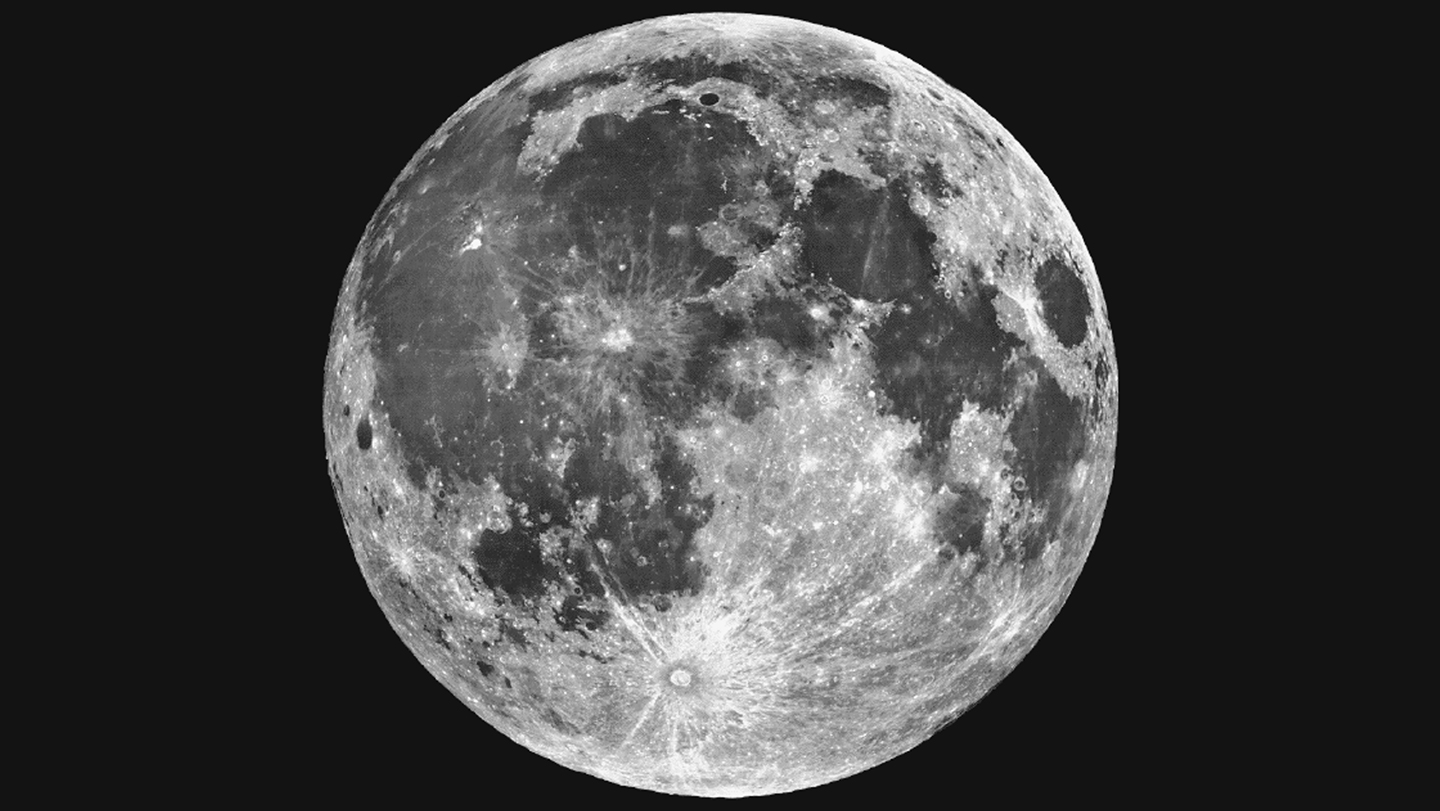
Rare Lunar Crater Forms on Moon, Posing Risk to Future Missions
A fresh impact crater, roughly the size of two American football fields, has been discovered on the moon’s surface, a rare event captured by NASA’s Lunar Reconnaissance Orbiter (LRO). Planetary scientist Mark Robinson reported the finding March 17 at the Lunar and Planetary Sciences Meeting in The Woodlands, Texas.
The crater, measuring 225 meters in diameter, is estimated to have formed between April and May 2024, according to Robinson, who serves as principal investigator for the LRO Camera at Arizona State University. Such a large crater is predicted to form only once every 139 years, highlighting the infrequent nature of significant lunar impacts.
The discovery underscores the risks posed by impacts to future lunar missions and potential habitats, Robinson noted. The crater’s location, at the boundary between the lunar highlands and a flat mare – a dark, basaltic plain formed by ancient volcanic eruptions – provides insight into the composition of the lunar surface. According to Robinson, the crater’s depth, averaging 43 meters, and steep walls suggest it formed in a relatively strong material, likely solidified lava.
The impact also created a bright ejecta blanket – a spray of rock and dust – extending hundreds of meters from the crater’s rim. Disturbances from the impact were detected as far as 120 kilometers away, Robinson reported. This wide dispersal of debris is a key concern for lunar base planning, as even little particles traveling at high velocities could pose a threat to structures and equipment.
“You’ve got to protect your assets to withstand small particles hitting you at order of magnitude a kilometer per second,” Robinson said.
The LRO has been mapping the moon since 2009, providing unprecedented detail about its surface and environment. Data from the orbiter is crucial for identifying safe landing sites for spacecraft and astronauts, and for locating potential resources like water ice and areas with extended sunlight, according to NASA. Robinson previously identified a much smaller crater, approximately 70 meters wide, early in the LRO mission, setting a benchmark for future discoveries. He had jokingly suggested that finding a 100-meter crater would be a significant achievement, a challenge now surpassed by this recent finding.
Robinson’s research also extends to other celestial bodies. He is the principal investigator for ShadowCam, a new NASA lunar imaging experiment currently under development, and was a co-investigator on the MESSENGER mission to Mercury. His work focuses on understanding the origin and evolution of planetary crusts, utilizing remote sensing techniques and data from a dozen NASA missions, including the Clementine and NEAR missions.