Rare Deep-Sea Brine Pools Discovered in Gulf of Aqaba Offer Clues to Alien Life
“Until we understand the limits of life on Earth, it will be difficult to determine if alien planets can host any living beings,” said Sam Purkis, professor and chair of the University of Miami Department of Marine Geosciences.
“Our discovery of a rich community of microbes that survive in extreme environments can help trace the limits of life on Earth and can be applied to the search for life elsewhere in our solar system and beyond,” Purkis said.
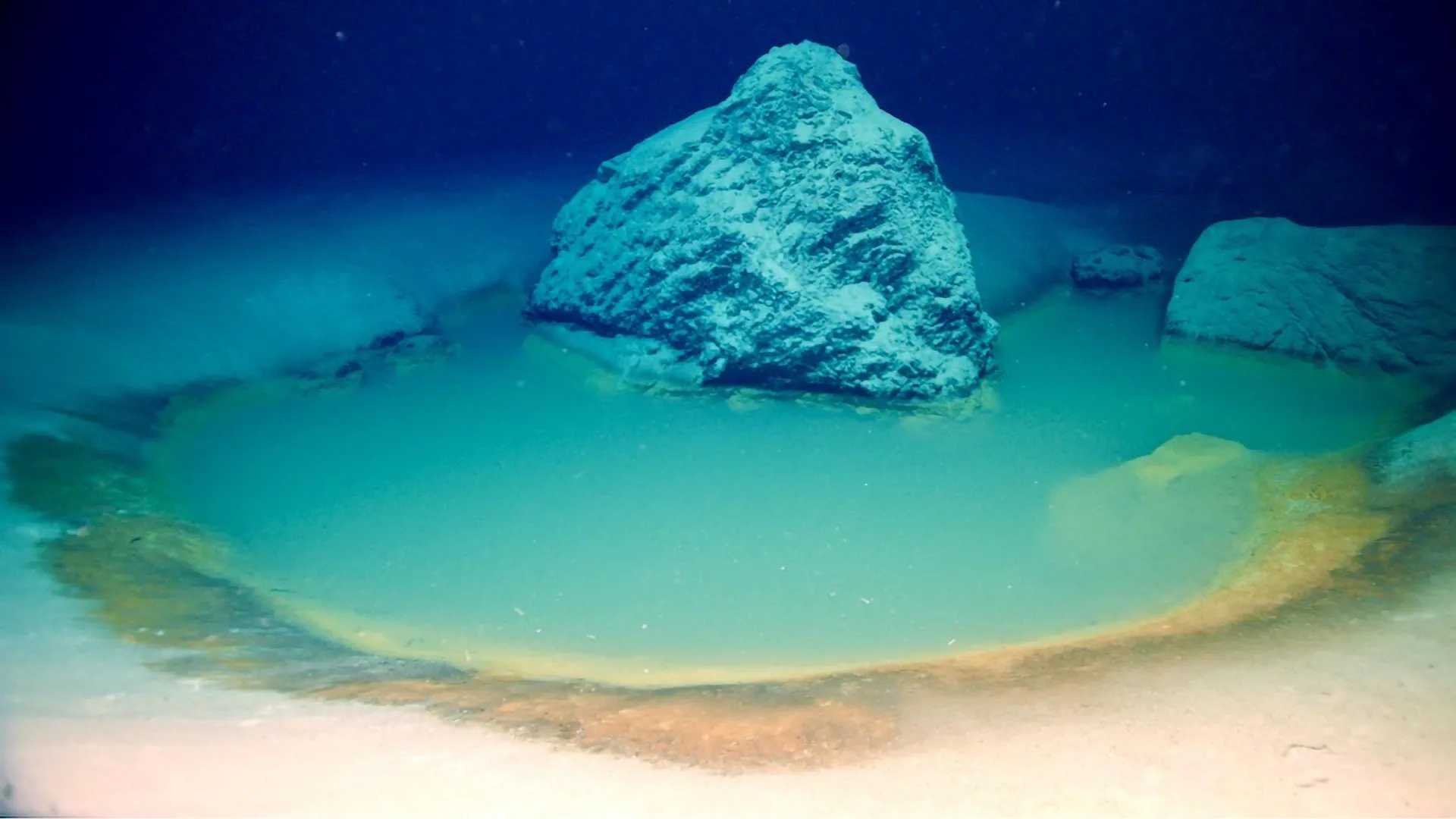
Researchers discovered rare deep-sea brine pools more than a mile beneath the surface of the Red Sea, ScienceDaily reported. Located in the Gulf of Aqaba, these underwater lakes sit at a depth of 1,770 meters. The team identified the pools using a remotely operated underwater vehicle deployed from the research vessel OceanXplorer.
The discovery was made by Purkis and his colleagues in collaboration with OceanX.

Brine pools are among the most extreme environments on the planet. According to ScienceDaily, the water contains exceptionally high concentrations of salt and lacks oxygen entirely. Despite these conditions, the pools host a rich community of microbes. Previous studies of similar Red Sea environments have identified biologically active molecules that show potential anticancer properties.
The discovery was nearly missed. The team located the pools in the final five minutes of a ten-hour dive, Purkis told ScienceDaily.
“We were very lucky,” Purkis said. “The discovery came in the last five minutes of the ten-hour ROV dive that we could dedicate to this project.”
The findings were published June 27, 2022, in the journal Communications Earth & Environment. The study, titled “Discovery of the deep-sea NEOM Brine Pools in the Gulf of Aqaba, Red Sea,” details the first documented instance of these pools in this specific region.
The discovery marks the first documented instance of brine pools in the Gulf of Aqaba, according to the study published in Communications Earth & Environment. Researchers located the pools at a depth of 1,770 meters using a remotely operated vehicle deployed from the OceanXplorer.

Situated relatively close to the coastline, the pools’ extremely salty, oxygen-free waters preserve evidence of tsunamis, flash floods, and earthquakes that occurred thousands of years ago, ScienceDaily reported.
Beyond their biological value, the pools function as natural archives of the region’s geological past. Their high salinity and oxygen-free state help preserve evidence of historical tsunamis, flash floods, and earthquakes, ScienceDaily reported.
OceanX operates as a nonprofit ocean exploration initiative that combines scientific research with media storytelling to advance discovery and public engagement. The organization’s 87-meter flagship OceanXplorer, acquired in 2021 to replace the earlier MV Alucia, carries submersibles, laboratories, and media facilities that enable mapping of uncharted ocean areas and study of marine life.
In this case, the vessel deployed the remotely operated vehicle that located the NEOM Brine Pools at 1,770 meters depth in the Gulf of Aqaba during a four-week expedition funded by NEOM.
Earlier in 2022, Purkis and his colleagues found evidence of a 500-year-old underwater landslide in the area that likely triggered a substantial tsunami. Understanding these events remains important for future coastal development projects in Egypt and Saudi Arabia. The four-week expedition was funded by NEOM, a company currently developing the Saudi Arabian coastline.