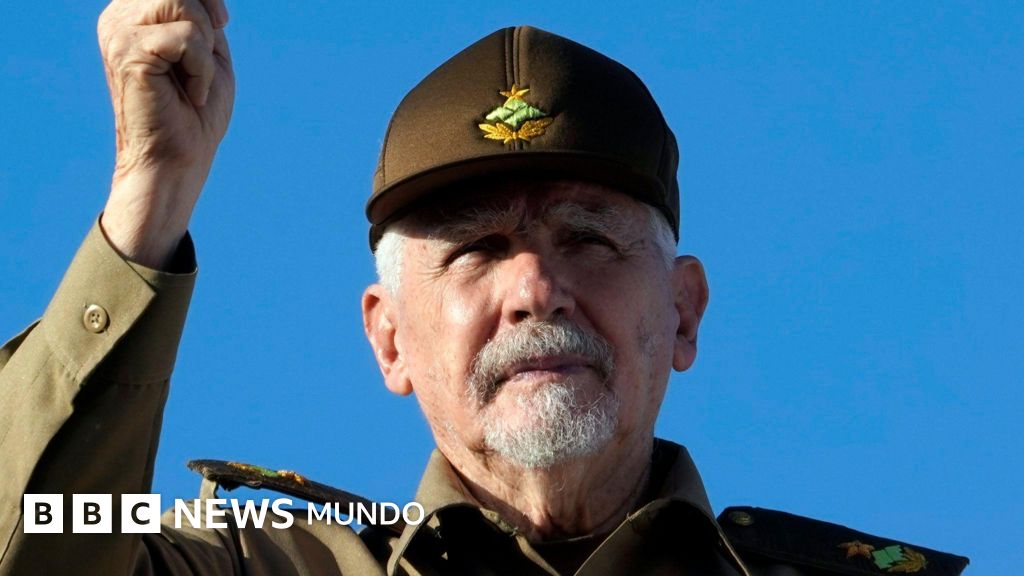
Ramiro Valdés Historic Cuban Revolution Leader Dies
Ramiro Valdés, a foundational commander of the 1959 Cuban Revolution and a central architect of the state’s internal security apparatus, has died at age 94. His passing marks the end of an era for the island’s aging revolutionary elite, creating a power vacuum within the Communist Party of Cuba as the nation grapples with severe economic instability and mounting social unrest.
The Architect of State Security
Valdés, known as a primary figure in the consolidation of Fidel Castro’s power, served as Minister of the Interior for two separate terms, overseeing the Ministry of the Interior (MININT). According to BBC News, his tenure was defined by the systematic suppression of political dissent and the establishment of the Committees for the Defense of the Revolution (CDRs). His death removes a hardline pillar of the government at a time when the administration of Miguel Díaz-Canel faces its most significant legitimacy crisis since the 1990s.

The transition of power within Cuba’s military-industrial complex, known as GAESA, is now accelerating. With the passing of historical figures like Valdés, the reliance on ideological loyalty is being tested by the practical needs of state survival.
Geopolitical Implications for the Caribbean Basin
Valdés was more than a domestic security chief; he was a bridge between the Cuban intelligence apparatus and various Soviet-aligned states during the Cold War. His influence extended to regional security partnerships, particularly with Venezuela and Nicaragua. Analysts note that his absence complicates the maintenance of existing intelligence-sharing agreements across the “Pink Tide” nations.

According to reports from Reuters, the Cuban government’s inability to maintain basic infrastructure and energy grids has pushed the country toward a deeper dependency on external financing. For multinational firms currently monitoring the region, the death of a “historic” leader signals a potential shift in how the Cuban state manages foreign direct investment (FDI) and joint ventures.
Strategic risk is rising. Multinational corporations operating in or near the Caribbean are increasingly turning to International Political Risk Consultancies to model the potential for sudden policy pivots or civil disturbances in the post-Valdés landscape.
Economic Stagnation and the Succession Crisis
The Cuban economy, currently hampered by hyperinflation and a lack of hard currency, relies on the stability of its institutional leadership to prevent total systemic collapse. As noted by the World Bank, the integration of Cuba into the global financial system remains restricted by the long-standing United States embargo, which necessitates creative, often opaque, financial structuring for any international trade.
The departure of a figure like Valdés highlights the fragility of the current leadership structure. Without the “revolutionary moral authority” provided by the 1959 cohort, the current administration may be forced to offer greater concessions to private sector actors to maintain domestic order.
Corporations seeking to insulate their supply chains from regional volatility are currently engaging Global Trade Compliance Specialists to navigate the complex web of sanctions and export controls that remain in force. The legal environment surrounding Cuban trade is notoriously fluid, necessitating constant oversight.
A Shifting Chessboard
The death of Ramiro Valdés is not merely the end of a life; it is the closing of a chapter on the institutionalized repression that defined the Cuban state for over six decades. From a geopolitical perspective, the focus now shifts to the younger, technocratic members of the Communist Party and whether they can prevent the further erosion of state power.

The loss of such a senior figure inevitably triggers a recalibration of internal security protocols. As the state re-evaluates its internal and external security posture, foreign firms must prepare for a period of heightened uncertainty.
For those managing exposure in high-risk jurisdictions, the necessity of robust due diligence has never been greater. Engaging Cross-Border Security Risk Advisory Firms is now considered a prerequisite for any entity maintaining assets in the region. The death of a revolutionary icon serves as a stark reminder: in geopolitics, the only constant is the inevitable turnover of the guard, and the subsequent disruption it brings to global market stability.