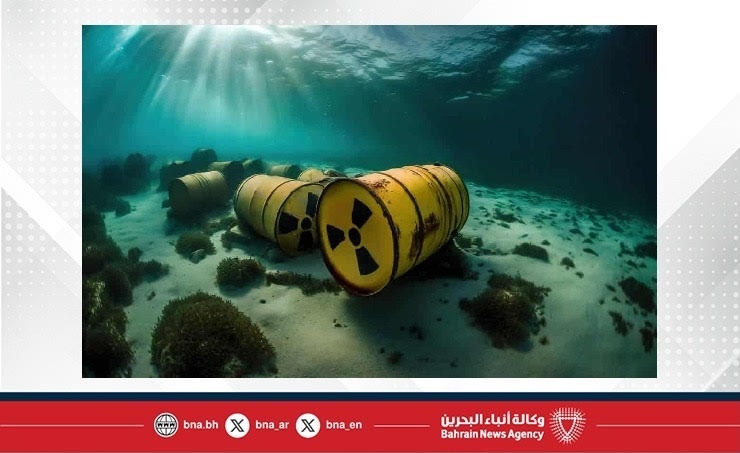
Radioactive Waste Discovered in Deep Atlantic Ocean
Scientific expeditions in the Atlantic Ocean have identified a deteriorating “cemetery” of radioactive waste barrels resting at depths of approximately 4,700 to 5,000 meters. These containers are now showing signs of structural failure, raising questions regarding the long-term containment of toxic materials in deep-sea ecosystems.
The Discovery of Deep-Sea Radioactive Decay
Recent deep-sea imaging has captured the state of metallic drums scattered across the Atlantic floor. Scientists observing the site report that the containers, which were originally intended to isolate radioactive waste from the marine environment, are suffering from corrosion. The visual evidence confirms that these barrels are degrading, with contents potentially leaching into the surrounding benthic environment.
Historical records indicate that nations utilized the ocean as a disposal site for radioactive materials. The prevailing scientific consensus at the time—often cited by government authorities during that era—posited that in the event of a leak, it would be diluted. Modern observation suggests this assumption may have underestimated the impacts of concentrated waste decay.
Infrastructure and Environmental Oversight
The degradation of these barrels poses a challenge for contemporary environmental management. As these sites become better documented, authorities face the task of assessing whether these legacy waste piles require intervention or if they represent a localized ecological risk that must be managed through long-term monitoring.
The presence of these sites complicates the expansion of marine infrastructure and the approval of new offshore projects. When developers identify potential hazards, they must determine the scope of necessary remediation and the regulatory requirements for handling legacy radioactive materials.
Scientific Uncertainty and the Dilution Hypothesis
The “dilution hypothesis” that once justified deep-sea dumping is now being scrutinized by oceanographers. Data collected from recent dives reveals that the waste is not being distributed as uniformly as historical models predicted. Instead, researchers are finding areas where the chemical signature of the waste remains highly concentrated in the sediment immediately surrounding the corroded barrels.
The disparity between 20th-century disposal assumptions and 21st-century reality is stark. While officials once viewed the deep ocean as an infinite sink, current analysis shows the seafloor acts more like a complex, slow-moving filter. This shift in understanding has forced a re-evaluation of how international maritime law treats historical dumping grounds.
Addressing Potential Liability and Remediation
As the degradation of these barrels continues, the question of legal and financial responsibility becomes pertinent. Entities involved in marine projects that encounter legacy waste often find themselves in a precarious position. Navigating these liabilities requires specialized knowledge of international environmental statutes and local coastal regulations.

For organizations operating near documented dump sites, the priority is risk mitigation. Engaging with environmental law firms is often the first step to ensure that project planning accounts for potential environmental contamination and the legal complexities of disturbing seabed sediments. Furthermore, ensuring that all site assessments are conducted by certified hazardous waste management specialists is essential for maintaining compliance with environmental safety standards.
A Legacy of Unseen Consequences
The sight of these ruptured barrels serves as a reminder of the unintended consequences of industrial disposal practices. What was once considered “out of sight, out of mind” has now become a persistent environmental variable that future generations must address.
As scientists continue to monitor the decay process at great depths, the focus is shifting from the act of disposal to the necessity of containment. The ocean floor, once treated as a vast, empty void, is now recognized as a fragile environment that requires careful stewardship. The challenge ahead lies in reconciling historical actions with modern ecological standards, ensuring that the legacy of radioactive waste does not compromise the health of the Atlantic for the decades to come.
For those managing the intersection of industry and marine health, the path forward requires proactive risk assessment. Securing vetted experts who can navigate both the scientific reality of the seafloor and the complex legal frameworks governing our oceans is an operational necessity.