Q1 Preliminary Revenue Hits $30M-$35M Amid Shift to HPC Hosting
TeraWulf is attempting a high-stakes pivot from pure-play Bitcoin mining to an AI-centric High-Performance Computing (HPC) infrastructure play. While the market reacted poorly to a $900 million equity raise—triggering a price drop—the real story isn’t the dilution; it’s the architectural shift toward liquid-cooled GPU clusters and the massive power density requirements of LLM training.
The Tech TL;DR:
- Capital Infusion: $900M equity raise to fund the transition from SHA-256 hashing to NVIDIA H100/B200-ready data centers.
- Revenue Pivot: Shifting from volatile crypto rewards to stable, recurring HPC hosting contracts.
- Infrastructure Risk: Massive power scaling requirements increase the surface area for grid instability and thermal throttling.
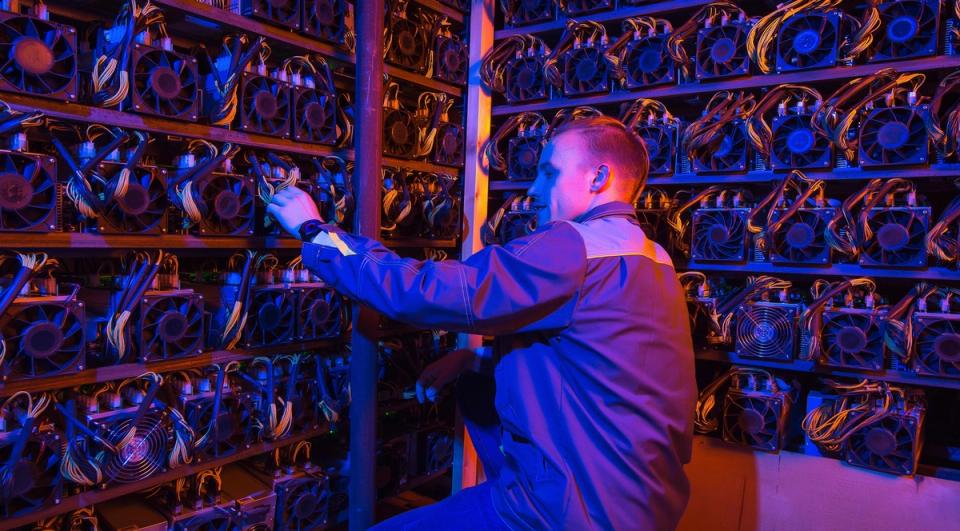
For the uninitiated, the transition from a mining farm to an AI data center isn’t as simple as swapping out ASICs for GPUs. We are talking about a fundamental shift in power density and thermal management. Bitcoin miners are essentially “dumb” heat generators; AI clusters are complex, interdependent systems requiring ultra-low latency interconnects and rigorous SOC 2 compliance to attract enterprise tenants. The $900 million raise is a desperate but necessary bid to avoid the “vaporware” trap by actually shipping physical capacity.
The Hardware Pivot: From ASICs to H100 Clusters
The core problem TeraWulf faces is the “Power Gap.” Traditional mining sites are optimized for high-volume, low-density power. AI workloads, specifically those involving Large Language Models (LLMs), require immense power density per rack. To compete with the likes of CoreWeave or Lambda Labs, TeraWulf must implement advanced liquid cooling (DLC) to prevent thermal throttling on H100s, which can pull up to 700W per GPU.
Following the hardware specifications found in official NVIDIA Data Center documentation, the shift to HPC requires a move toward InfiniBand networking to minimize latency. If TeraWulf fails to optimize the network fabric, their “hosting” service will suffer from massive bottlenecks, rendering the $900M investment a waste of silicon.

| Metric | Legacy Mining (ASIC) | AI HPC (GPU Cluster) | Technical Impact |
|---|---|---|---|
| Power Density | Low to Moderate | Ultra-High (100kW+ per rack) | Requires Liquid Cooling |
| Networking | Standard Ethernet | InfiniBand / RoCE v2 | Microsecond Latency |
| Revenue Model | Variable (Block Rewards) | Fixed (SLA-based Hosting) | Predictable Cash Flow |
| Compliance | Minimal | SOC 2 / ISO 27001 | Enterprise Ready |
This transition creates a massive security vacuum. Moving from a closed mining loop to a multi-tenant HPC environment introduces risks of side-channel attacks and data leakage between virtualized instances. As these facilities scale, firms are urgently deploying cybersecurity auditors and penetration testers to ensure that the transition to AI hosting doesn’t open a backdoor into the federal or corporate data pipelines they intend to serve.
The Implementation Mandate: Monitoring Thermal and Power Flux
For the sysadmins and DevOps engineers managing these pivots, the focus shifts from hash rates to power usage effectiveness (PUE) and GPU utilization. Monitoring these metrics in real-time is critical to prevent hardware failure during peak training loads. Below is a conceptual Python snippet using the NVIDIA Management Library (NVML) to monitor GPU temperature and power draw—the primary KPIs for any HPC host.
import pynvml pynvml.nvmlInit() device_count = pynvml.nvmlDeviceGetCount() for i in range(device_count): handle = pynvml.nvmlDeviceGetHandleByIndex(i) temp = pynvml.nvmlDeviceGetTemperature(handle, pynvml.NVML_TEMPERATURE_GPU) power = pynvml.nvmlDeviceGetPowerUsage(handle) / 1000 # Convert to Watts print(f"GPU {i}: Temp: {temp}C | Power Draw: {power}W") if temp > 85: print("CRITICAL: Thermal throttling imminent. Triggering liquid cooling override.") pynvml.nvmlShutdown()This level of granularity is what enterprise clients demand. They aren’t buying “space”; they are buying guaranteed uptime and thermal stability. If TeraWulf cannot prove this via rigorous benchmarks, they are just another data center with a fancy name.
The Cybersecurity Threat Vector: AI Infrastructure as a Target
The shift to AI data centers transforms the facility from a financial tool into a strategic asset. According to the CVE vulnerability database, vulnerabilities in the virtualization layers and the orchestration tools (like Kubernetes) used to manage GPU clusters are prime targets for state-sponsored actors. The “blast radius” of a breach in an AI cluster is significantly larger than in a mining farm; a single compromised node could lead to the theft of proprietary model weights or training datasets.

“The industry is treating AI data centers like glorified warehouses, but from a security perspective, they are high-density target zones. The convergence of massive power and massive compute creates a unique physical and digital attack surface that most MSPs aren’t equipped to handle.” — Sarah Chen, Lead Security Researcher at OpenSec Labs
To mitigate this, the deployment of containerization and strict network segmentation is non-negotiable. Companies scaling their AI footprint should not rely on internal teams alone but should integrate managed service providers (MSPs) specializing in AI infrastructure to handle the continuous integration and deployment (CI/CD) pipelines securely.
TeraWulf vs. The Competition: The Infrastructure War
When comparing TeraWulf’s approach to competitors like CoreWeave or Equinix, the primary differentiator is the “energy moat.” By owning the power source (often zero-carbon), TeraWulf attempts to lower the OpEx of AI training. However, the technical debt of converting a mining site is significant. While Equinix offers a polished, enterprise-grade ecosystem, TeraWulf is essentially building a “brutalist” version of an AI cloud—focused on raw power and scale over refined UX.
For developers and CTOs, the choice comes down to latency, and reliability. If the $900M is spent on cutting-edge open-source orchestration tools and high-end liquid cooling, TeraWulf could grow a dominant low-cost provider. If they stumble on the networking architecture, they will simply be a incredibly expensive way to heat a building.
The market’s reaction to the stock sale is a classic case of short-term dilution fear versus long-term architectural pivoting. The real metric for success won’t be the stock price in April 2026, but the Teraflops per watt they can actually deliver to a paying customer. As the demand for sovereign AI clouds grows, the ability to provide secure, scalable, and thermally efficient compute will be the only currency that matters. For those looking to secure their own transition into this space, consulting with vetted AI cybersecurity specialists is the only way to ensure your infrastructure doesn’t become a case study in systemic failure.
Disclaimer: The technical analyses and security protocols detailed in this article are for informational purposes only. Always consult with certified IT and cybersecurity professionals before altering enterprise networks or handling sensitive data.