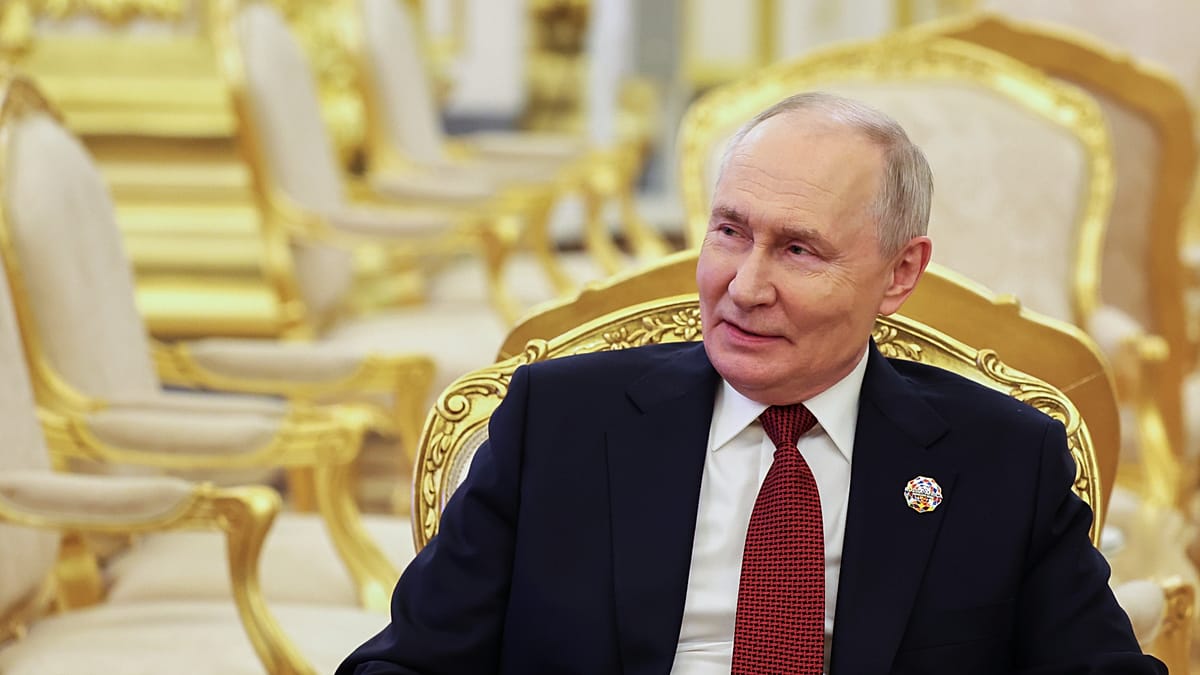
Putin signs decree placing JTI Russian assets under state control
Russian President Vladimir Putin signed a decree on Thursday, November 5, 2026, placing the Russian operations of Japan Tobacco International (JTI) under state-mandated “temporary administration.” The order transfers control of the cigarette manufacturer’s local assets to the state-linked holding company AO Promyshlennye aktivy, or Industrial Assets, effectively stripping the Geneva-based parent firm of its operational authority in the country.
This move impacts JTI’s facilities in St. Petersburg, Rostov-on-Don, the Leningrad region, and the Lipetsk region. As the largest tobacco manufacturer in Russia with a market share of nearly 40%, the company employs approximately 4,000 people. The portfolio seized includes international brands such as Winston, Camel, and Sobranie, alongside domestic labels like Pyotr I and Donskoi Tabak, according to reporting by Euronews.com.
Japan Tobacco Loses Control over Russian Assets
JTI’s footprint in Russia dates back to 1999, with a significant expansion in 2018 through the acquisition of local producer Donskoi Tabak. A company profile updated in November 2025 indicates that the Japan Tobacco group has invested $4.6 billion into its Russian operations over the past two decades. Following the February 2022 invasion of Ukraine, the firm suspended new capital expenditures and marketing campaigns, though it maintained production. This latest intervention forces a total loss of management control without the consent of the foreign owner and excludes any form of financial compensation.
The seizure follows a pattern of state intervention targeting companies from nations classified by Moscow as “unfriendly.” Similar administrative actions were taken in September and October against the Russian assets of the Swiss food giant Nestlé, the French retail group Auchan, and the German wholesaler Metro AG. These companies face conditions where dividends are restricted and the sale of commercial assets is subject to heavy state-imposed fees.

Tokyo and Moscow Face Worsening Diplomatic Ties
The decision coincides with a sharp deterioration in diplomatic relations between Tokyo and Moscow. In October, Russian authorities arrested a Japanese journalist working for the Hokkaido Shimbun in the Sakhalin region on allegations of espionage. While the Japanese government has formally denied these claims, the Russian Foreign Ministry has accused Tokyo of using journalists for intelligence gathering. These tensions are compounded by a long-standing territorial dispute over a chain of Pacific islands and Japan’s participation in Western sanctions against the Russian economy.
Moscow has explicitly linked these asset transfers to the support provided by foreign nations to Ukraine. The Russian government maintains that these “external management” measures are a direct response to what it characterizes as illegal expropriations of Russian property abroad.
Japan Tobacco Evaluates Decree After Asset Seizure
For multinational corporations, this environment creates a volatile market for cross-border asset management.
Japan Tobacco International stated in a communication that it is currently evaluating the decree and exploring its options, emphasizing that its primary focus remains the welfare of its local workforce and other stakeholders.
Moscou présente la mise sous gestion temporaire des actifs de JTI comme une réponse aux sanctions imposées par les pays jugés “inamicaux” après l’invasion de l’Ukraine en 2022.