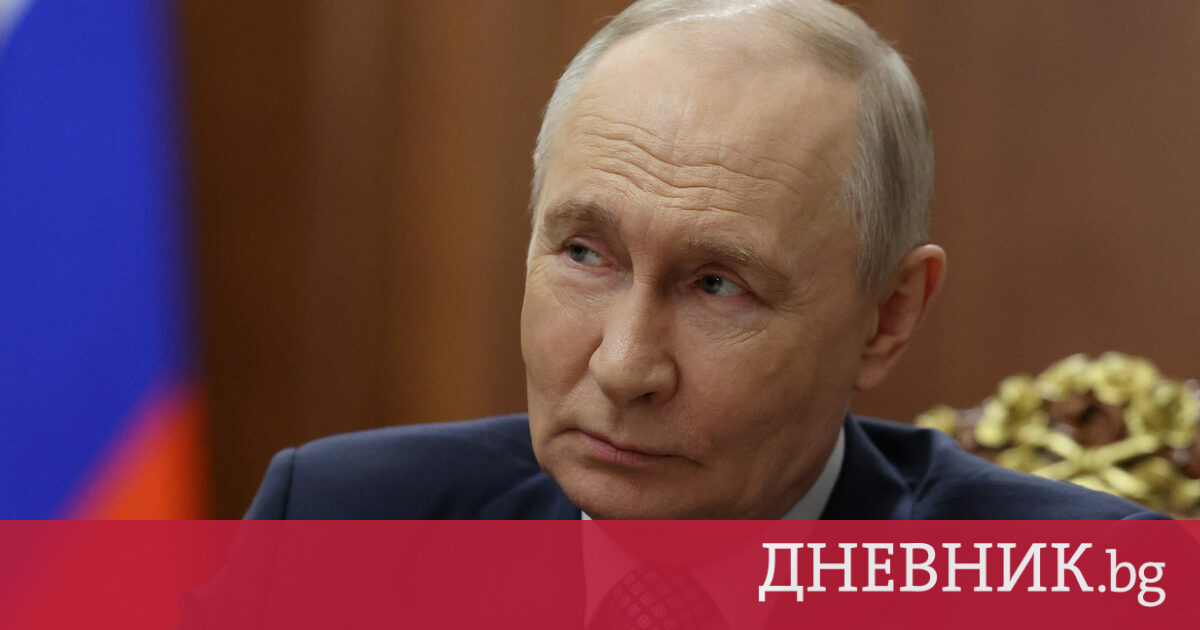
Putin Proposes Easter Ceasefire in Ukraine Amid Conflicting Reports
Russian President Vladimir Putin has declared a temporary ceasefire with Ukraine to observe the Orthodox Easter holiday. The truce is scheduled to take effect from 16:00 on April 11 through the end of April 12, 2026, with the Kremlin explicitly calling on Kyiv to reciprocate the cessation of hostilities.
This is not a peace treaty. We see a tactical pause—a brief, calculated suspension of kinetic activity that serves more as a psychological instrument than a diplomatic breakthrough. In the high-stakes arena of Eastern European geopolitics, a 32-hour window of silence is rarely about piety; it is about signaling, positioning and the management of internal and external perceptions.
For the global corporate community, these sudden, short-term shifts in conflict status create a volatile environment for risk assessment. When the lines between active combat and temporary truce blur, the operational risks for entities operating in adjacent corridors spike. This volatility is why multinational firms are increasingly relying on global risk consultants to navigate the unpredictable nature of conflict-zone stability.
The Architecture of a Tactical Pause
The directive originates from the highest level of the Russian state. As the Supreme Commander-in-Chief of the Armed Forces of the Russian Federation, Vladimir Putin has formalized this cessation of fire. The timing is precise: starting at 16:00 on April 11 and extending until the conclusion of April 12, 2026.
The execution of this order falls upon two key figures in the Russian military hierarchy: Defense Minister Andrey Belousov and General Valery Gerasimov, the Chief of the General Staff and Commander of the Combined Group of Forces. They have been ordered to halt military operations across all directions of the front.
“On the Russian Minister of Defense Andrey Belousov and the Chief of the General Staff of the Russian Armed Forces… It has been ordered to stop military actions in all directions for this period.”
Although, the Kremlin has carefully inserted a security loophole into the decree. Whereas the order is to cease fire, Russian troops remain on high alert, specifically instructed to “counteract any possible provocations from the enemy” and respond to “any aggressive actions.”
This caveat transforms the ceasefire from a guaranteed peace into a fragile agreement. By defining any Ukrainian movement as a “provocation,” Moscow retains the legal and military pretext to resume hostilities at a moment’s notice. This inherent instability makes the region a nightmare for logistics and insurance. Firms moving goods through neighboring corridors often find their premiums skyrocketing during such “unstable truces,” necessitating the expertise of specialized conflict-zone insurance underwriters to maintain viable supply chains.
Strategic Ambiguity and the Diplomatic Gamble
The rollout of this announcement was marked by the characteristic friction of Kremlin communications. While official press releases and channels like Max messenger confirmed the decree, other reports indicated that spokesperson Dmitry Peskov initially denied that any such decision had been made. This discrepancy is likely not an accident but a manifestation of strategic ambiguity.
By oscillating between denial and confirmation, the Russian state tests the waters of international reaction before committing to a public stance. Once the decision was formalized, the narrative shifted toward placing the burden of peace on Kyiv. The Kremlin explicitly stated, “We assume that the Ukrainian side will follow the example of the Russian Federation.”
This is a classic power play. By unilaterally declaring a ceasefire and then “expecting” the opponent to follow, Russia attempts to seize the moral high ground in the eyes of the global community and the Orthodox world. If Ukraine refuses, Moscow portrays them as the aggressor; if Ukraine accepts, Moscow demonstrates its ability to dictate the terms of engagement, however briefly.
Such diplomatic maneuvering creates a complex legal landscape for international observers and corporate entities involved in reconstruction or humanitarian efforts. The ambiguity of “temporary truces” often requires the intervention of international legal consultants to ensure that corporate activities do not inadvertently violate shifting sanctions or combatant statuses during these windows.
Macro Implications for the Global Order
While a 32-hour truce may seem insignificant on a macro scale, it reflects the broader trend of “intermittent conflict” that now characterizes modern geopolitical warfare. We are seeing a shift away from total, continuous mobilization toward a pattern of intense bursts of violence interspersed with calculated pauses.

This pattern disrupts traditional economic forecasting. It prevents the stabilization of regional markets and keeps foreign direct investment (FDI) in a state of paralysis. The global economy cannot price in a conflict that fluctuates between “total war” and “Easter truce” within the span of a single weekend.
The involvement of figures like Andrey Belousov—a man known more for his economic and administrative background than traditional military tenure—suggests that the Russian Ministry of Defense is increasingly viewing the war through the lens of resource management and sustainability. A temporary ceasefire allows for a brief respite in logistics and personnel rotation without conceding any territorial or strategic ground.
The world is watching to see if Ukraine will reciprocate. If they do, it establishes a precedent for “holiday diplomacy,” where religious or cultural milestones become the only viable channels for temporary de-escalation. If they do not, the “provocation” clause in Putin’s decree ensures that the return to combat will be swift and justified in the eyes of the Kremlin.
The Easter ceasefire is a reminder that in the current global order, peace is often used as a weapon of perception. The chessboard is shifting, and the rules of engagement are being rewritten in real-time. For those navigating this volatility—whether they are state actors or global enterprises—the only constant is the need for precise, expert intelligence. To find the legal, financial, and security partners capable of managing these transnational risks, the World Today News Directory remains the definitive resource for the global professional.