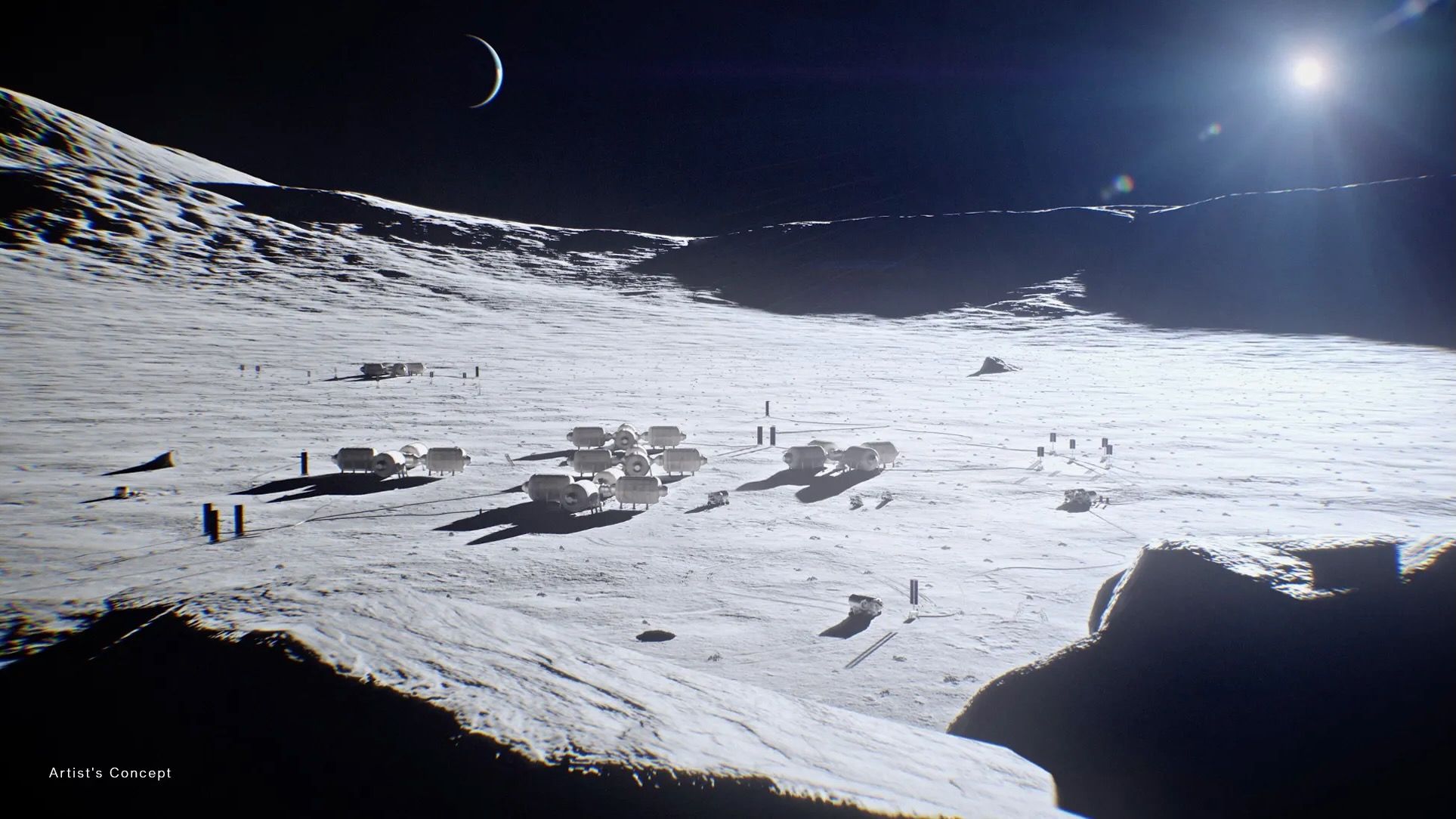
Purdue Researchers Turn Moon Dust and Cardboard Waste into Aerogel Insulation for Lunar Habitats
Moon base insulation made from recycled cardboard waste and lunar dust could slash hefty shipping costs under a study published in September in the journal ACS Sustainable Chemistry & Engineering.
Lunar Shipping Costs
Transporting materials from Earth to the moon costs about $544,000 per pound, or $1.2 million per kilogram, according to data cited by Space. That steep price tag has driven researchers to investigate in situ resource utilization, an approach that relies on materials already present on the moon rather than shipments from Earth.
“Sustaining a long-term presence on the moon will require us to rethink how we use local resources,” Alexander Wei, a professor in the James Tarpo Jr. and Margaret Tarpo Department of Chemistry at Purdue University, said in a Nov. 19 statement reported by Space.
“Rather than relying on Earth to supply everything we need, we’re exploring how materials already available on the moon, including waste generated by its inhabitants, could be upcycled into something essential for safe and livable habitats,” Wei added.
Purdue Develops Ultralight Aerogel from Wastepaper and Lunar Dust
To shield habitats from extreme temperature swings that reach 260 degrees Fahrenheit during the day and drop to minus 280 degrees Fahrenheit at night, researchers at Purdue developed an ultralight aerogel. The material mixes cellulose from discarded cardboard and paper packaging with a simulated lunar regolith.
Wastepaper is roughly 60% to 70% cellulose by weight, while lunar dust made up 25% to 75% of the finished aerogels tested in the lab. When measured in air, the experimental batches scored between 30 and 45 milliwatts per meter-kelvin in thermal conductivity.

“Imagine an aerogel as a high-tech thermos for a lunar base,” Jacob Staker, a graduate researcher working on the study, said in the Purdue statement reported by Space. “Most of it consists of empty space that insulates the interior, helping it maintain the temperature of what’s inside.”
Artemis Program Timeline
NASA aims to establish a long-term, sustainable lunar base by 2032 through its Artemis program, according to Around Prague. The research team conducted the work in collaboration with NASA’s Glenn Research Center in Cleveland, Open Access Government reported.