Puerto Rico Supreme Court Ruled to Cancel Government Contract With Luma Energy
“Where to start? The outrage is absolute,” said 74-year-old Radamés García Badillo.
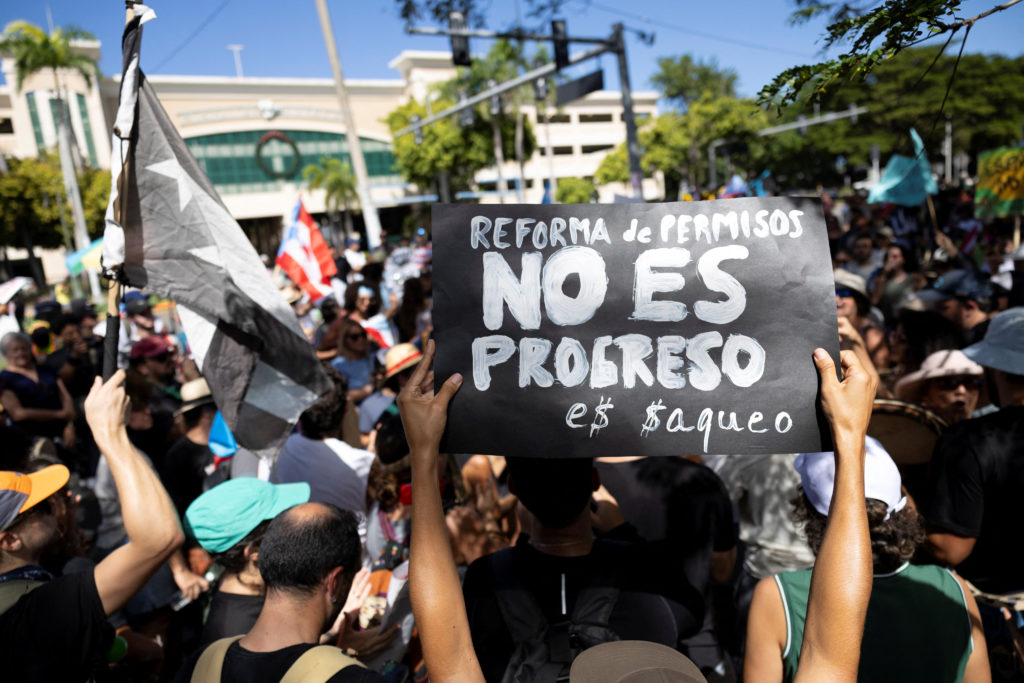
He also decried a sharp increase in the cost of living. “We’re buying less because things are extremely expensive,” he said. “For us retirees, it is essential to make every dollar stretch.” Thousands of demonstrators gathered in San Juan on Friday to protest record-high electric rates, the rising cost of living, and the deterioration of basic services across Puerto Rico.
The protest, which organizers called the “Day of National Outrage,” drew retirees, students, and union members to the Caribbean’s largest mall on Black Friday. According to the Associated Press, crowds surged throughout the day, eventually forcing the closure of one of the island’s main highways.
Participants traveled by bus from across the territory to voice grievances that have intensified since Gov. Jenniffer González took office in January 2025. For many, the primary frustration centers on the local power grid.
| Category | Puerto Rico Rate | U.S. Mainland Average |
|---|---|---|
| Residential Electricity | 33.86 cents per kWh | 18.3 cents per kWh |
Residential electricity bills for some customers recently increased by approximately 18%, climbing from $229 to $271. The U.S. Energy Information Administration notes that the island’s new rate significantly exceeds the U.S. mainland average of 18.3 cents per kWh.

Protesters directed much of their anger toward Luma Energy, the private firm responsible for power transmission and distribution. On Wednesday, the Puerto Rico Supreme Court narrowly ruled to cancel the government’s contract with the company. While the governor welcomed the decision, concerns remain regarding future service stability.
The Puerto Rico Manufacturers Association warned that canceling the contract could “discourage private investment and jeopardize the continuity of projects in progress.” These ongoing projects aim to repair a grid severely damaged by Hurricane Maria in 2017 and weakened by years of limited maintenance.
For residents like 22-year-old visual arts student Verónica Ishtar, the systemic issues are personal. She reported experiencing 12 power outages in her neighborhood this week alone. “Things have never been good in Puerto Rico, but they keep getting worse,” she said. “This is not normal, and it should not be normalized,” she said.
“We must begin to channel the rage,” said Hernaliz Vázquez, executive director of Sierra Club Puerto Rico. “We must begin to organize the indignation felt by people who do not know what to do.” As the protest grew, one demonstrator pledged a “combative Christmas.”
Puerto Rico’s Manufacturers Association echoed those concerns, warning that the cancellation threatens recovery efforts as the island struggles with unreliable power and a deteriorating standard of living.
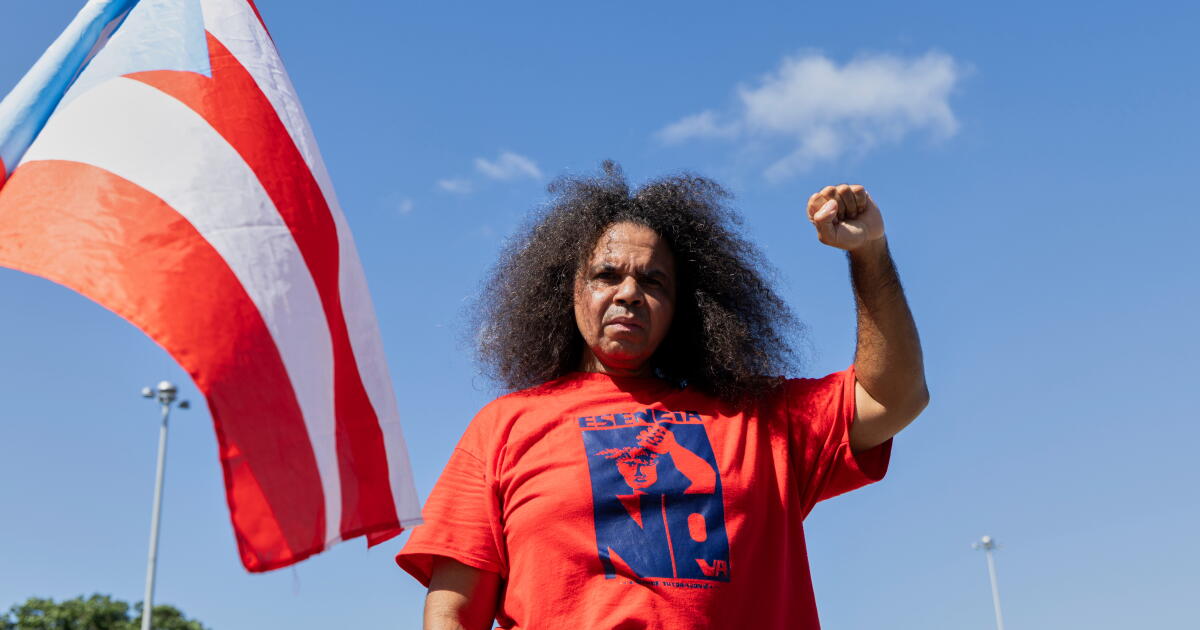
Hernaliz Vázquez, executive director of Sierra Club Puerto Rico, urged protesters to organize, saying, “We must begin to channel the rage” and “organize the indignation felt by people who do not know what to do.” Activists pledged to continue their movement, and one demonstrator vowed a “combative Christmas.”
“Puerto Rico is awaiting concrete solutions,” she said.
Puerto Rico’s administrative structure as a U.S. commonwealth, established in 1952, grants it internal self-government while maintaining subordination to federal oversight in key areas like defense and foreign policy. This status, coupled with its classification as a developed jurisdiction by the IMF, underscores the systemic tension between local autonomy and federal constraints.
Politician and attorney Eva Prados, who joined the protest, emphasized that the island’s current economic climate is unsustainable. Puerto Rico “is awaiting concrete solutions,” she said.