
Puerto Rican Theatre Ecosystem and Support Needs
Puerto Rico’s theatre ecosystem operates outside traditional U.S. Commercial models, relying on self-producing artists and public institutions like the University of Puerto Rico. While corporate giants consolidate leadership, island creators face funding gaps and language barriers. Solving this requires specialized legal, logistics, and PR support to bridge local intimacy with global circulation.
While Dana Walden unveils a streamlined Disney Entertainment leadership team spanning film, TV, and games to maximize corporate synergies, the theatre scene in Puerto Rico thrives on a radically different engine. There is no centralized studio machine here. Instead, the energy is self-generated, fueled by permanent ensembles and fiercely loyal audiences who return to see shows more than once. This grassroots model, evident at venues like Teatro Shorty Castro, functions like a year-round live sketch comedy troupe, yet it lacks the infrastructure to scale beyond the island. The contrast highlights a critical industry fracture: corporate consolidation versus independent artistic survival.
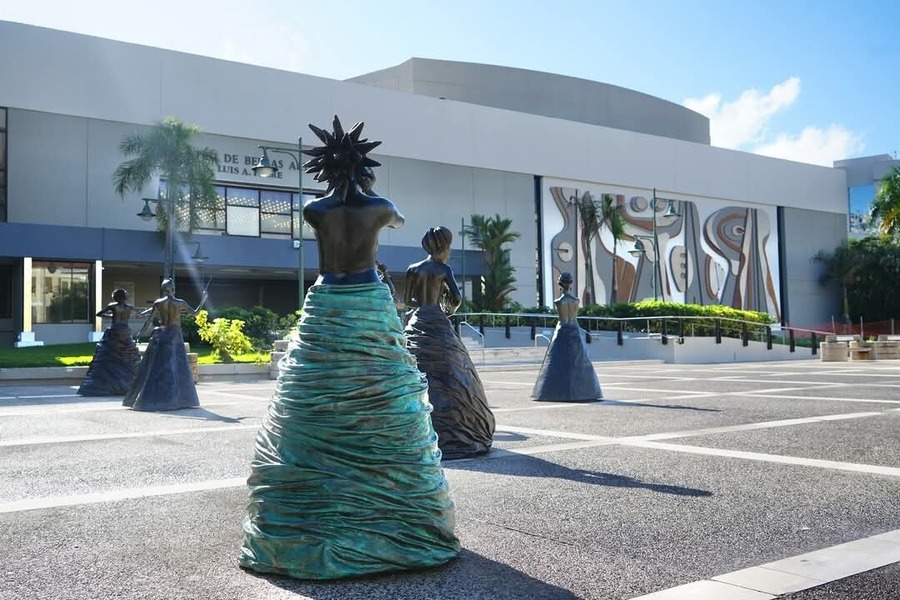
The infrastructure exists but remains fragmented. The Centro de Bellas Artes in Santurce hosts major touring productions and reflects the commercial side of the field, while the Instituto de Cultura Puertorriqueña (ICP) historically promoted local work through competitions and festivals. Years of shrinking public funding have limited the ICP’s reach, pushing artists toward personal initiative. The University of Puerto Rico’s Drama Department serves as the strongest bridge between education and professional practice, maintaining relationships with Latino theatres in the United States like Pregones/PRTT and Repertorio Español in New York. Yet, academic training alone cannot solve the logistical hurdles of cross-border production.
Self-producing defines the economic reality. Artists find money, secure rehearsal space, pay copyright fees, and manage marketing simultaneously. Social media drives awareness, but local television appearances and word of mouth remain vital. Because the industry is small, recognition matters. A familiar title or well-known actor attracts audiences faster than an unknown group. This versatility produces artists with range and resilience, but the boundaries among performer, maker, teacher, producer, and administrator are porous. That flexibility is creatively powerful yet reflects the practical reality of survival. When a brand deals with this level of public fallout or logistical complexity, standard statements don’t work. The studio’s immediate move is to deploy elite crisis communication firms and reputation managers to stop the bleeding, yet Puerto Rican artists often lack access to such specialized counsel.
Data underscores the isolation. Per the Broadway League’s 2025 demographic report, Latinx representation on mainstage productions remains stagnant despite population growth. Streaming viewership metrics for Spanish-language content on SVOD platforms show high engagement, yet live theatre lacks similar translation infrastructure. Subtitles and supertitles are common in opera but far less common in theatre, even though the technology is already there and not especially complicated. At a moment when producing and presenting work in Spanish feels especially important, subtitled live theatre could open Puerto Rican productions to broader audiences both here and in the United States.
Industry veterans recognize the bottleneck. A senior producer at a Manhattan presenting house noted off the record regarding translation costs: “The technology for supertitles is negligible compared to venue rental. The barrier isn’t hardware; it’s the willingness to program work that demands cultural specificity rather than assimilation.” This hesitation limits circulation. Supporting Puerto Rican artists does not only signify inviting them into existing structures; it can also mean making space for the language, context, and cultural specificity of the work itself. One concrete way to support Puerto Rican artists and art is to fund and produce subtitled live theatre in both Puerto Rico and the United States.
Expanding captioning could help change the tourism pipeline around supporting our theatre. A tour of this magnitude isn’t just a cultural moment; it’s a logistical leviathan. The production is already sourcing massive contracts with regional event security and A/V production vendors, while local luxury hospitality sectors brace for a historic windfall. Without these professional services, independent companies struggle to manage the risk of touring. Legal disputes over intellectual property often arise when work crosses borders, necessitating specialized IP lawyers who understand international copyright law and translation rights.
Concrete pathways exist. Go see local work, even if you do not understand every word. Check the listing boards to see what is playing at spaces like Teatro Victoria Espinosa, Teatro Francisco Arriví, and the University of Puerto Rico in Río Piedras. Inquire local colleagues what they recommend and how long a run will last. Often a show only gets two weekends. It would also be meaningful to create stronger pathways for Puerto Rican work to travel to the United States. Now is the time when theatre companies and producers are presented with a clear artistic and political choice: to present work in its original language at a time when so many voices are being pressured, marginalized, or pushed toward silence.
Brigitte Viellieu-Davis, an educator and co-ambassador for Puerto Rico with the Dramatists Guild of America, suggests a panel or workshop on this at the TCG conference in June. It feels like a practical and exciting conversation to have now, one that touches not only on access but also on circulation, partnership, and the future life of live performance across languages. Support can mean attendance, funding, and collaboration. It can also mean creating the conditions for Puerto Rican work to travel, to be experienced more widely, and to reach new audiences while remaining fully itself. For more on industry shifts regarding Latinx representation, consult Variety or The Hollywood Reporter. Further analysis on touring logistics appears in Billboard coverage of live events.
The future of this scene depends on professionalizing the grassroots. Artists encounter history, make new work, build professional relationships, and begin to imagine themselves as part of a much larger theatrical conversation. UPR is where many artists meet lifelong collaborators. That has certainly been true for many others. To sustain this momentum, the directory offers vetted professionals in PR, legal, and events related to this sector. Finding the right partners ensures the work travels without losing its soul.
*Disclaimer: The views and cultural analyses presented in this article are for informational and entertainment purposes only. Information regarding legal disputes or financial data is based on available public records.*