
PSX Records Historic Single-Day Rally Following US-Iran Ceasefire
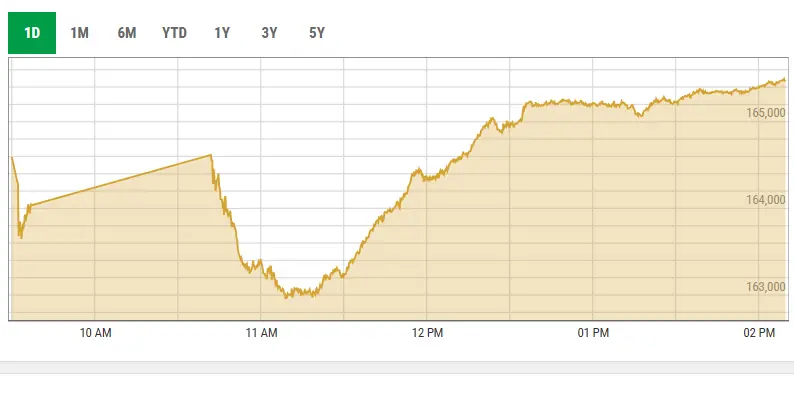
The Pakistan Stock Exchange (PSX) benchmark KSE-100 index surged nearly 14,000 points on Wednesday, April 8, 2026, marking the largest single-day gain in the exchange’s history. The rally followed a two-week ceasefire agreement between the US and Iran to reopen the Strait of Hormuz, triggering a massive revival in investor confidence.
This level of volatility is a wake-up call for any firm with exposure to Middle Eastern trade routes. When a benchmark index can swing by over 10,000 points in a single session, the reliance on static forecasting becomes a liability. Forward-thinking enterprises are now pivoting toward risk management consultants to build dynamic hedging strategies that can withstand geopolitical shocks of this magnitude.
The Anatomy of a Record-Breaking Rally
The KSE-100 did not just climb; it exploded. By 9:37 am, the index had already shot up 12,362.38 points, an 8.15 percent increase that pushed the market to 164,035.83. The momentum was so violent that it triggered a mandatory trading halt. Per PSX regulations, the market suspends trading once the index surpasses a 5 percent threshold to curb excessive volatility and allow the order book to stabilize.
The surge did not peak at the opening bell. By 3:08 pm, the gains expanded to 13,925.47 points, or 9.18 percent. This pushed the final standing to 165,598.92, starting from a previous close of 151,673.45. In absolute terms, this is the single greatest one-day jump ever recorded on the exchange.
To put this in perspective, the previous record was set on May 12, 2025, when the index gained 10,123 points (9.45 percent) following the downing of seven Indian fighter planes. Today’s rally didn’t just break that record; it shattered it by nearly 4,000 points.
The sheer speed of this recovery suggests a market that was coiled like a spring, waiting for a catalyst to unwind months of geopolitical dread.
The Geopolitical Pivot: Trump and the Strait of Hormuz
The catalyst was a high-stakes diplomatic gamble. US President Donald Trump announced a temporary two-week ceasefire with Iran, conditioning the suspension of military operations on the “complete, immediate, and safe” reopening of the Strait of Hormuz. Given that the strait is a critical artery for global oil shipments, the market viewed this as an immediate relief valve for global energy pricing.
Iranian Foreign Minister Abbas Araghchi confirmed that Tehran would allow safe passage through the strait for the duration of the ceasefire. This agreement is more than a temporary truce; it is a bridge to formal negotiations. According to market data and official statements, Iran has offered a 10-point proposal that Trump described as a “workable foundation.”
The diplomatic center of gravity has shifted toward Islamabad. Iran indicated that formal talks with the United States will commence there this Friday, with Pakistan acting as the mediator. This positioning elevates Pakistan’s strategic importance, transforming it from a regional observer into a key diplomatic hub.
For corporations navigating these shifting alliances, the legal landscape is becoming just as complex as the financial one. The sudden reopening of trade corridors often necessitates a rapid overhaul of shipping contracts and compliance protocols, driving a surge in demand for international trade law firms specializing in sanctions and maritime law.
Macro Analysis: Three Pillars of Market Transformation
This rally is not merely a reaction to a headline; it is a fundamental shift in the perceived risk premium of the region. The ceasefire alters the macro environment in three critical ways:

- Energy Price Stabilization: The reopening of the Strait of Hormuz removes the immediate threat of a global oil supply shock. By reducing the “war premium” embedded in crude prices, the ceasefire lowers input costs for energy-dependent industries, which in turn stabilizes inflation expectations.
- Capital Inflow Acceleration: The transition from a “war footing” to a “negotiation footing” restores the confidence of foreign institutional investors. We expect to see a shift from defensive liquidity hoarding to aggressive equity accumulation as the risk of total regional conflict recedes.
- Mediator Premium: Pakistan’s role as the venue for US-Iran talks provides a psychological floor for the PSX. The perception that the country is indispensable to regional peace creates a stability narrative that attracts long-term infrastructure and sovereign investment.
The volatility, however, remains a double-edged sword.
From Bloodbath to Breakthrough
The euphoria of Wednesday is a stark contrast to the carnage seen just weeks ago. The PSX has been under immense pressure since the US-Israel war on Iran began. The most devastating moment occurred on March 2, described by analysts as a market bloodbath. Following the assassination of Iran’s supreme leader, Ayatollah Ali Khamenei, the KSE-100 suffered its steepest single-day plunge, shedding 16,089 points, or 9.57 percent.
Even yesterday, Tuesday, the market was a nerve-wracking environment. Investors were on edge ahead of the US deadline for Iran to agree to a deal, resulting in extreme volatility. While the market managed to close up by 465.64 points on Tuesday, it was a tentative gain compared to today’s explosion.
This violent oscillation—from a 16,000-point drop in March to a 14,000-point gain in April—highlights the extreme sensitivity of the Karachi bourse to Middle Eastern geopolitics. It underscores the necessity for firms to employ commodity trading advisors to manage the volatility of oil-linked assets during these windows of instability.
The market is currently operating on a two-week countdown. The ceasefire is temporary, and the 10-point proposal remains a foundation, not a finished building. If the Friday talks in Islamabad fail or if the Strait of Hormuz closes again, the correction will be swift, and severe.
The trajectory of the PSX over the next two fiscal quarters will depend entirely on whether this ceasefire evolves into a permanent diplomatic framework. For now, investors are celebrating a reprieve, but the pragmatic player knows that in this region, stability is often just a pause between shocks. To navigate this uncertainty, the World Today News Directory remains the primary resource for connecting with vetted B2B partners capable of managing high-stakes global volatility.