
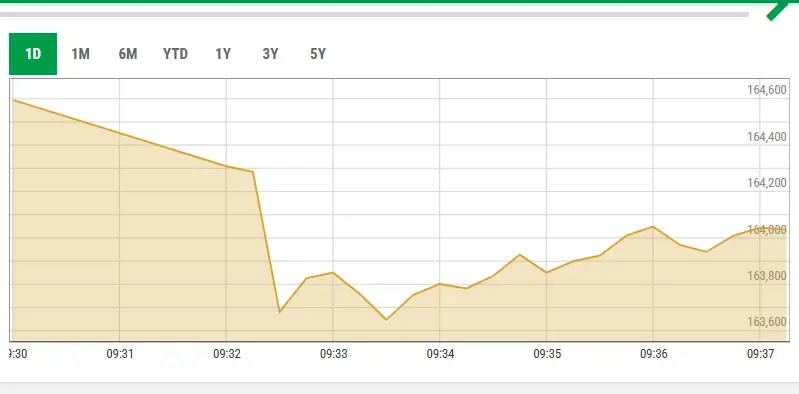
PSX Records Historic Single-Day Rally After US-Iran Ceasefire
The Pakistan Stock Exchange (PSX) witnessed a historic rally on April 8, 2026, as the KSE-100 index surged 12,362.38 points (8.15%) to 164,035.83. This unprecedented intraday spike followed news of a US-Iran ceasefire, triggering a massive wave of investor optimism and the largest single-day absolute gain in the exchange’s history.
Markets don’t move on hope alone; they move on the removal of systemic risk. For months, the KSE-100 was a hostage to geopolitical volatility, specifically the looming threat of a regional conflagration that threatened to paralyze trade corridors and spike energy costs. The sudden pivot to a ceasefire has transformed the narrative from “survival” to “recovery,” but the volatility residue remains. Companies that suffered during the “bloodbath” of March—specifically those with heavy exposure to energy imports and logistics—now face the grueling task of restructuring their balance sheets to capitalize on this new liquidity window.
The immediate fiscal problem is a massive imbalance in risk-weighted assets. Firms that hedged aggressively against war scenarios are now over-insured or locked into expensive short-term contracts. To navigate this transition, many are engaging corporate treasury consultants to optimize their cash flow and unwind costly hedges without eroding their newly recovered margins.
The Macro Mechanics: Why the KSE-100 Exploded
To understand the scale of this rally, one must look at the “coiled spring” effect. The PSX had been suppressed by a crushing risk premium. When the US-Iran deadline passed without an escalation, that premium evaporated instantly. We aren’t just seeing a price correction; we are seeing a violent repatriation of capital.

- Energy Price Deflation: A ceasefire removes the “war premium” from Brent Crude. For a net importer like Pakistan, a drop in oil prices reduces the pressure on foreign exchange reserves and lowers the cost of goods sold (COGS) for the industrial sector.
- Liquidity Inflow: Institutional investors, particularly those tracking emerging markets via MSCI Emerging Markets Indices, have shifted from “Risk-Off” to “Risk-On” overnight. This creates a surge in demand for undervalued blue-chip equities.
- Currency Stabilization: The geopolitical calm reduces the speculative pressure on the Pakistani Rupee, lowering the cost of servicing dollar-denominated debt for the corporate sector.
The volatility was palpable. Just days prior, the market was in a state of paralysis. Now, the momentum is shifting toward a bullish trend for the upcoming fiscal quarters.
“The market was essentially pricing in a worst-case regional collapse. The ceasefire didn’t just provide a relief rally; it reset the baseline for valuation multiples across the entire energy and infrastructure sector,” says Marcus Thorne, Chief Investment Officer at a leading global hedge fund specializing in frontier markets.
Analyzing the Volatility Gap: From Bloodbath to Bull Market
The contrast is stark. On March 2, the market shed 16,089 points following the assassination of Iran’s supreme leader—a move that sent shockwaves through global supply chains. The current rally is a direct inverse of that trauma. However, the recovery is not uniform. Although the benchmark index is soaring, the underlying EBITDA margins of many firms remain scarred by the previous quarter’s disruptions.
According to data from the World Bank’s latest economic updates on Pakistan, the volatility in energy prices has created significant working capital gaps for mid-sized manufacturers. While the stock price reflects investor glee, the operational reality involves managing high-interest debt incurred during the crisis.
What we have is where the “recovery gap” becomes a business opportunity. Companies are now scrambling to refinance high-cost debt. We are seeing a surge in demand for investment banking and debt restructuring firms to help corporations swap emergency short-term loans for more sustainable long-term financing.
The rally is a signal, not a destination.
The Path Forward: Fiscal Quarters and Structural Risks
Looking ahead to the next two quarters, the focus shifts from geopolitical headlines to fundamental performance. The “ceasefire bounce” will eventually fade, and the market will demand to notice real earnings growth. The critical metric will be the ability of firms to translate lower energy costs into higher net profit margins.
We must also consider the regulatory fallout. The temporary suspension of trading on Wednesday was a necessary circuit breaker, but it highlights the fragility of the PSX’s infrastructure when faced with extreme volatility. For institutional players, this unpredictability necessitates more robust risk management frameworks. Many are now seeking enterprise risk management (ERM) software providers to implement real-time stress testing and automated hedging strategies.
“The KSE-100’s move is a classic example of sentiment-driven pricing. The real story will be written in the Q2 and Q3 earnings calls, where we will see if the cost-savings from stabilized oil prices actually hit the bottom line,” notes Sarah Jenkins, Senior Emerging Markets Analyst.
The primary source of truth for the coming months will be the State Bank of Pakistan’s (SBP) monetary policy statements. If the SBP can leverage this stability to lower policy rates, the rally could evolve from a spike into a sustained bull run. If inflation remains sticky despite the ceasefire, the current gains may be viewed in hindsight as a temporary euphoria.
The market has proven it can recover from a bloodbath. The question now is whether the corporate sector can pivot from survival mode to growth mode without tripping over the debt they accumulated during the war.
For executives and investors navigating this new landscape, the priority is no longer avoiding disaster, but optimizing for the rebound. Finding vetted, high-tier B2B partners is the only way to ensure that this window of opportunity isn’t wasted. Whether you necessitate to restructure your balance sheet or hedge against the next geopolitical pivot, the World Today News Directory remains the definitive resource for connecting with the global firms capable of delivering institutional-grade results.