Provisional Pseudopseudohypoparathyroidism Diagnosis in Adolescent With Albright Hereditary Osteodystrophy Phenotype Lost to Follow-Up
On November 22, 2026, medical records detailed the case of a 14-year-old girl evaluated for poor height gain and bilateral elbow deformities.
- She presented to the clinic at age 14 years and 5 months measuring 135.5 cm in height.
- Karyotype analysis returned a 46,XX result.
- Serum calcium, phosphate, and parathyroid hormone levels fell within reference ranges.
Patient Shows Albright Hereditary Osteodystrophy Features
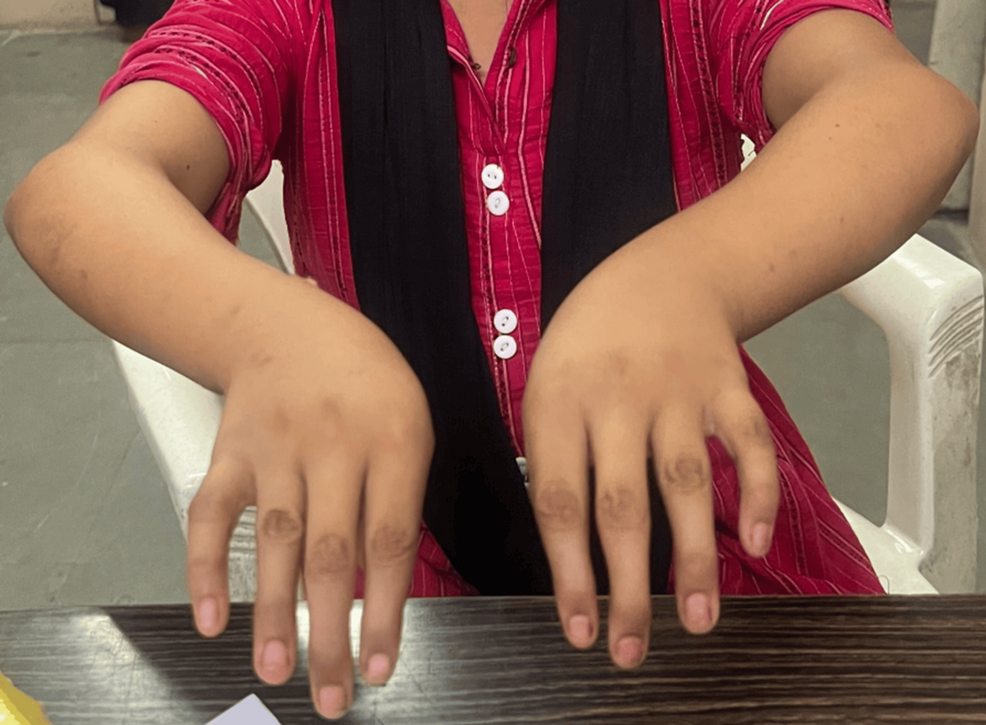
The patient exhibited round facies, dental crowding, and a stocky habitus typical of the Albright hereditary osteodystrophy phenotype, Cureus reported. Physical examination revealed bilateral cubitus varus at the elbow and brachydactyly of the fourth and fifth digits.
Doctors noted bilateral thenar hypoplasia and a positive Archibald sign with dimpling over the fourth and fifth metacarpal heads during fist formation. Lower limb checks showed shortened fourth and fifth toes alongside flat feet.
Family history indicated second-degree consanguinity, though no relatives shared the phenotype. Breast development began around age 10.5 years with minimal subsequent progression, and she remained premenarchal at presentation. Systemic checks revealed no cognitive impairments or subcutaneous ossifications.
Lab Results Normal; Imaging Confirms Brachydactyly Type E
Hand radiographs demonstrated shortening of the fourth and fifth metacarpals and thumb distal phalanges, matching brachydactyly type E. Skull imaging confirmed dental crowding without visible calcifications.
Blood tests showed normal thyroid profiles and electrolyte levels. Growth hormone stimulation testing yielded peak concentrations of 2.38 ng/mL at 90 minutes. Karyotype analysis confirmed a normal female 46,XX chromosomal makeup.
Provisional Pseudopseudohypoparathyroidism Diagnosis; Follow-Up Lost
Normal calcium, phosphate, and parathyroid hormone levels ruled out end-organ resistance to parathyroid hormone, pointing clinicians toward a provisional diagnosis of pseudopseudohypoparathyroidism. Fuller Albright first defined this distinct entity in 1952, identifying patients with the physical features of Albright hereditary osteodystrophy who lack hormone resistance.
Although genetic testing was performed and reportedly supported the diagnosis, the records could not be retrieved. The patient subsequently became lost to follow-up, preventing verification of the molecular findings, parent of origin, and further growth assessment.