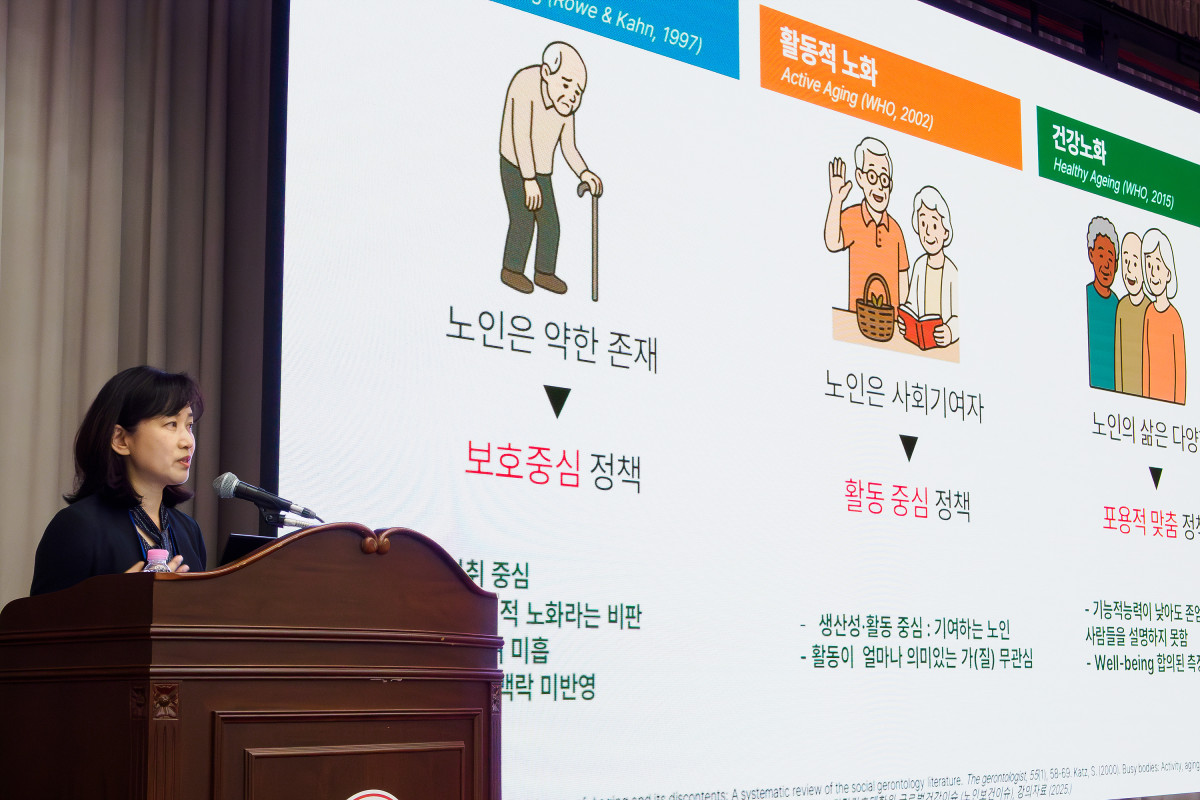
Professor Sook-Rang Jang Discusses Healthy Aging at the 2026 Korean Gerontological Society Spring Conference
The global demographic shift toward a super-aged society has rendered the traditional binary of “healthy” versus “sick” obsolete. As of June 2026, clinical gerontology is undergoing a paradigm shift, moving away from simple disease management toward the optimization of “thriving” as a clinical metric. This transition, underscored by recent discourse at the Korean Gerontological Society’s annual summit, demands that we redefine human dignity not merely by the absence of morbidity, but by the capacity for functional autonomy in the final decades of life.
Key Clinical Takeaways:
- Healthy aging is being redefined as “thriving,” shifting the clinical focus from palliative symptom management to the preservation of physiological reserve and cognitive plasticity.
- The integration of social determinants of health is now as critical as pharmacological intervention in delaying the onset of frailty and multi-morbidity in geriatric populations.
- Clinical outcomes are increasingly dependent on early-stage diagnostic screening, necessitating proactive engagement with specialized geriatric medicine providers to establish a baseline for long-term functional health.
Professor Sook-Rang Jang of Chung-Ang University has brought a critical, evidence-based lens to the discourse on geriatric health. Her recent presentation highlights a growing gap in public health infrastructure: while current medical protocols effectively extend life expectancy, they often fail to address the “quality-of-life” deficit. This is not merely a sociological concern; it is a profound clinical challenge involving the management of chronic inflammation, sarcopenia, and the neurodegenerative pathways associated with advanced age.
The pathogenesis of age-related decline is complex, involving the gradual accumulation of senescent cells and the dysregulation of homeostatic mechanisms. According to data published in The Lancet Healthy Longevity, the trajectory of an individual’s health span is heavily influenced by the “social exposome”—the sum of environmental, behavioral, and social factors that dictate biological aging rates. When we discuss “thriving,” we are addressing the mitigation of these stressors through targeted, evidence-based interventions.
“The clinical objective for the next decade is the compression of morbidity. We must move beyond the reactive model of treating geriatric pathologies as isolated events and instead adopt a longitudinal, systemic approach that prioritizes the maintenance of biological resilience,” notes Dr. Elena Vance, a lead researcher in translational gerontology at the Institute for Aging Research.
This shift requires a robust, multidisciplinary infrastructure. For patients seeking to optimize their physiological trajectory, the standard of care involves more than just routine blood panels. It requires a comprehensive assessment of metabolic markers, hormonal balance, and cognitive function. Patients currently navigating these transitions should proactively consult with board-certified geriatric specialists to develop evidence-based longevity protocols that align with current clinical guidelines.
The funding landscape for this research remains largely anchored in government-backed initiatives, such as those overseen by the National Institute on Aging (NIA), which has prioritized the study of cellular senescence and its systemic impacts. These studies are essential, yet their translation into community-level practice remains inconsistent. The clinical gap often lies in the lack of coordinated care between primary practitioners and specialists who focus on the nuances of geriatric pharmacology, where polypharmacy remains a significant risk factor for adverse drug events.
Managing the risks of late-life decline demands a strategic, data-driven approach to wellness. For those managing complex comorbidities, the complexity of drug-drug interactions and the potential for contraindications in elderly populations require the oversight of professionals who specialize in complex chronic care. Accessing vetted, high-quality diagnostic and therapeutic support is paramount for maintaining independence. We strongly advise patients and caregivers to utilize our network of internal medicine specialists to ensure that treatment plans are continuously audited against the latest peer-reviewed findings.
as healthcare systems move toward value-based care, the role of institutional compliance and standardized diagnostic protocols becomes central to patient safety. Healthcare providers and facility administrators are increasingly turning to specialized healthcare compliance consultants to navigate the regulatory requirements that govern the delivery of advanced geriatric care. Ensuring that clinical operations meet these rigorous standards is a prerequisite for achieving the high-level outcomes that define a “dignified life.”
The trajectory of geriatric medicine is clear: we are entering an era where the prevention of frailty is as quantifiable as the treatment of cardiovascular disease. By integrating the insights of epidemiologists with the precision of specialized clinicians, we can move closer to a reality where the later stages of life are characterized by sustained capacity rather than inevitable decline. The path forward is not found in a single breakthrough, but in the disciplined application of current medical science to the daily lives of our aging population. We encourage those looking to secure long-term health outcomes to seek out providers who prioritize evidence-based, patient-centered care through our verified health coordination services.
Disclaimer: The information provided in this article is for educational and scientific communication purposes only and does not constitute medical advice. Always consult with a qualified healthcare provider regarding any medical condition, diagnosis, or treatment plan.