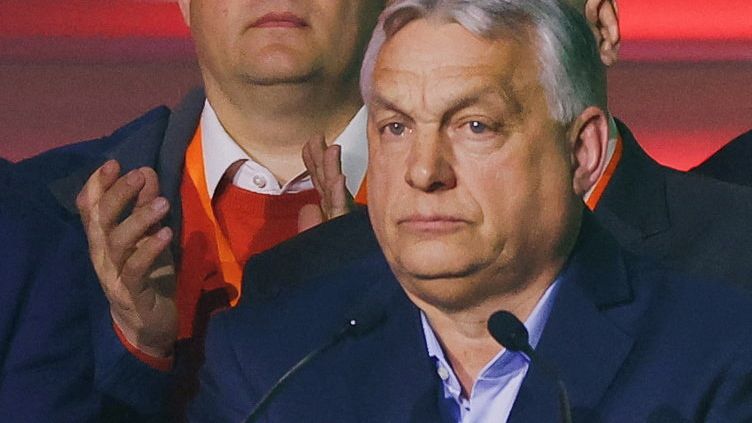
Private Jets Loaded with Cash: Orbán-Linked Oligarchs Move Wealth Abroad
On April 18, 2026, Hungarian Prime Minister Viktor Orbán’s inner circle of oligarchs is accelerating the covert transfer of billions in cash and assets via private jets to offshore jurisdictions, exploiting gaps in EU transparency rules to shield wealth from impending sanctions and domestic scrutiny—a move that threatens to destabilize Central European financial integrity and test the bloc’s resolve against creeping authoritarian capture.
The phenomenon, first flagged by Czech investigative outlet Novinky, reveals a pattern: since Orbán’s Fidesz party consolidated power in 2010, allied business magnates like Lorinc Mészáros and Sándor Csányi have systematically routed capital through Cyprus, the UAE, and Singapore using shell companies and underreported aircraft movements. What began as tax optimization has evolved into a sophisticated asset-protection machinery designed to outlast political cycles—and potentially, sanctions regimes. With the EU’s Sixth Anti-Money Laundering Directive (6AMLD) now fully enforceable and the U.S. Treasury’s OFAC preparing secondary sanctions targeting enablers of democratic backsliding, these flights represent not just wealth flight but a strategic hedge against institutional accountability.
This exodus poses systemic risks to global markets. Hungary’s position as a logistics nexus for Central European supply chains—particularly in automotive components and agricultural exports—means that opaque financial flows distort risk pricing for foreign investors. When oligarch-linked firms secure state contracts via opaque tender processes, as documented by the European Commission’s 2025 Rule of Law Report, it creates moral hazard: multinational suppliers face uncertainty over payment reliability and contract sanctity. The diversion of state resources toward patronage networks crowds out productive investment, suppressing Hungary’s GDP growth potential by an estimated 1.2% annually, according to IMF staff estimates cited in a February 2026 working paper.
“What we’re seeing isn’t corruption in the traditional sense—it’s the privatization of state sovereignty. When oligarchs move cash faster than regulators can track jets, they’re not just hiding money. they’re declaring independence from democratic oversight.”
— Javier Solana, former EU High Representative for Foreign Policy, remarks at the Bratislava Forum on Democratic Resilience, March 2026
The macroeconomic bridging is stark. Consider the Volkswagen supply chain: 30% of its Hungarian-sourced wiring harnesses flow through Tier 2 suppliers with known ties to Fidesz-aligned conglomerates. Any disruption in payment fidelity or sudden asset freezes could trigger cascading delays across Slovakian assembly lines and German just-in-time operations. Similarly, agribusiness giants like Cargill and ADM, which rely on Hungarian grain exports for EU feedstock markets, face heightened counterparty risk when silo operators are linked to entities under investigation for illicit financial flows.
These dynamics create urgent demand for specialized intermediaries. Global traders navigating Hungarian exposure increasingly consult trade finance specialists to structure letters of credit with escrow mechanisms insulated from sovereign risk. Simultaneously, multinational legal teams are engaging cross-border arbitration counsel to preemptively draft contracts with enforceable jurisdiction clauses in neutral venues like Singapore or London. Forensic accounting firms are also seeing surging retention as companies seek asset tracing consultants to map beneficial ownership behind Hungarian counterparties—a critical step before onboarding new vendors in V4 economies.
Historical parallels deepen the concern. The current trajectory mirrors Russia’s post-2014 capital flight, when oligarchs used Azerbaijani and Maltese conduits to shield assets ahead of sanctions—only to see those channels dismantled by the EU’s 2022 Anti-Money Laundering Package. Yet Hungary’s case is distinct: unlike Russia, it remains within NATO and the EU single market, meaning its erosion of institutional norms creates a unique contagion risk. As noted by the World Bank’s Europe and Central Asia Chief Economist in a March 2026 blog, “When a member state weaponizes sovereignty to shield illicit finance, it undermines the very legal homogeneity that makes the single market function.”
“The real danger isn’t the money leaving—it’s the signal it sends. If Budapest can normalize asset stripping without consequence, why wouldn’t Warsaw or Bucharest test the limits next?”
— Anna Fotyga, Polish MEP and former Minister of Foreign Affairs, European Parliament debate on Rule of Law Conditionality, April 2026
From a security perspective, the proliferation of unmonitored private flights raises red flags for NATO’s Counter-IED and Illicit Trafficking units. While no direct links to arms smuggling have been proven, the same networks moving cash could easily pivot to dual-use goods or intelligence exfiltration—a vulnerability highlighted in the U.S. European Command’s 2025 Posture Statement, which warned of “illicit aviation corridors enabling malign actor mobility along NATO’s southeastern flank.”
The editorial kicker is clear: this is not merely a Hungarian problem. It is a stress test for the liberal international order’s ability to defend its rules against incremental, legalistic subversion. When state power is harnessed to move money beyond judicial reach, the solution lies not in outrage but in precision—deploying the very tools of global finance and law that oligarchs seek to evade. For corporations operating in the shadow of this drift, the imperative is to partner with vetted experts who can turn opacity into insight. Find your advantage in the World Today News Directory—where global risk advisors, financial intelligence units, and sanctions compliance strategists turn geopolitical turbulence into navigable clarity.
Sources: European Commission 2025 Rule of Law Report; IMF Working Paper WP/26/38; U.S. European Command Posture Statement 2025; World Bank Europe and Central Asia Blog, March 12, 2026; Novinky.cz investigative archive, April 2026.