
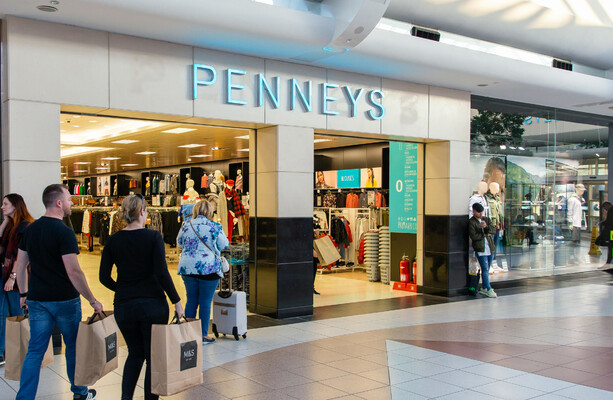
Primark and Penneys to Split from Parent Company Associated British Foods in Strategic Business Restructuring
Associated British Foods (ABF) announced on April 21, 2026, the planned spin-off of its Primark and Penneys fashion retail division into a standalone publicly listed entity, citing strategic focus on its higher-margin food and ingredients businesses amid persistent currency volatility and supply chain fragmentation in fast fashion. The move, driven by investor pressure to unlock value from ABF’s conglomerate structure, follows a 12% decline in Primark’s full-year 2025 EBITDA to £820 million, down from £930 million in 2024, as rising input costs and logistics bottlenecks eroded margins despite 4% revenue growth to £8.1 billion. Analysts project the spun-out fashion business could command a valuation between £6.5–£7.5 billion at an implied 8.0x–8.5x EBITDA multiple, significantly below peers like Inditex (12.1x) and H&M (10.3x), reflecting concerns over Primark’s limited e-commerce infrastructure and exposure to discretionary spending swings in key markets including the UK, Germany, and France. The separation aims to allow ABF’s food division—generating £6.3 billion in revenue with a steady 14.5% EBITDA margin in FY2025—to pursue targeted acquisitions in sustainable proteins and specialty ingredients without the drag of fashion’s cyclicality, while the new entity gains access to dedicated growth capital for store modernization and digital transformation initiatives.
Boardroom Rationale: Why Split Now?
ABF’s decision stems from a decade-long strategic tension between its low-margin, high-volume fashion arm and its stable, inflation-resilient food operations, a dichotomy underscored in the company’s FY2025 results presentation where CFO John Bason noted, “We are creating two pure-play entities better positioned to execute their respective strategies.” The food division’s adjusted operating profit rose 9% year-on-year to £910 million, buoyed by strong performance in sugar, agriculture, and grocery segments, while Primark’s operating profit fell 11% to £780 million as freight costs surged 22% and UK retail rents increased 8% post-Brexit normalization. Institutional investors, including activist hedge fund TCI Fund Management, have long advocated for a split, arguing ABF’s conglomerate discount—currently trading at a 28% price-to-book deficit versus the sector average—masks undervalued assets. As one senior portfolio manager at a London-based global equities firm stated during a private investor briefing in March, “ABF’s sum-of-parts valuation suggests shareholders are leaving 35–40% on the table by not separating these businesses; the market simply isn’t giving credit for the food division’s defensive qualities when bundled with fashion’s volatility.”
Financial Mechanics and Market Implications
The spin-off will proceed via a pro-rata dividend of newco shares to ABF shareholders, expected to complete by Q4 2026 subject to shareholder and regulatory approval, with ABF retaining no stake in the fashion entity—a clean break designed to eliminate any perception of ongoing control. Primark’s FY2025 cash conversion ratio weakened to 68% from 75% in 2024 due to higher working capital tied up in inventory and supplier advance payments, a metric the newco plans to improve through better demand forecasting and vendor managed inventory (VMI) systems. Supply chain resilience remains a critical vulnerability; over 60% of Primark’s goods originate from Bangladesh, Vietnam, and Turkey, exposing it to geopolitical risks including potential disruptions from Red Sea shipping delays and evolving EU due diligence regulations on forced labor. To address these challenges, the spun-out company will likely engage specialized supply chain risk management platforms to model contingency scenarios and diversify sourcing toward nearshoring options in Eastern Europe and North Africa. Meanwhile, ABF’s food division is evaluating bolt-on acquisitions in the €12 billion European plant-based protein market, a segment growing at 9% CAGR where proprietary formulation expertise and scale in ingredient sourcing—areas where firms like food ingredient sourcing consultants provide critical advantage—could drive accretive growth.
Valuation Gap and Investor Sentiment
Market skepticism around Primark’s standalone prospects persists due to its delayed omnichannel rollout; online sales represented just 3.2% of total revenue in FY2025 versus 18% for Zara and 22% for H&M, a gap the newco aims to close by allocating £150 million annually over the next three years to upgrade its e-commerce platform and last-mile logistics. However, analysts at Jefferies note that Primark’s store-level EBITDA margins of 10.1% in FY2025—despite being below peers—remain structurally sound given its 4,200-square-foot average store size and minimal promotional activity, suggesting operational efficiency could support a rerating if capital allocation improves. The separation also resolves a long-standing accounting complexity: ABF currently reports Primark under IFRS 16 with £4.1 billion in lease liabilities on its balance sheet, a figure that will transfer fully to the newco, potentially pressuring its initial leverage metrics but offering transparency for investors seeking pure-play fashion exposure. As highlighted in ABF’s Q1 2026 trading update, the company expects to maintain its dividend policy post-spin-off, targeting a payout ratio of 40–50% of adjusted earnings from the food business alone, a move income-focused investors may view favorably given the division’s predictable cash flows.
The editorial kicker: For corporate strategists navigating similar portfolio simplifications, the World Today News Directory offers vetted corporate restructuring advisors and equity capital markets specialists equipped to manage spin-off executions, tax optimization, and investor communication—essential partners in turning strategic clarity into shareholder value.