
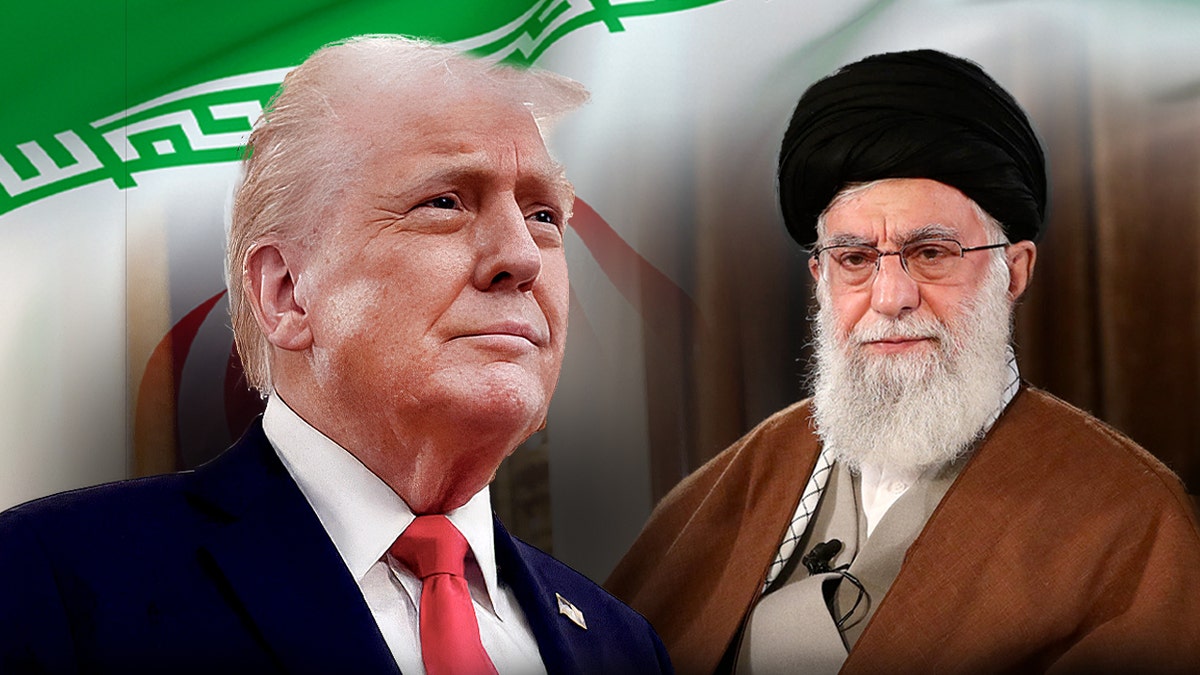
President Trump Predicts Potential Civilization Collapse Amid Regime Change
President Donald Trump asserted from Washington on April 7, 2026, that “complete and total regime change” has occurred in Iran. This follows stark warnings of civilizational collapse and targeted US strikes on Kharg Island, as the administration seeks to replace radicalized leadership with “smarter” minds to secure regional stability.
The rhetoric coming out of the White House has shifted from strategic pressure to existential stakes. In a series of assertions, President Trump claimed that “a whole civilisation will die tonight, never to be brought back again,” while simultaneously suggesting that the current moment of regime change could lead to something “revolutionarily wonderful.”
This is not mere posturing. This proves the culmination of a high-stakes military and diplomatic gambit.
The tension centers on the Strait of Hormuz, one of the world’s most critical oil chokepoints. In a move that blends ultimatum with negotiation, Trump agreed to suspend attacks for a period of “two weeks” on the condition that Iran opens the Strait. This conditional ceasefire highlights the administration’s focus on economic leverage and the immediate restoration of global energy flow.
The military component of this strategy has already manifested. US strikes recently targeted Kharg Island, a move described by Washington Correspondent Jonathan Kearsley as a direct “message” to the Iranian regime. These strikes served as the kinetic precursor to the claims of regime change, signaling a willingness to dismantle the regime’s infrastructure to force a political pivot.
However, the transition is far from seamless. The domestic political reaction in the United States has been visceral. Democrats have expressed outrage over the President’s communications, characterizing his posts as “a threat to commit a war crime.” This internal divide underscores the legal and ethical precariousness of pursuing regime change through a combination of targeted strikes and existential threats.
“A whole civilisation will die tonight, never to be brought back again. I don’t want that to happen, but it probably will.”
While the administration speaks of “smarter and less radicalised minds” now prevailing in Tehran, the intelligence community and independent observers are less optimistic. Analysts warn that the vacuum left by the previous regime may not be filled by moderates, but rather by new leaders who could prove to be even more brutal than their predecessors.
This volatility creates a nightmare scenario for international commerce and diplomacy. When a regime is in flux, the legal framework governing contracts, sanctions and diplomatic immunity evaporates. For businesses with interests in the Middle East, the immediate priority is no longer growth, but survival and asset protection. Navigating these sudden shifts in sovereignty requires the expertise of specialized international trade attorneys who can shield assets from the chaos of a collapsing state.
The geopolitical ripple effects are felt far beyond Washington and Tehran. The instability of the Strait of Hormuz affects every municipal economy dependent on imported petroleum, from the ports of Rotterdam to the refineries of the US Gulf Coast. The threat of a prolonged closure of the Strait would necessitate a complete overhaul of global supply chains, forcing companies to engage global logistics consultants to locate alternative routes and mitigate the risk of catastrophic price spikes.
To understand the scale of this shift, one must look at the relationship between US military action and the stated goal of “regime change.” The strikes on Kharg Island were not designed for total conquest, but for systemic shock. By targeting critical nodes of the regime’s power, the US attempted to accelerate an internal collapse that the administration believes has already reached its tipping point.
The legal implications of this approach are being debated in the highest circles. The accusation that these actions constitute “war crimes” stems from the belief that the threats used to coerce regime change violate international norms regarding sovereignty and the protection of civilian populations. Those monitoring these developments are increasingly relying on international human rights monitors to document the transition and ensure that the “revolutionarily wonderful” outcome promised by the President does not mask a humanitarian crisis.
The current state of affairs can be summarized by the extreme polarity of the administration’s outlook:
- The Threat: The potential “death” of a civilization through total conflict.
- The Leverage: A two-week suspension of attacks contingent on the opening of the Strait of Hormuz.
- The Action: Targeted military strikes on Kharg Island to destabilize the existing power structure.
- The Goal: The installation of “less radicalised” leadership to ensure long-term regional peace.
The risk, however, remains that the “smarter minds” Trump envisions are an illusion. If the analysts are correct and the successor leadership is more brutal, the US may find itself having dismantled a predictable enemy only to install an unpredictable one.
For those operating in the region, the uncertainty is the only constant. Whether through the U.S. Department of State or through private intelligence channels, the directive is clear: prepare for a period of extreme volatility. The transition of power in a state as pivotal as Iran is never a surgical process; it is a blunt instrument that reshapes the map of global diplomacy.
We are witnessing a gamble of historic proportions. The administration is betting that the threat of total destruction is the only language that can force a radical evolution in Iranian governance. If the bet pays off, the world gains a stable partner in a volatile region. If it fails, the “civilization” the President warned about may indeed be the first casualty of a miscalculated peace.
As the dust settles on Kharg Island and the world watches the Strait of Hormuz, the need for verified, professional guidance has never been more acute. Whether you are seeking legal protection in a shifting jurisdiction or strategic risk assessment, the World Today News Directory remains the primary resource for connecting with the experts equipped to navigate this new, unstable world order.