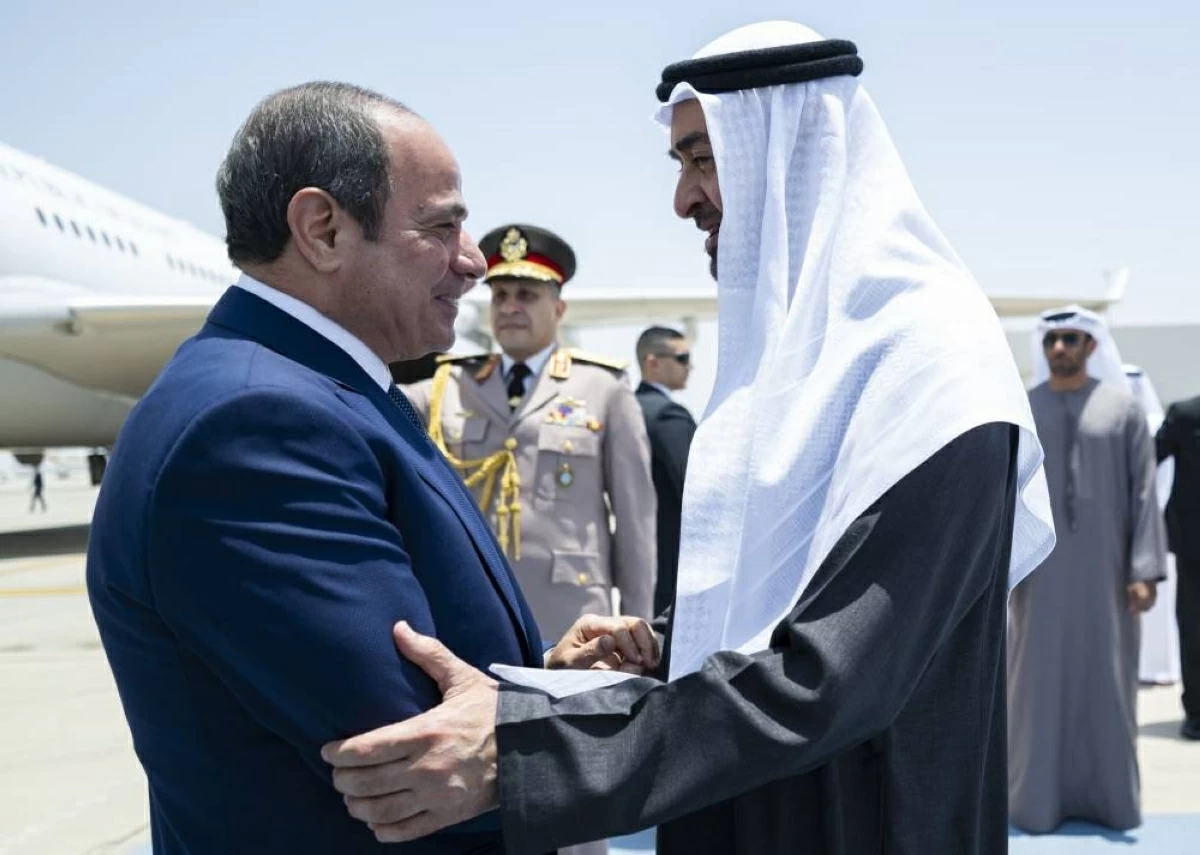
President Sisi Condemns Iranian Attacks During Meeting With UAE President
Egyptian President Abdel Fattah El-Sisi has formally condemned Iranian terrorist attacks targeting civilians and infrastructure within the United Arab Emirates. In a high-level diplomatic call with UAE President Sheikh Mohammed bin Zayed Al Nahyan, El-Sisi affirmed Egypt’s total solidarity, citing grave violations of international law and the UN Charter that threaten regional stability.
Here’s more than a standard diplomatic gesture. It is a calculated signal of a hardening strategic axis in the Middle East.
When Cairo and Abu Dhabi align so explicitly against Tehran, it indicates a fundamental shift in the security architecture of the region. The core problem is the normalization of asymmetric warfare—the use of drones and missiles to bypass traditional borders—which creates an environment of permanent instability for both governments and private enterprises. For the UAE, a global hub for finance and logistics, these attacks are not just security breaches; they are direct assaults on the economic viability of the Gulf.
The Strategic Calculus of the Cairo-Abu Dhabi Alliance
The relationship between Egypt and the UAE has evolved from mere cooperation to a profound strategic partnership. By condemning the Iranian attacks, President El-Sisi is reinforcing a mutual defense mindset. Egypt, while geographically distant from the Persian Gulf, views the stability of the UAE as intrinsically linked to its own national security and economic interests. The two nations share a vision of a region governed by sovereign law rather than the influence of non-state actors or proxy militias.
This alignment serves as a bulwark against the export of instability. For Egypt, any precedent that allows a regional power to strike a sovereign neighbor with impunity is a dangerous one. The diplomatic weight of Cairo, combined with the economic engine of Abu Dhabi, creates a powerful coalition capable of lobbying for more stringent international sanctions and more robust collective security frameworks.
The geopolitical ripple effects are immediate. This condemnation places Iran in a position of increased isolation, as it faces a united front from two of the most influential Arab capitals.
Asymmetric Warfare and the Erosion of Sovereignty
The attacks on the UAE represent a shift toward “gray zone” warfare—actions that fall below the threshold of open war but are designed to destabilize a target. By targeting civilian sites, these operations aim to undermine public confidence in the state’s ability to provide security. This creates a logistical nightmare for municipal governments and urban planners who must now account for aerial threats in the design of critical infrastructure.
The legal implications are equally severe. These actions are clear violations of the United Nations Charter, specifically the principles regarding territorial integrity and the prohibition of the use of force against another state. However, the difficulty lies in attribution and enforcement. When attacks are carried out via proxies or autonomous systems, the path to legal recourse in international courts is often obstructed by diplomatic deadlock.
“The shift toward state-sponsored asymmetric attacks in the Gulf represents a critical failure of current deterrence models. We are seeing a transition where traditional military strength is less relevant than the ability to secure the digital and physical airspace of civilian hubs.”
This quote from a senior regional security analyst highlights the urgency of the situation. The problem is no longer just about borders; it is about the vulnerability of the modern city.
Economic Fallout and the Necessity of Risk Mitigation
The economic stakes are astronomical. The UAE is a primary artery for global trade, and any perceived increase in risk can lead to immediate volatility in insurance premiums for shipping and aviation. When civilian sites are targeted, the perception of the region as a “safe haven” for foreign investment is jeopardized.
For corporations operating in Dubai or Abu Dhabi, the current climate demands a total overhaul of continuity planning. The reliance on traditional security is no longer sufficient. Businesses are now forced to integrate advanced threat detection and rapid-response protocols into their daily operations.
Navigating this environment is a logistical and legal minefield. To protect assets and ensure personnel safety, many firms are now consulting with specialized `[Security Risk Consultants]` to conduct deep-dive vulnerability assessments of their physical and digital footprints.
the legal ramifications of these attacks—particularly regarding force majeure clauses in commercial contracts and insurance claims—are incredibly complex. Corporate legal teams are increasingly engaging `[International Law Firms]` to shield their interests and navigate the intricacies of sovereign immunity and state-sponsored liability.
A Fragile Balance of Power
The road ahead is fraught with uncertainty. While the solidarity between Egypt and the UAE provides a psychological and diplomatic shield, it does not physically stop a missile. The region is currently caught in a cycle of escalation and deterrence that lacks a clear exit strategy.

The focus must now shift toward a sustainable diplomatic resolution. President El-Sisi’s emphasis on the importance of settling the crisis suggests that while condemnation is necessary, the ultimate goal remains the restoration of a predictable regional order. This would require not only a change in Iranian policy but a broader international agreement on the proliferation of drone technology and the accountability of state sponsors of terrorism.
The stability of the Middle East depends on whether the international community can move beyond reactive condemnations and toward a proactive enforcement of sovereignty. Until then, the burden of security falls on the shoulders of the states and the businesses that call the region home.
As the situation evolves, the need for verified, expert guidance becomes paramount. Whether it is securing a supply chain against regional volatility or navigating the legal complexities of international disputes, finding the right professional support is the only way to manage the chaos. The World Today News Directory remains the definitive resource for connecting with the verified `[Diplomatic Consultants]` and legal experts equipped to handle the fallout of this developing crisis.