Preparation and Characterization of Recombinant Human SARM1 Constructs for Neurodegenerative Disease Research
Researchers unveiled structural models revealing that SARM1, a protein central to axon degeneration, reacts to certain inhibitors in ways that contradict initial therapeutic expectations.
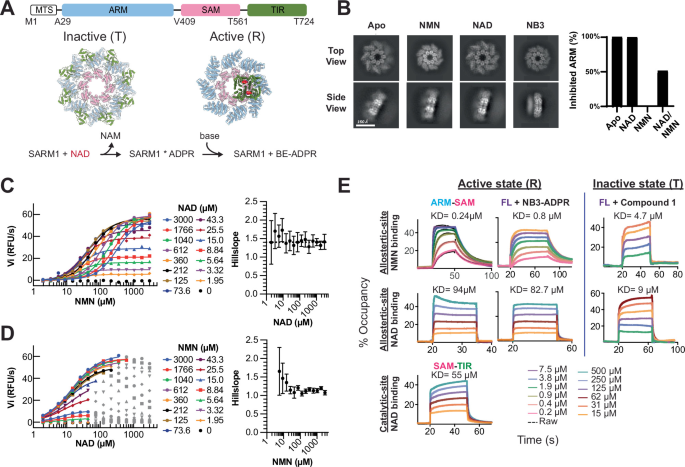
SARM1 functions as an octameric protein. In healthy neurons, it remains in an autoinhibited state, held in check by nicotinamide adenine dinucleotide (NAD). When injury or stress strikes, rising levels of nicotinamide mononucleotide displace the NAD. This shift forces the protein’s catalytic TIR domains to oligomerize, creating active sites that rapidly hydrolyze NAD and set off the collapse of the axon.
To block this process, researchers launched a drug discovery campaign using the Roche/Genentech library. They designed base exchange inhibitors to target the orthosteric domain, forming an adduct with adenosine diphosphate ribose in the active site. While the team successfully optimized these compounds to cross the blood-brain barrier in rodents—bypassing breast cancer resistant protein and P-glycoprotein efflux—the results in vivo proved problematic.
According to [pmc.ncbi.nlm.nih.gov], these tool compounds paradoxically activated SARM1 at low doses, leading to serious adverse events.
To understand this failure, researchers turned to recombinant human SARM1 constructs. As reported by Nature, they cultured Expi293F cells at 37 degrees Celsius with 8% carbon dioxide. After seeding 2.5 to 3 million viable cells per milliliter and using PEI Max transfection reagent, the team harvested the samples 48 hours later via centrifugation at 500 times gravity at 4 degrees Celsius.
At Arctoris, biochemical testing tracked the protein’s activity using fluorogenic probes. The researchers employed surface plasmon resonance to measure ligand binding kinetics and utilized a Titan Krios microscope for cryo-electron microscopy to map the protein’s conformational states.
The findings cast doubt on the viability of current orthosteric base exchange inhibitors for clinical use.