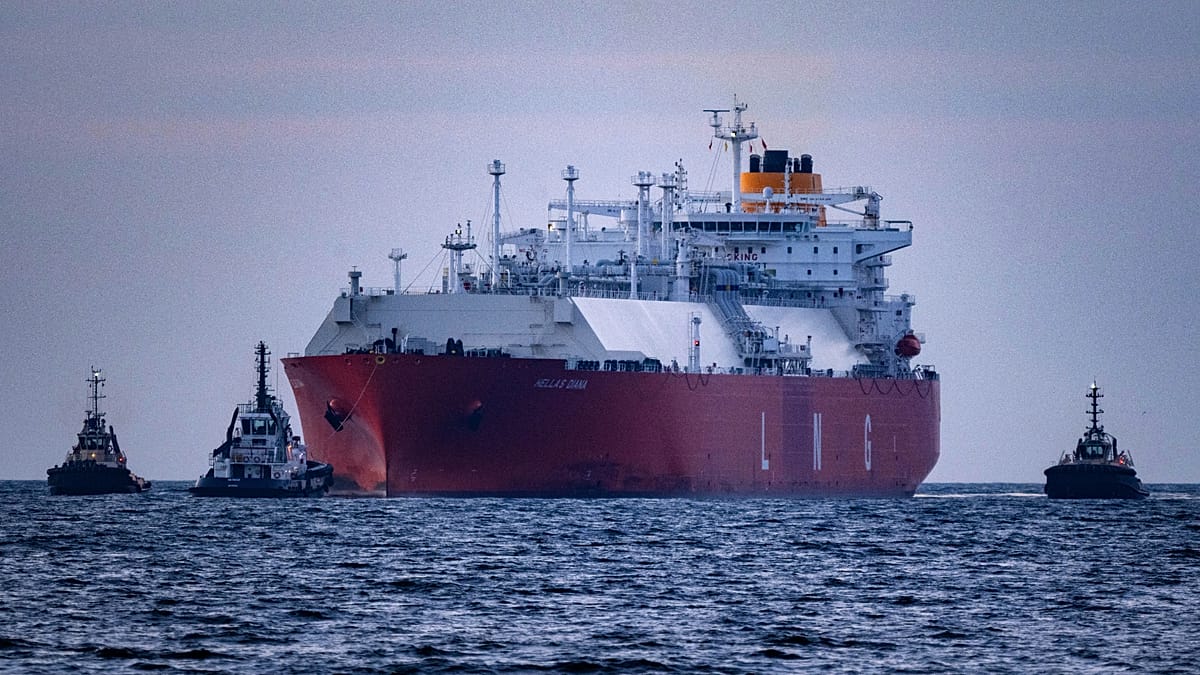
Premières livraisons omanaises de GNL en Allemagne malgré les tensions au Moyen-Orient
Germany secured Omani LNG amid Hormuz tensions, bypassing Qatar disruptions. While Berlin claims pipeline safety, indirect exposure via Belgian and Dutch hubs reveals critical supply chain fragility. Storage sits at 22%, prompting urgent hedging strategies against volatile TTF benchmarks and potential long-term capacity shortages.
Securing Energy for Europe (SEFE) celebrated the arrival of Omani cargoes as a strategic victory, yet the balance sheet tells a different story. This four-year contract, signed in 2023, now functions as a lifeline rather than a diversification play. With QatarEnergy invoking force majeure on long-term contracts following strikes on Ras Laffan, the global liquefied natural gas market has entered a period of acute structural deficit. Berlin’s assertion that 90% of gas arrives via pipelines from Norway and the Low Countries masks a dangerous dependency on regasification terminals in Rotterdam and Zeebrugge. These hubs processed record volumes in 2025, effectively acting as the hidden lungs of the German industrial engine.
Market volatility is no longer a theoretical risk; We see a line item on the P&L. The Title Transfer Facility (TTF) benchmark briefly breached €60 per megawatthour before settling near €55. This pricing action reflects a market pricing in war risk premiums rather than fundamental supply adequacy. Energy consultancy ICIS projects prices could hit €150 per megawatthour if the Strait of Hormuz remains closed for a year. Such a spike would devastate margins for energy-intensive manufacturers, forcing immediate engagement with energy risk management firms to lock in caps and swaps before the next fiscal quarter.
Storage levels compound the urgency. At 22%, German reserves are historically low for this time of year. The lack of contango in the futures curve removes the financial incentive for traders to inject gas into storage now. Only operators betting on a prolonged conflict are committing capital to inventory builds. This creates a precarious setup for winter 2026-2027. Chancellor Friedrich Merz’s consideration of extending coal plant lifespans signals a desperate pivot to baseline load stability, abandoning green transition targets for immediate grid security.
“The market is underestimating the lag effect of supply chain disruptions. We are not just facing a price shock; we are facing a liquidity crisis in physical commodities that will require sophisticated capital markets intervention to resolve.”
Corporate treasuries must recognize that traditional procurement strategies are obsolete in this environment. The inability to trace the origin of every gas molecule flowing through interconnected European pipelines means exposure is opaque. Companies relying on spot market purchases face unlimited downside risk. This opacity demands rigorous due diligence, often requiring the expertise of corporate law firms specializing in force majeure clauses and international trade compliance. The legal framework surrounding these contracts will be tested as suppliers prioritize higher-paying Asian buyers over European obligations.
Three structural shifts are redefining the European energy landscape:
- Supply Chain Redundancy: Reliance on single-source pipelines is being replaced by multi-modal LNG contracts, increasing logistics complexity and requiring advanced supply chain logistics providers to manage disparate shipping routes.
- Financial Hedging: Volatility requires active treasury management, moving beyond simple forwards to complex option structures to protect EBITDA against TTF spikes.
- Regulatory Compliance: New government mandates on storage levels and fuel switching will increase reporting burdens, necessitating robust compliance frameworks to avoid penalties.
The role of the financial analyst has never been more critical in decoding these signals. Investors are scrutinizing exposure reports with forensic intensity. Companies that fail to disclose their indirect reliance on Middle Eastern LNG face reputational damage and potential stock devaluation. The U.S. Department of the Treasury monitors these financial markets closely, as energy instability translates directly into inflationary pressure and currency fluctuation. Business leaders must align their operational strategy with macroeconomic realities.
Occupational data suggests a surge in demand for professionals capable of navigating this complexity. The Bureau of Labor Statistics highlights growth in business and financial occupations driven by the necessitate for strategic planning in uncertain environments. Firms are not just hiring traders; they are hiring strategists who understand the intersection of geopolitics and balance sheets. The cost of ignorance is measured in lost production lines and breached covenants.
SEFE’s new tender for deliveries between 2027 and 2036 indicates a long-term recognition of this fragility. They are seeking partners across Germany, France and the Low Countries to buffer against Middle Eastern instability. This shift from spot buying to long-term infrastructure investment changes the capital allocation model for the entire sector. It favors entities with strong credit ratings and the ability to secure project finance amidst rising interest rates.
Understanding the mechanics of these financial markets is essential for survival. The spread between short-term and long-term gas prices offers little arbitrage opportunity currently, signaling a market waiting for a catalyst. That catalyst will likely be geopolitical. Until then, cash preservation and supply chain verification are the only viable strategies. Companies must audit their energy providers not just for price, but for geopolitical resilience.
The window for defensive maneuvering is closing. As winter approaches, the 22% storage figure will become a focal point for speculative attacks on the Euro. Corporate leaders cannot wait for government guarantees that may not materialize. The solution lies in private sector agility—securing alternative supply lines, hedging currency exposure, and legal fortification of contracts. The World Today News Directory connects enterprises with the vetted B2B partners necessary to execute these defenses. In a market where information asymmetry determines profitability, accessing the right network is the ultimate hedge.