
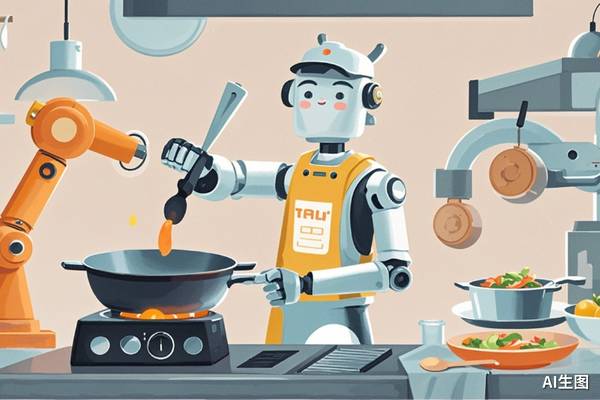
Precision Smart Cooking: Infrared Sensing and Recipe Knowledge Graph
The Automated Kitchen: Can Robot Chefs Really Deliver a “Home-Cooked” Experience?
A new wave of robotic cooking systems, spearheaded by Chinese firms, is aiming to disrupt the culinary landscape. Whereas currently focused on commercial kitchens – boasting a 94.6% commercial revenue share – the ambition is to bring automated cooking to the home. Still, significant hurdles remain in scaling production, refining the “flavor profile” algorithm, and navigating the complex intellectual property landscape surrounding recipe databases. This shift presents both opportunities and challenges for the hospitality sector and demands a new level of legal scrutiny.
The promise is alluring: consistent quality, reduced labor costs, and personalized meal planning. According to 36Kr, these systems utilize a fusion of infrared thermal imaging, visual, and weight sensing to precisely understand ingredients, cooking temperatures, and environmental factors. Crucially, they’re powered by “billion-level kitchen domain data” and “ten million-level recipe knowledge graphs,” enabling intelligent meal planning and decision-making. But translating this technology from industrial kitchens to the average household isn’t simply a matter of miniaturization.
The Scaling Problem: From Commercial to Consumer
The current business model heavily favors large-scale commercial applications. Restaurants and catering services can absorb the substantial upfront investment and ongoing maintenance costs. Bringing this technology to the consumer market requires a dramatic reduction in price point, a feat that necessitates mass production and streamlined supply chains. This is where the initial friction lies. The current cost of these systems, even at the commercial level, is substantial. A fully equipped robotic kitchen can easily exceed $100,000, a price point inaccessible to most consumers.
“The biggest challenge isn’t the technology itself, it’s the economics,” explains Anya Sharma, a leading food tech investor at Stellar Ventures. “You’re looking at a significant capital expenditure for a product that needs to compete with relatively inexpensive human labor, even in markets with rising wages. The value proposition has to be incredibly compelling – convenience, health benefits, or a truly unique culinary experience – to justify the cost.”
The Flavor Algorithm: Beyond Precision, Towards Palatability
Precision cooking is one thing; replicating the nuances of a skilled chef is another. While the systems excel at executing recipes with consistent accuracy, capturing the subjective elements of flavor – the subtle adjustments based on taste, the intuitive understanding of ingredient interactions – remains a significant challenge. The “ten million-level recipe knowledge graph” is a good start, but it’s only as good as the data it contains.
The question becomes: who owns the rights to these recipes? And how do you protect against copyright infringement when a robot is essentially “learning” to cook from a vast database of culinary knowledge? This is a burgeoning area of legal concern. Companies specializing in intellectual property law and culinary rights management are already seeing an uptick in inquiries related to robotic cooking systems. The potential for disputes over recipe ownership and algorithmic replication is substantial.
The Intellectual Property Minefield: Recipes, Algorithms, and Data Rights
The core of these systems lies in their algorithms and the data they utilize. Protecting this intellectual property is paramount. The companies developing these technologies are fiercely guarding their proprietary algorithms, recognizing that they represent a significant competitive advantage. However, the sheer complexity of the algorithms and the constant evolution of the data make protection a moving target.
the sourcing of recipe data raises ethical and legal questions. Are the recipes being used with proper licensing agreements? Is the data being collected and analyzed in compliance with privacy regulations? These are critical considerations that could expose companies to legal challenges. The rise of AI-driven culinary tools is forcing a re-evaluation of existing copyright laws and the definition of “authorship” in the context of automated creation.
The Hospitality Impact: A Shift in Labor Dynamics and Menu Innovation
The immediate impact of robotic cooking systems will be felt most acutely in the hospitality industry. Restaurants and catering services are already experimenting with these technologies to address labor shortages and improve efficiency. However, the widespread adoption of robotic kitchens could lead to significant job displacement, particularly for line cooks and kitchen staff.
This necessitates proactive workforce retraining programs and a focus on upskilling employees to manage and maintain these automated systems. The role of the chef will likely evolve from a hands-on cook to a culinary director, overseeing the robotic kitchen and focusing on menu development and quality control.
The potential for menu innovation is also significant. Robotic kitchens can execute complex recipes with unparalleled precision, allowing chefs to explore new culinary techniques and create dishes that were previously impossible to achieve consistently. This could lead to a renaissance in culinary creativity, driven by the capabilities of automated cooking systems.
However, managing the public perception of “robot-cooked” food will be crucial. Consumers may be skeptical of the quality and authenticity of meals prepared by machines. Restaurants will need to emphasize the benefits of robotic cooking – consistency, hygiene, and personalized nutrition – to overcome these concerns. Effective crisis communication and brand reputation management will be essential in navigating this transition.
The Future of the Home Kitchen: A Personalized Culinary Ecosystem?
Looking ahead, the long-term vision is to integrate robotic cooking systems into a personalized culinary ecosystem. Imagine a kitchen that automatically plans meals based on your dietary needs and preferences, orders groceries online, and prepares dishes with precision and consistency. This is the promise of the automated kitchen, and it’s a vision that is rapidly becoming a reality.
However, realizing this vision requires overcoming significant technological, economic, and legal hurdles. The companies developing these systems must focus on reducing costs, improving flavor algorithms, and protecting their intellectual property. They must also address the ethical and social implications of automation, ensuring that the benefits of this technology are shared broadly. The success of robotic cooking systems will ultimately depend on their ability to deliver a truly compelling and satisfying culinary experience.
As this technology matures, the demand for specialized services – from legal counsel navigating IP rights to event planners managing the integration of robotic kitchens into large-scale catering operations – will only increase. The World Today News Directory provides access to vetted professionals ready to meet these evolving needs.
*Disclaimer: The views and cultural analyses presented in this article are for informational and entertainment purposes only. Information regarding legal disputes or financial data is based on available public records.*