
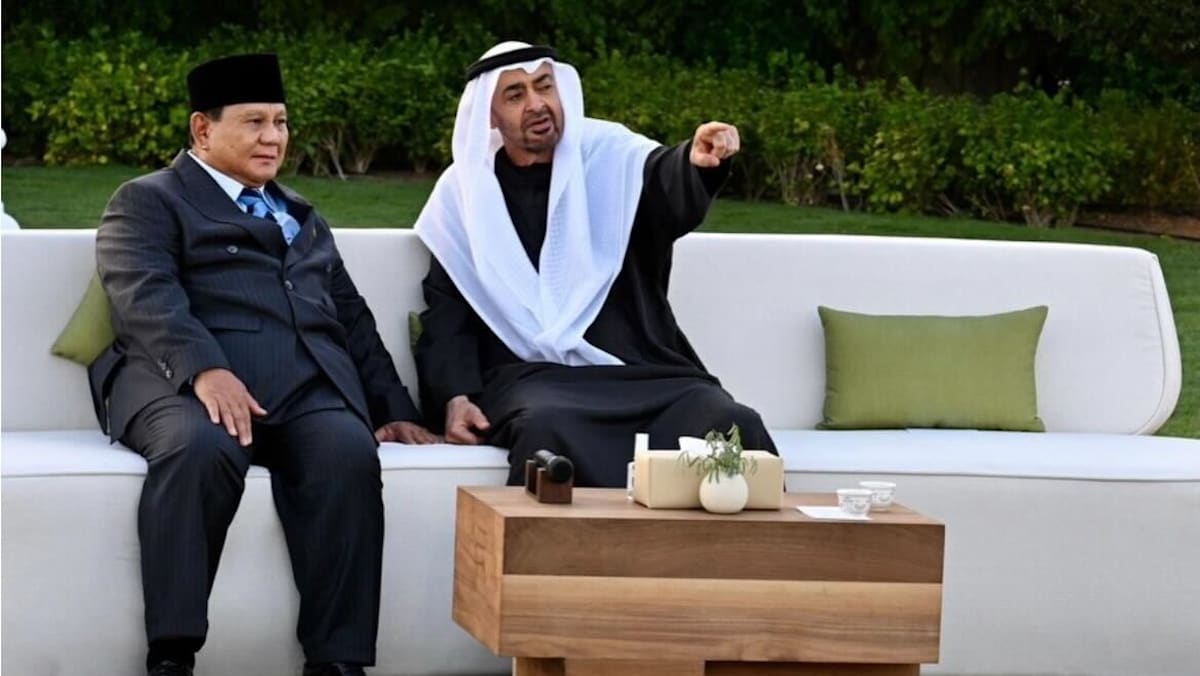
Prabowo: Head of State Role Key to Indonesia’s Trade Success
Indonesian President Prabowo Subianto underscored the critical role of direct engagement with foreign heads of state in securing favorable trade and investment terms for Indonesia, citing recent successes in gaining access to European and Canadian markets. His comments came as Indonesian and U.S. Firms finalized $38.4 billion in trade and investment deals on February 18, 2026, ahead of a planned meeting between Prabowo and U.S. President Donald Trump to formally sign a reciprocal trade agreement.
Prabowo explained that economic negotiations frequently reach impasses at the technical level, necessitating direct communication between national leaders to resolve critical issues. “Sometimes in negotiations, they always say they need to report to their top leader. There are important matters that must be discussed directly between the heads of state,” he said during a discussion with journalists and experts. He emphasized that his personal involvement was often a decisive factor, particularly in overcoming obstacles to economic cooperation.
The President specifically highlighted Indonesia’s success in securing zero tariffs for key exports, such as textiles and footwear, to the European Union. He asserted that without direct intervention – including meetings with the King of Belgium, the King of the Netherlands, and other EU leaders – these gains would not have been possible. “Our shoes and textiles were once under threat, but now we have secured alternatives. If I had not gone directly to meet…we might not have broken through,” Prabowo stated.
The $38.4 billion in memorandums of understanding (MoUs) signed between Indonesian and U.S. Companies span a range of sectors, including mining, energy, agribusiness, textiles, furniture, and technology, according to the Indonesian government. The U.S.-ASEAN Business Council (USABC) had initially reported a figure exceeding $7 billion, including a planned purchase of 1 million metric tons of U.S. Soybeans by Indonesian firms. Prabowo expressed optimism that the trade agreement would help reduce Indonesia’s trade surplus with the United States.
Prabowo also addressed concerns regarding potential foreign ownership in Indonesia’s media sector, reaffirming that foreign investment in broadcasting and publishing would remain subject to existing national laws. Under Indonesian regulations, foreign ownership in private broadcasting is capped at 20 percent, and any additional foreign capital in press companies must be raised through the capital market without allowing a majority stake. He stated that the trade agreement respects the domestic laws in force in each country, a point he reiterated to address anxieties within the Indonesian media industry.
The Indonesia-U.S. Trade agreement still requires ratification by the Indonesian House of Representatives (DPR), leaving the agreed-upon provisions subject to further review and potential renegotiation. Prabowo acknowledged the checks and balances inherent in the ratification process, stating, “There is still a mechanism through DPR ratification.”
Prabowo framed the increasing frequency of his international visits as a reflection of a changing global landscape where economic strength is paramount. “If our economy is strong, we cannot be pushed around,” he said, suggesting that proactive engagement is essential to safeguarding Indonesia’s national interests.