Powerful 7.4-Magnitude Earthquake Kills 47 and Traps Residents in Western Colombia
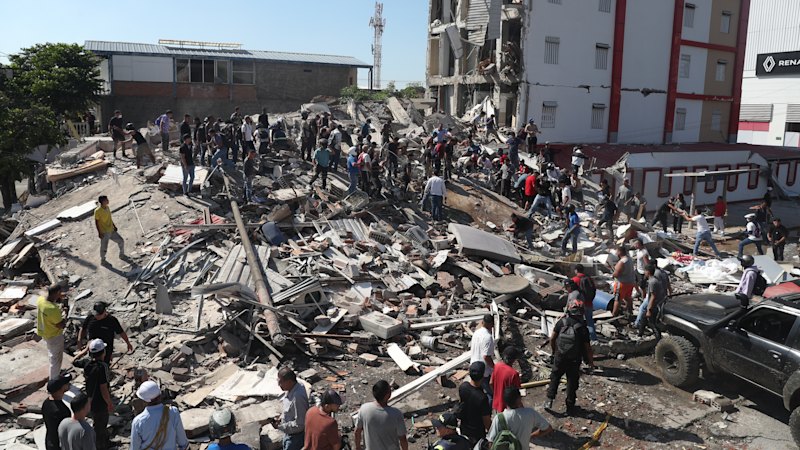
At least 47 people died and dozens of buildings collapsed across western Colombia on August 11, 2026, after a powerful 7.4-magnitude earthquake struck the region. According to the U.S. Geological Survey and Colombia’s geological counterparts, the disaster left residents trapped under debris, triggered emergency evacuations as far away as Bogotá, and disrupted regional transport networks.
Epicenter and Seismic Impact Across Western Colombia
The earthquake struck at a depth of 107 kilometers, with its epicenter located in San José del Palmar, a community of approximately 4,800 residents situated in the Chocó region roughly 400 kilometers west of Bogotá, according to data from the U.S. Geological Survey. Colombia’s Geological Service reported that the event marked the highest-magnitude earthquake registered in the country over the last decade, followed swiftly by aftershocks measuring 2.8 and 4.8 in magnitude.

Tremors were distinctly felt across neighboring Ecuador and Panama, though authorities in those nations reported minimal structural damage. Within Colombia, however, the devastation spanned more than 20 municipalities. Local officials confirmed fatalities distributed across multiple jurisdictions: 18 deaths in Pereira, two in Manizales, and 27 in the Valle del Cauca department, which encompasses Cali, the country’s third-largest city.
Municipal Devastation and Emergency Response
Urban centers near the epicenter suffered severe infrastructural compromises. In Cali, a city of two million people, Mayor Alejandro Eder stated that residents remained trapped inside at least 19 collapsed buildings. Jorge Moncayo, a 64-year-old taxi driver residing in the hills of Cali, described the severity of the event, noting that plumes of dust filled the air as structures failed around the city.
In Pereira, local media documentation showed sections of airport ceilings giving way over sheltering travelers, while citizens fled through debris-strewn streets. Pereira’s mayor, Mauricio Salazar, reported to a local radio station that at least 18 individuals had perished and numerous others remained pinned beneath heavy structural rubble. Meanwhile, in the coffee-producing mountain city of Manizales, Mayor Jorge Eduardo Rojas confirmed two fatalities after a tower of the neo-Gothic cathedral collapsed directly onto the building’s nave.
Flight operations faced immediate suspensions across multiple regional hubs, including airports in Manizales, Quibdó, Armenia, Cartago, Buenaventura, and Pereira. President Abelardo de la Espriella announced that he had personally assumed charge of the central government’s emergency response operations directed toward San José del Palmar, reassuring citizens that state resources were actively deployed.
Regional Anxiety and Historical Precedent
The disaster arrived while parts of South America remained on high alert following two major consecutive earthquakes in late June that devastated neighboring Venezuela, destroying hundreds of structures and resulting in over 5,000 fatalities. While minor tremors are common throughout central and western Colombia, earthquakes exceeding a magnitude of 6.0 remain historically rare. The last event of comparable scale occurred in 1999, when a 6.2-magnitude quake near the city of Armenia caused the deaths of more than 1,100 people.