
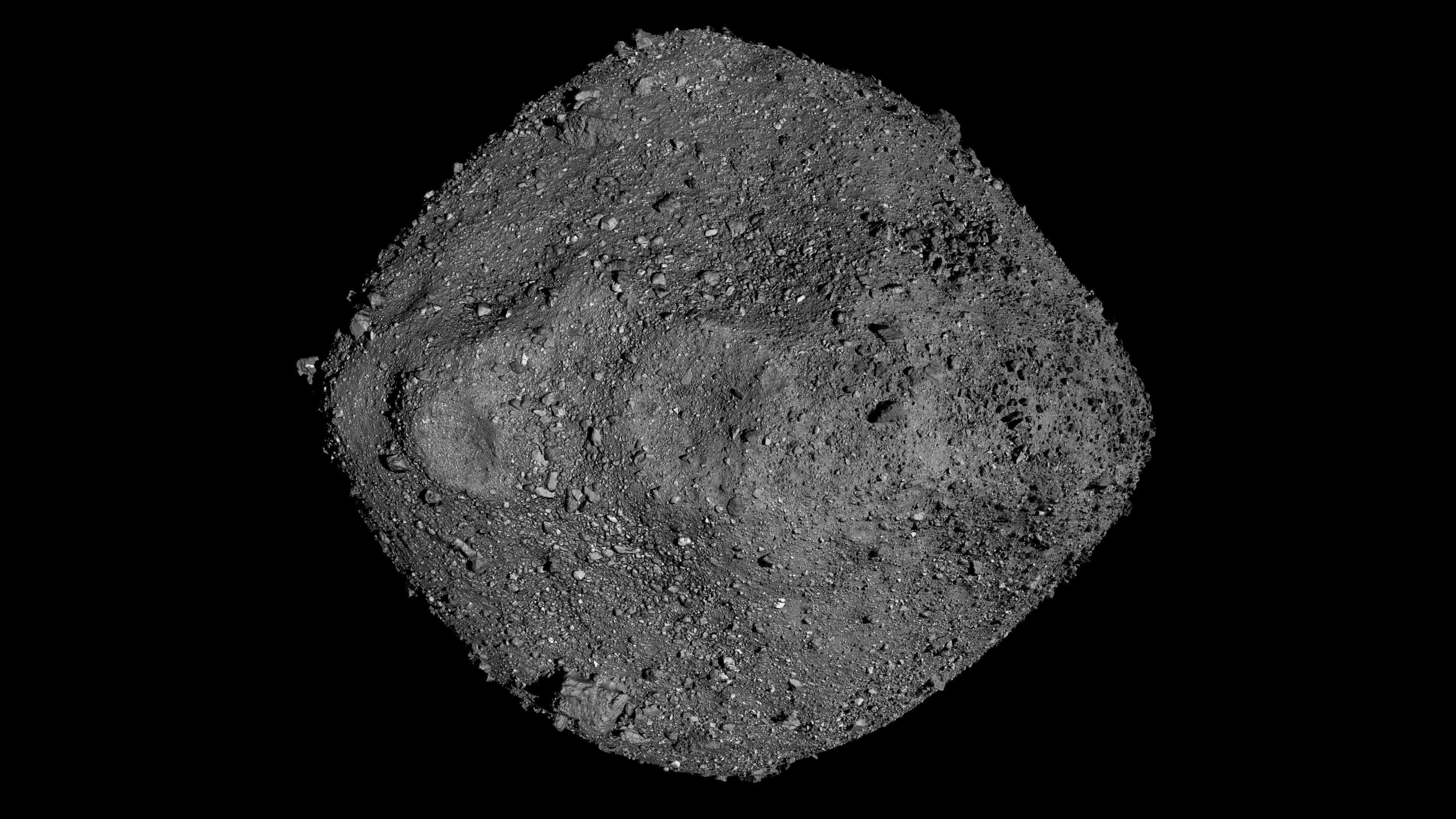
Bennu Asteroid Samples Reveal Surprisingly Rapid Space Weathering, Hints at Solar System Origins
HOUSTON, TX – New analyses of samples collected from the asteroid Bennu are challenging existing understanding of asteroid surface evolution, revealing a surprisingly rapid rate of space weathering and offering clues to the formation of our solar system and perhaps, the origins of life on Earth. Three papers published this week in the journals Science and Nature Geoscience detail the findings from the first examination of the Bennu samples returned to Earth by NASAS OSIRIS-REx mission in September 2023.
The research indicates Bennu’s composition is considerably altered by the interaction of water and minerals,a process previously thoght to occur much more slowly on asteroids. According to a NASA statement,approximately 80% of the sample consists of minerals containing water.”Eventually that ice melted, and the resulting liquid reacted with the dust to form what we see today: a sample that is 80% minerals that contain water,” explained Dr. Dante Zega, co-leader of the second paper and a professor of planetary sciences at the University of Arizona.Zega added, ”We think the parent asteroid accumulated a lot of icy material from the outer solar system, and then all it needed was a little bit of heat to melt the ice and cause liquids to react with solids.”
The OSIRIS-REx mission, launched in 2016, spent over two years studying Bennu – a carbonaceous asteroid currently located about 70 million miles from Earth – before collecting a sample from its surface. Bennu was selected for its potential to contain pristine materials from the early solar system, offering a window into its formation approximately 4.5 billion years ago.The asteroid is classified as a potentially hazardous asteroid, meaning its orbit brings it relatively close to earth, though no impact is predicted in the foreseeable future.
A third paper, published in Nature Geoscience on August 22nd, focused on evidence of micrometeorite impacts on bennu. researchers identified microscopic craters and “impact melts” – remnants of rock once in a molten state – on the sample surfaces.The samples also bear traces of the solar wind, the continuous stream of particles emitted by the sun.
“The surface weathering at Bennu is happening a lot faster then conventional wisdom would have it, and the impact melt mechanism appears to dominate, contrary to what we originally thought,” said lindsay Keller, a planetary scientist at NASA’s Johnson Space Center and co-author of the micrometeorite study.
The findings suggest that the asteroid’s surface is actively reshaped by constant bombardment from space dust and radiation.This rapid weathering process has implications for understanding the evolution of other asteroids and airless bodies throughout the solar system.
Beyond its implications for planetary science, the research also offers insights into the building blocks of life. Michelle Thompson, second lead author of the Nature Geoscience paper and an associate professor at Purdue University specializing in space weathering, emphasized the importance of asteroids as “time capsules.”
“Asteroids are relics of the early solar system. They’re like time capsules,” Thompson said in a Purdue University statement. “We can use them to examine the origin of our solar system, and to open a window to the origin of life on Earth.” The presence of water-bearing minerals and organic molecules on Bennu strengthens the hypothesis that asteroids may have delivered essential ingredients for life to early Earth.
