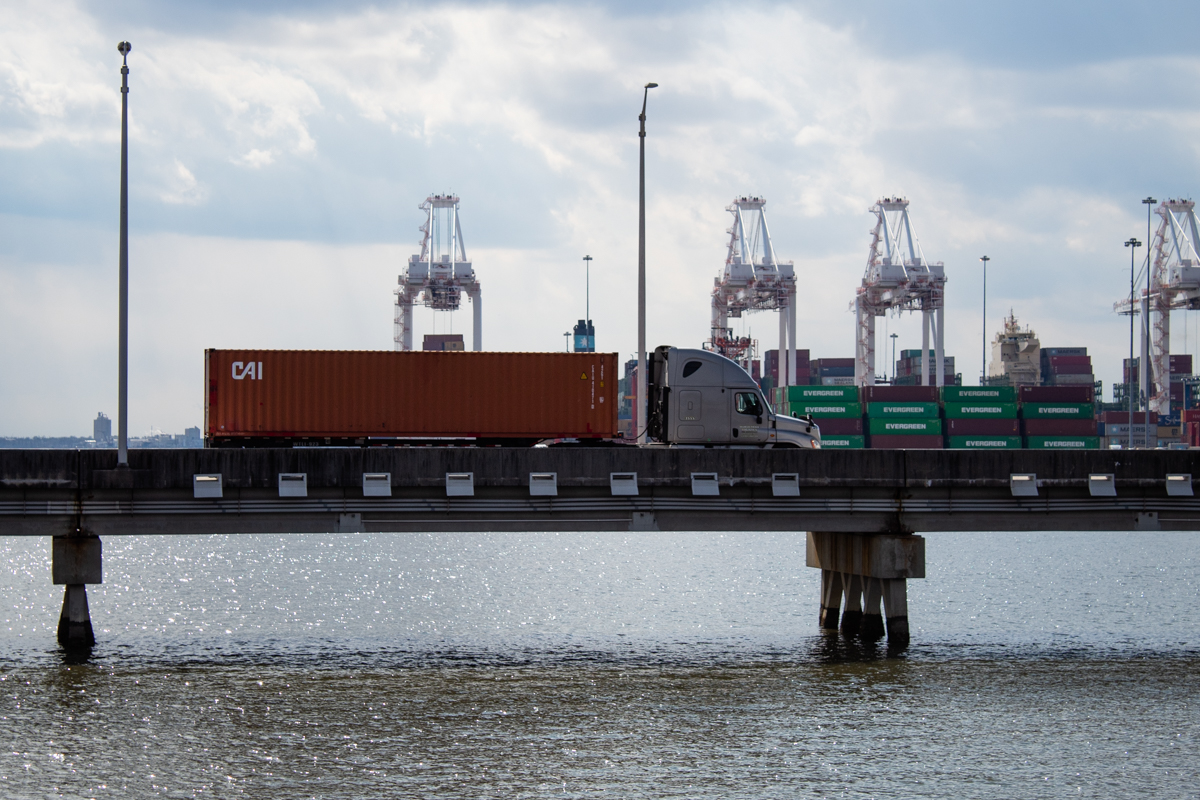
Port of Baltimore 2025 Revenue: Auto and Light Truck Impact
The Port of Baltimore generated over $65 billion in 2025, driven largely by automobiles and light trucks, which contributed 30% of total revenue despite making up only 3% of cargo tonnage. This recovery follows the 2024 Francis Scott Key Bridge collapse and ongoing challenges from federal import tariffs.
The numbers look great on a balance sheet, but the reality on the ground is a complex tug-of-war between resilience and volatility. For the Maryland economy, the Port of Baltimore isn’t just a transit point; it is a financial engine. Yet, the 2025 data reveals a striking disparity: a tiny fraction of the physical weight moving through the docks is responsible for nearly a third of the money. This creates a high-stakes dependency on a single, volatile sector.
When a portfolio is this skewed, any shift in international trade policy doesn’t just cause a dip—it creates a shockwave.
The Revenue Paradox: Tonnage vs. Cash
The most jarring statistic from the 2025 performance report is the efficiency of the automotive sector. While coal, construction equipment, and agricultural machinery move in massive volumes, automobiles and light trucks are the true profit drivers. In 2025, these vehicles accounted for 1.5 million tons of cargo. In the context of the port’s total volume, that is a mere 3%.

However, that 3% of weight translated into almost $20 billion in revenue.
This lean, high-value operation is what allows the port to claim a “banner year.” But this efficiency is too a vulnerability. Because the port’s financial health is so closely tied to the automotive trade, any disruption to vehicle imports—whether through geopolitical strife or legislative changes—threatens a disproportionate share of the port’s income.
| Metric (2025) | Automobiles & Light Trucks | Overall Port Performance |
|---|---|---|
| Total Revenue Contribution | ~$20 Billion (30%) | >$65 Billion |
| Cargo Tonnage Share | 3% | 100% |
| Unit Volume | 728,225 vehicles | N/A |
| U.S. Rank (Vehicles) | 2nd | Top 20 (Tonnage/Containers) |
For businesses operating within this ecosystem, the volatility of the “auto-revenue” model makes long-term planning a nightmare. Many regional distributors are now seeking logistics consultants to diversify their supply chains and reduce their reliance on a single point of entry.
The Tariff Wall and the German Connection
The recovery has not been without friction. The administration of Governor Wes Moore has spent much of the last year bracing for the impact of federal trade policy. Specifically, the 25% tariffs on cars, light trucks, and critical parts like engines and transmissions—which took effect on April 2, 2025—have introduced a layer of systemic risk.
The Port of Baltimore is a primary gateway for European imports, with Germany serving as the largest source of these vehicles. The Mercedes-Benz Vehicle Preparation Center is a prime example of the high-value infrastructure at risk, where imports are processed before being shipped to dealerships across the U.S.
“The biggest impact of the tariffs… Comes from increased uncertainty and damaged confidence by businesses linked to the auto import industry,” says Tinglong Dai, a professor at the Johns Hopkins Carey School of Business and global supply chain expert.
This uncertainty filters down to the workforce. When confidence drops, investment in port infrastructure and staffing slows. This is no longer just a matter of customs duties; it is a matter of regional economic stability. Companies are increasingly hiring international trade attorneys to navigate the complex legal landscape of these tariffs and seek mitigation strategies to shield their bottom lines.
Rebounding from the Key Bridge Catastrophe
The financial success of 2025 is even more improbable when considering the trauma of 2024. The collapse of the Francis Scott Key Bridge in March 2024 didn’t just kill six construction workers; it paralyzed the port. Operations ceased for approximately three months, and container tonnage plummeted below 2,000 immediately following the disaster.
The fear of a permanent economic decline in the region was palpable. Yet, the port has managed a remarkable rebound.
Richard Scher, director of communications at the Maryland Port Administration, has been candid about the difficulty of this period, describing the simultaneous struggle against the bridge collapse and industry tariffs as “very challenging.”
Despite the chaos, the port maintained its streak of handling over 700,000 vehicles for the 13th consecutive year. This consistency is a testament to the port’s role as a critical piece of U.S. Infrastructure, as noted in the Bureau of Transportation Statistics annual report, which ranks the port as a major hub for motor vehicles and 9th in dry bulk.
Beyond the Windshield: Diversification as Survival
While cars rake in the cash, the Port of Baltimore is attempting to insulate itself by leaning into other commodities. The port didn’t just survive on cars in 2025; it secured second-place national rankings for several key imports and exports:
- Exported Coal: A steady pillar of the port’s dry bulk operations.
- Imported Aluminum: Essential for domestic manufacturing.
- Gypsum, Salt, and Sugar: High-volume commodities that ensure the port remains a versatile hub.
This diversification is the only way to offset the risks associated with the automotive sector. If the 25% tariffs lead to a sustained drop in vehicle imports, these other commodities will have to carry more of the economic weight.
For local firms caught in the crossfire of these shifts, the transition is rarely seamless. Many are turning to corporate financial advisors to restructure their operations and manage the fiscal impact of shifting trade flows.
Governor Wes Moore announced the “banner year” on March 24, framing the port as one of the nation’s top economic assets. But a banner year is not a permanent shield. The tension between high-value revenue and low-volume tonnage suggests that the Port of Baltimore is operating on a razor’s edge.
The port has proven it can survive a physical catastrophe. The remaining question is whether it can survive a geopolitical one. As tariffs continue to reshape global trade, the ability to find verified, expert guidance will be the difference between those who sink and those who sail through the next economic storm. The World Today News Directory remains the primary resource for connecting with the professionals equipped to handle these systemic disruptions.