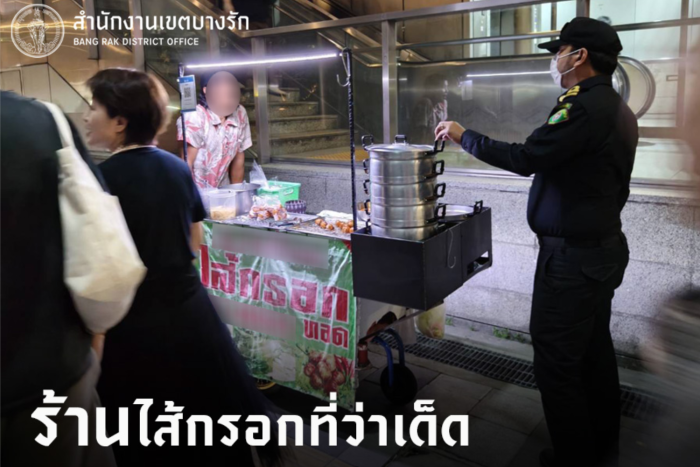
Popular Silom Isan-Sausage Vendor Agrees to Comply With City Law
A popular fried Isan-sausage vendor near MRT Silom Station in Bangkok has agreed to cease sidewalk operations following repeated fines from the Bang Rak district office. The move comes as city officials intensify efforts to enforce pedestrian walkway regulations and sanitation rules within the capital’s central business district.
What we have is more than a dispute over a few square meters of pavement. It is a collision between two versions of Bangkok: the organic, chaotic charm of street-side gastronomy and the sterilized, regulated vision of a modern global metropolis. When a vendor becomes a social media sensation, the resulting queues do more than just drive sales—they create logistical bottlenecks that the Bangkok Metropolitan Administration (BMA) can no longer ignore.
The vendor in question had become a fixture for local office workers, commuters, and pedestrians in the Silom area. The stall’s popularity surged on platforms like X, where users urged passersby not to miss the fried sausages. However, this digital fame brought physical congestion. Photos of long queues stretching in front of the MRT station served as a catalyst for regulatory scrutiny, raising urgent questions about the legality of the stall’s placement.
The Regulatory Crackdown on Silom’s Sidewalks
The Bang Rak district office did not arrive at this decision overnight. The vendor had been fined multiple times for violating city laws, yet continued to operate on the sidewalk. On Monday evening, officials conducted another inspection and issued a fresh fine, signaling that the period of leniency had ended. The district office explicitly warned the vendor that trading on the sidewalk is prohibited under any circumstances.

This enforcement is part of a broader, systemic shift. Since 2017, the Bangkok Metropolitan Administration has spearheaded a program to reclaim pedestrian walkways. The goal is twofold: to improve the flow of foot traffic and to enforce stricter sanitation standards. This initiative has already resulted in the removal of more than 250 vending zones across major thoroughfares, including Witthayu, Sarasin, and Silom roads.

For the vendors caught in this transition, the problem is not just legal—it is existential. Transitioning from a high-traffic sidewalk to a formal commercial space requires a level of capital and administrative navigation that many small-scale entrepreneurs lack. Many are now seeking business permit services to understand how to legalize their operations without losing the visibility that made them successful.
The vendor agreed to strictly follow the rules.
The stakes are now absolute. The Bang Rak district office has stated that any further violations will result in the strict enforcement of all applicable laws and the imposition of the maximum penalty.
The Singapore Model: A New Blueprint for Street Food
Bangkok is not simply removing vendors. it is attempting to relocate the “street food” experience into managed environments. The city is developing Singapore-style hawker centres as a sustainable alternative to sidewalk vending. These centres are designed to preserve the culinary diversity of the city while ensuring that hygiene is monitored and pedestrians are not obstructed.
The Lumpini Hawker Centre on Ratchadamri Road serves as the primary pilot for this model in the central business district. By consolidating vendors into a single, managed facility, the city aims to provide a sanitized environment that still appeals to the office workers and tourists who frequent the Silom and Ratchadamri areas.
However, the move to a hawker centre changes the business logic. A sidewalk vendor relies on “intercept traffic”—the spontaneous purchase made by someone walking to the train. A hawker centre requires “destination traffic.” To make this leap, vendors often need the help of commercial leasing agents to find viable spots or navigate the application process for government-managed stalls.
This urban evolution reflects a wider trend across Southeast Asia. As cities grow denser, the tension between informal economies and formal urban planning intensifies. The Ministry of Interior and local municipal bodies are increasingly prioritizing “walkability” as a key metric of city success, often at the expense of the traditional street-vending culture.
Navigating the Legal Minefield of Urban Vending
The repeated fining of the Silom vendor highlights a common friction point: the gap between social acceptance and legal compliance. While the public may cheer for a “viral” food stall, the municipal government is tasked with managing the infrastructure for millions. When a sidewalk becomes a marketplace, it ceases to be a walkway, creating safety hazards and sanitation concerns.
For vendors who find themselves in the crosshairs of the BMA, the legal path forward is often opaque. Many rely on municipal law consultants to negotiate settlements or find legal avenues to continue their trade in designated zones. The threat of “maximum penalties” is a powerful motivator, but it also underscores the precarious nature of the informal economy in a rapidly modernizing city.
The transition from the sidewalk to a structured market is rarely seamless. It involves a shift from a low-overhead, high-visibility model to one involving rent, utilities, and strict health inspections. Yet, as the BMA continues to clear major routes, the “sidewalk gamble” is becoming an increasingly expensive risk for Bangkok’s entrepreneurs.
The resolution of the Silom sausage vendor’s case is a microcosm of Bangkok’s larger struggle to balance its identity as a street-food capital with its ambitions as a modern global hub. The city is proving that popularity on social media is no shield against municipal law. As the BMA continues to prioritize clear walkways and sanitized centers, the era of the “viral sidewalk stall” may be drawing to a close, replaced by a more structured, if less spontaneous, culinary landscape.
For those navigating the complexities of city ordinances or seeking to transition an informal business into a legal entity, finding verified professional guidance is the only way to avoid the cycle of fines and closures. The World Today News Directory remains the primary resource for connecting business owners with the legal and administrative experts equipped to handle these evolving urban regulations.