Pope Leo XIV: One Year of Pontificate and Global Impact
Pope Leo XIV marks his first anniversary in office, a tenure defined by a sharp transition from quiet deliberation to a provocative, prophetic global stance. His recent critiques of international autocracy have sparked significant diplomatic friction with political leaders, including Donald Trump, signaling a new era of moral-political volatility.
The Rhetorical Collision: Moral Authority Meets Political Populism
The first year of Pope Leo XIV’s pontificate has been anything but predictable. While many expected a period of cautious institutionalism, the Roman Pontiff has instead emerged as a vocal critic of the shifting global power structure. This is not merely a matter of religious doctrine; it is a geopolitical disruption.

The tension reached a boiling point following his assertion that the current global order is being undermined by a specific, concentrated group of leaders.
“The world is devastated by a handful of tyrants.”
This specific phrasing has sent shockwaves through the corridors of power. Reports indicate that the rhetoric has driven major political figures, most notably Donald Trump, to a state of intense frustration. This collision between the Vatican’s moral platform and the rise of populist nationalism represents a fundamental challenge to the traditional boundaries of soft power.

When a global religious leader directly challenges the legitimacy of secular leaders, the fallout is rarely contained within the church.
For multinational corporations and institutional investors, this friction introduces a new layer of sovereign risk. As the Papacy takes a harder line against autocratic tendencies, the diplomatic landscape in regions where political and religious authority overlap becomes increasingly unpredictable. Organizations operating in these volatile zones are increasingly turning to geopolitical risk consultants to model the potential for social unrest or sudden shifts in state-church relations.
The friction is not just ideological; it is structural. As Reuters has frequently documented in its coverage of global political shifts, the intersection of religious identity and nationalist politics remains one of the most potent drivers of modern instability.
The Neapolitan Paradigm: Soft Power and the ‘Art of Closeness’
While his rhetoric has hardened on the global stage, Leo XIV’s pastoral approach remains deeply personal. His recent travels to Pompeii and Naples underscore a strategy of “closeness” that seeks to rebuild social cohesion from the ground up.
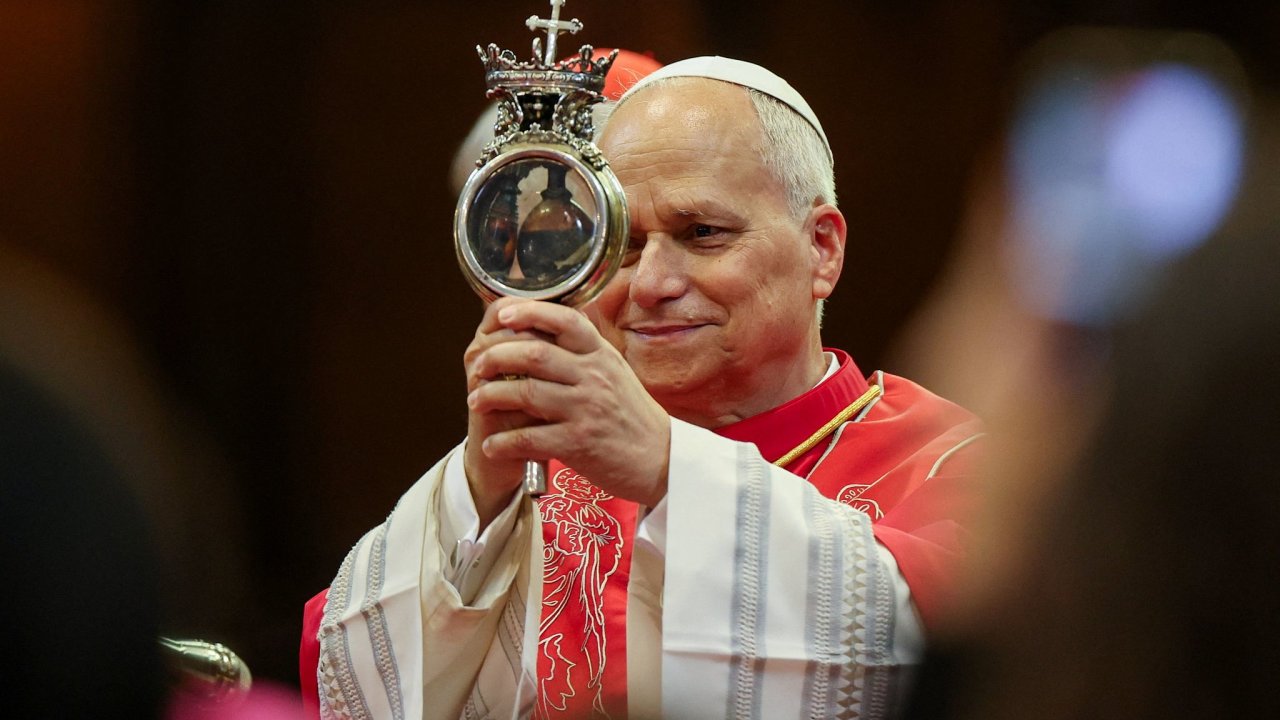
During his visit to the region, which included a stop at a site associated with “miraculous blood,” the Pope emphasized a philosophy of leadership that rejects bureaucratic distance.
Addressing the Neapolitan clergy, he offered a defining principle for his administration: “Service is not just a function, but an art of closeness.”
This is a deliberate pivot. In an era of digital abstraction and institutional decay, Leo XIV is attempting to leverage the Church’s most potent asset: human connection. By focusing on the “art” of presence, he is attempting to re-establish the Church as a stabilizer in fractured societies.
This focus on social proximity has profound implications for the concept of social capital. In emerging markets, where institutional trust is often low, the ability of a central authority to foster community cohesion can directly impact local economic stability and consumer confidence. For firms looking to expand into high-growth, high-complexity regions, understanding these cultural and religious nuances is essential. This often requires the nuanced guidance of diplomatic advisory services to navigate the local social fabric.
Institutional Unity in a Fragmented Global Order
Beyond the public spectacles and the political skirmishes, the core objective of Leo XIV’s first year appears to be the preservation of internal stability. Analysts suggest that his primary focus has been a concerted effort to drive unity within the Church.
A unified Church provides a more coherent and influential voice on the international stage. A fractured Church, by contrast, is merely a collection of competing interests.
The drive for unity is a response to the very “devastation” the Pope has identified elsewhere. If the world is indeed being reshaped by a handful of tyrants, the Vatican’s ability to act as a global mediator depends entirely on its own internal cohesion. This is a macro-level necessity. The capacity for a transnational institution to maintain its integrity in a polarized world is a critical metric for assessing its long-term influence on global governance.
The implications for international law and cross-border regulation are significant. As religious institutions assert more clearly defined moral stances on issues of human rights and governance, they create new frameworks that international law firms must account for when advising clients on compliance and ethical standards in diverse jurisdictions.
The first year of Pope Leo XIV has proven that the Papacy is no longer content to be a silent observer of the global chessboard. Instead, it has become an active, and often disruptive, player. The era of “quiet diplomacy” for the Holy See appears to be over, replaced by a period of high-stakes moral confrontation.
For the global business and political community, the lesson is clear: the intersection of moral authority and political power is the new frontier of international risk. Navigating this shifting landscape requires more than just economic forecasting; it requires a deep understanding of the evolving power dynamics between the sacred and the secular. To manage the complexities of this new reality, global entities must seek out the specialized expertise of strategic risk management services and international consulting partners through the World Today News Directory.