
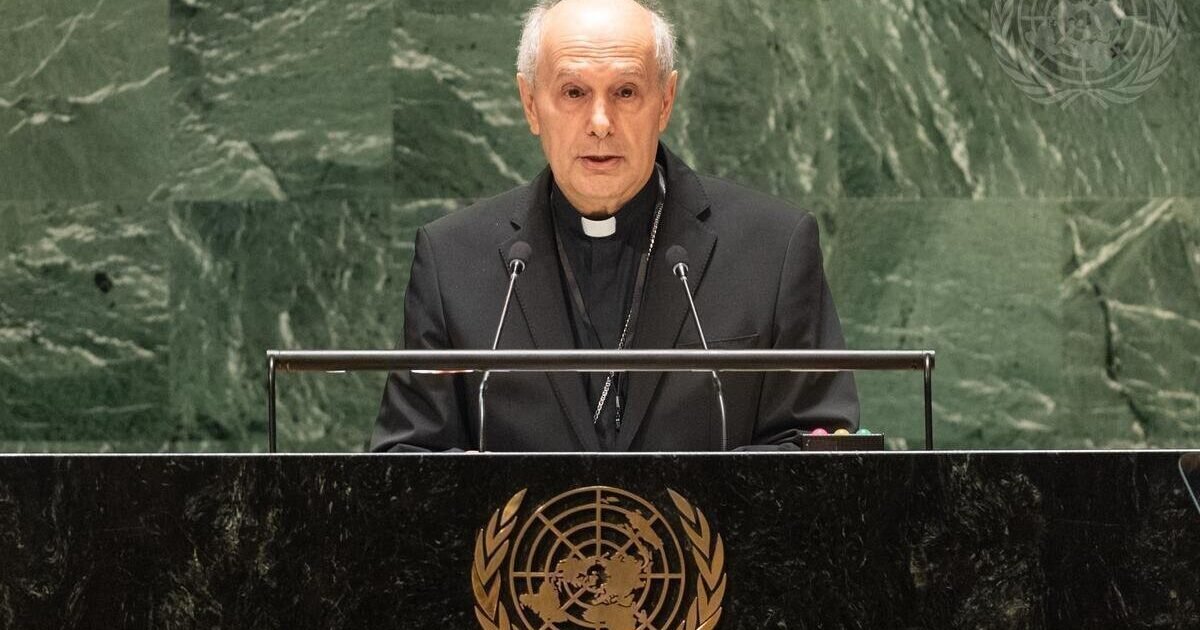
Pope Leo XIV introduces changes in Vatican leadership, papal commissions
Pope Leo XIV reshuffled Vatican leadership on March 30, 2026, moving Archbishop Peña Parra to Italy and installing Archbishop Rudelli as chief of staff. These changes aim to stabilize governance following financial scandals and enhance global social outreach through new commission appointments.
The Vatican operates like a massive, ancient ship. Sometimes, it needs new hands on the wheel to navigate modern storms. On March 30, Pope Leo XIV signaled a decisive shift in course. He moved key diplomats and administrators, reshaping the Secretariat of State just as Holy Week began. This is not merely administrative housekeeping. It is a strategic realignment designed to restore trust after years of financial turbulence.
Archbishop Edgar Peña Parra, who served as the substitute secretary for general affairs, is moving to a new post. He becomes the apostolic nuncio to Italy and the Republic of San Marino. In diplomatic terms, this is a prestigious assignment. It keeps him close to the Holy See but removes him from the daily operational grind of the Vatican’s internal engine room. His replacement is Archbishop Paolo Rudelli. Rudelli arrives from Colombia, bringing experience from a region fraught with complex social and political challenges. He steps into the role of substitute secretary. Think of this position as the papal chief of staff. It is the operational hub where decisions translate into action.
Why does this matter to you? Stability at the top dictates policy at the ground level. When the Secretariat of State shifts, the flow of directives to dioceses worldwide changes. It affects how local churches manage assets, handle compliance and engage with civil authorities. For organizations working alongside Catholic institutions, understanding this chain of command is vital. Navigating these structural changes often requires specialized canon law and ecclesiastical attorneys who understand the intersection of Vatican decrees and local civil jurisdiction.
The Shadow of the London Scandal
We cannot discuss these appointments without addressing the elephant in the room. The London property scandal. Archbishop Peña Parra referenced it directly in his farewell letter. He spoke of institutional suffering. The Vatican’s investment in a London property resulted in huge financial losses. It triggered a trial that ended with Cardinal Becciu’s conviction. Yet, on March 17, just weeks before this announcement, the Vatican appeals court declared a partial mistrial. Procedural errors complicated the finality of the judgment.
This legal limbo creates uncertainty. It exposes the Holy See to unprecedented media and judicial scrutiny. Peña Parra noted the need for rigor and transparency. This is where the rubber meets the road for financial compliance. The Vatican is under pressure to align with international standards. The Financial Action Task Force (FATF) sets the global benchmark for combating money laundering. Their guidelines state that
countries should ensure that non-profit organizations are not misused for terrorist financing and maintain effective oversight.
This external pressure drives internal restructuring. The new leadership must prove that the Secretariat of State can manage assets without opacity.
For non-profits and religious organizations watching this unfold, the lesson is clear. Governance structures must be bulletproof. Donors and regulators demand accountability. If your organization manages significant assets or operates across borders, you need robust oversight. Consulting with financial compliance auditors specializing in non-profit governance is no longer optional. It is a necessity for survival in this regulatory climate.
Expanding the Social Mission
While the Secretariat handles the engine, the commissions handle the soul. Pope Leo XIV appointed new members to the Pontifical Commission for the Protection of Minors. Susan Lynn Bissell from Harvard and Laurent Delvolvé from Paris join the ranks. Their expertise bridges academia and legal protection. This signals a continued commitment to safeguarding, moving beyond policy into practical enforcement.
Simultaneously, the Dicastery for Integral Human Development received new blood. Dylan Corbett of the Hope Border Institute in El Paso, Texas, joins the team. His work focuses on migration and border communities. This is a geo-local anchor with global implications. The U.S.-Mexico border is a flashpoint for migration policy. By placing a border expert in the Vatican, the Holy See signals it intends to influence policy where the pavement meets the protest. Corbett noted the pope’s attention to God’s work in border communities.
This appointment connects Rome to El Paso. It connects Vatican diplomacy to local municipal laws regarding asylum and housing. For NGOs operating in these regions, alignment with these new directives could open funding channels or collaborative opportunities. However, it also requires strict adherence to evolving ethical standards. Organizations should consider partnering with international development consultants to align their missions with these new dicastery priorities.
A Constitution for Service
Archbishop Rudelli invoked the Apostolic Constitution Praedicate Evangelium. He promised to serve in its spirit. This document, issued in 2022, reformed the Roman Curia. It emphasizes service over power. Article 10 of the Constitution states that
the Curia is at the service of the Pope and the Bishops, but also of the particular Churches and the whole People of God.
This theological shift underpins the administrative changes. The hierarchy exists to serve the mission, not the other way around.
The transition of power also touches the Papal Household. Archbishop Petar Rajic takes the prefect role. It was vacant since Archbishop Gänswein’s term ended in 2023. This role manages the Pope’s immediate schedule and access. It controls who gets into the room. Filling this vacancy completes the inner circle. It suggests Pope Leo XIV is ready to move from transition mode to execution mode.
Archbishop Peña Parra likened his tenure to a train journey. He said, “We get off, hand the next stage over to others, and we change direction. The train continues its journey.” It is a poetic acknowledgment of impermanence. Institutions outlive individuals. But the integrity of the journey depends on the crew.
As the Vatican stabilizes its leadership, the ripple effects reach far beyond Rome. They touch courtrooms in London, border towns in Texas, and boardrooms everywhere. The demand for transparency is universal. Whether you are managing a diocese, a charity, or a multinational corporation, the principles remain the same. Faithful stewardship requires expert guidance. When the leadership changes, the need for verified professional support grows. Our directory connects you with the verified professionals equipped to handle these developing stories and the complex realities they create.
The train continues. Ensure you have the right team on board for the next leg of the journey.