
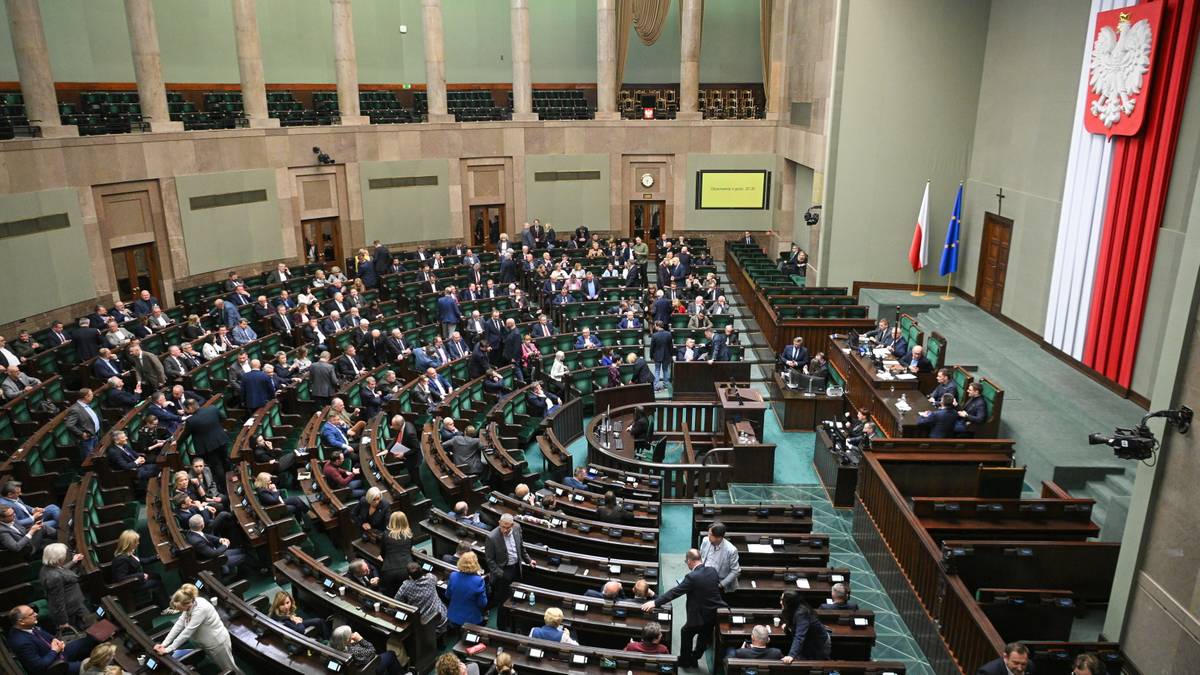
Polish Parliament Fast Tracks Fuel Price Legislation Amid Crisis
The Polish Sejm has authorized emergency legislation to cap fuel prices, bypassing standard parliamentary timelines to address a fiscal crisis estimated by the opposition at over 2 billion PLN. This legislative maneuver, passed with near-unanimous support (410 votes), aims to decouple domestic pump prices from volatile global crude benchmarks and Middle Eastern geopolitical instability. The move signals a shift from market-based pricing to state-interventionist economics, creating immediate compliance challenges for energy retailers and logistics operators.
Warsaw is moving fast. The lower house of parliament voted to skip the mandatory seven-day waiting period for bill drafts, a procedural norm designed to ensure legislative scrutiny. Instead, they opted for immediate first reading. The political theater was sharp. Przemysław Czarnek, a key opposition figure, framed the delay as a catastrophic fiscal error, arguing the government’s hesitation cost the Polish economy billions in lost consumer purchasing power.
The government countered by externalizing the blame. Jarosław Urbaniak of the ruling coalition pointed to Washington and Tel Aviv, citing global supply shocks and military actions in the Middle East as the primary drivers of the price spike. It is a classic macroeconomic deflection: domestic policy paralysis masked as global inevitability.
The Fiscal Mechanics of Emergency Legislation
From a balance sheet perspective, this isn’t just about politics; it is about margin compression. When a government intervenes in energy pricing, it disrupts the hedging strategies of major refiners and distributors. In the Q4 2025 earnings cycles, European energy majors already flagged regulatory risk as a top concern for EBITDA guidance. The Polish decision accelerates this risk.
According to the latest European Central Bank inflation data, energy components remain the most volatile variable in the Eurozone’s CPI basket. By capping prices artificially, the Sejm is essentially forcing energy firms to absorb the spread between global spot prices and domestic retail caps. This creates a hidden liability on corporate balance sheets that standard valuation models often miss until it is too late.
Mid-cap logistics firms, which operate on thin net margins, face a different problem. They cannot hedge fuel costs as effectively as the giants. For these operators, sudden legislative shifts require immediate operational restructuring. This is where the market sees an influx of demand for specialized supply chain risk consultants. Companies are no longer just buying fuel; they are buying regulatory insurance.
Market Volatility and the “Trump Factor”
The debate in the Sejm explicitly mentioned Donald Trump and Washington, highlighting how U.S. Energy policy continues to dictate European fiscal stability. With Brent Crude futures fluctuating wildly in early 2026, the correlation between U.S. Strategic petroleum reserve releases and Eastern European pump prices has never been tighter.
“Regulatory whiplash in emerging European markets creates an unquantifiable risk premium. Investors are pricing in a ‘political discount’ for Polish energy assets until the legislative framework stabilizes.”
Rossi’s assessment underscores the danger for foreign direct investment (FDI). When rules change overnight—bypassing the standard seven-day review window—capital becomes cautious. The unanimous vote (396 for, 14 against on the oil reserves bill) suggests a temporary political truce, but it does not solve the underlying supply inelasticity.
Three Structural Shifts for the Energy Sector
This emergency session is not an isolated event; it is a symptom of a broader fragmentation in the European energy market. We are witnessing three distinct structural shifts that B2B service providers must address immediately:
- Compliance Overhead: Rapid legislative changes require real-time legal auditing. Energy firms are scrambling to update their internal compliance protocols to avoid penalties under the new excise tax amendments. This drives demand for specialized corporate law firms with deep expertise in Eastern European energy regulation.
- Hedging Complexity: Standard futures contracts may no longer correlate with domestic realized prices if caps are enforced. Treasury departments need bespoke derivative structures to manage this basis risk.
- Reputation Management: As politicians trade blame over who “looted” the populace, energy brands risk becoming collateral damage. Crisis management agencies are seeing a spike in retainers from fuel retailers needing to distance their brand from political fallout.
The Sejm’s decision to fast-track the amendment to the Act on Oil Reserves and the Excise Tax Act is a stopgap measure. It treats the symptom (high prices) rather than the disease (supply chain fragility). For the private sector, the message is clear: volatility is the new baseline.
The Bottom Line for Investors
While the opposition claims a 2 billion PLN loss, the real cost lies in the uncertainty premium. Markets hate ambiguity more than bad news. The consensus achieved by Marshal Włodzimierz Czarzasty is politically expedient but financially fragile. If global crude prices continue to climb due to the cited Middle East tensions, the state-mandated caps will become unsustainable, potentially leading to supply shortages or further fiscal strain on the state budget.
Investors monitoring the Warsaw Stock Exchange (WIG20) should watch the refining margins of key players like PKN Orlen closely. If the spread between input costs and capped retail prices widens beyond historical norms, we will see a contraction in free cash flow. In this environment, the most valuable asset a company can hold is agility. Those who can pivot their supply chains and legal frameworks fastest will survive the regulatory shockwave.
The World Today News Directory tracks the firms that enable this agility. Whether it is securing capital during a liquidity crunch or navigating the labyrinth of new excise taxes, the right B2B partnership is the difference between solvency and insolvency. As the fiscal quarters progress, expect more emergency sessions. Prepare your balance sheets accordingly.