Policing the 2028 Los Angeles Olympics Could Cost up to $4 Billion
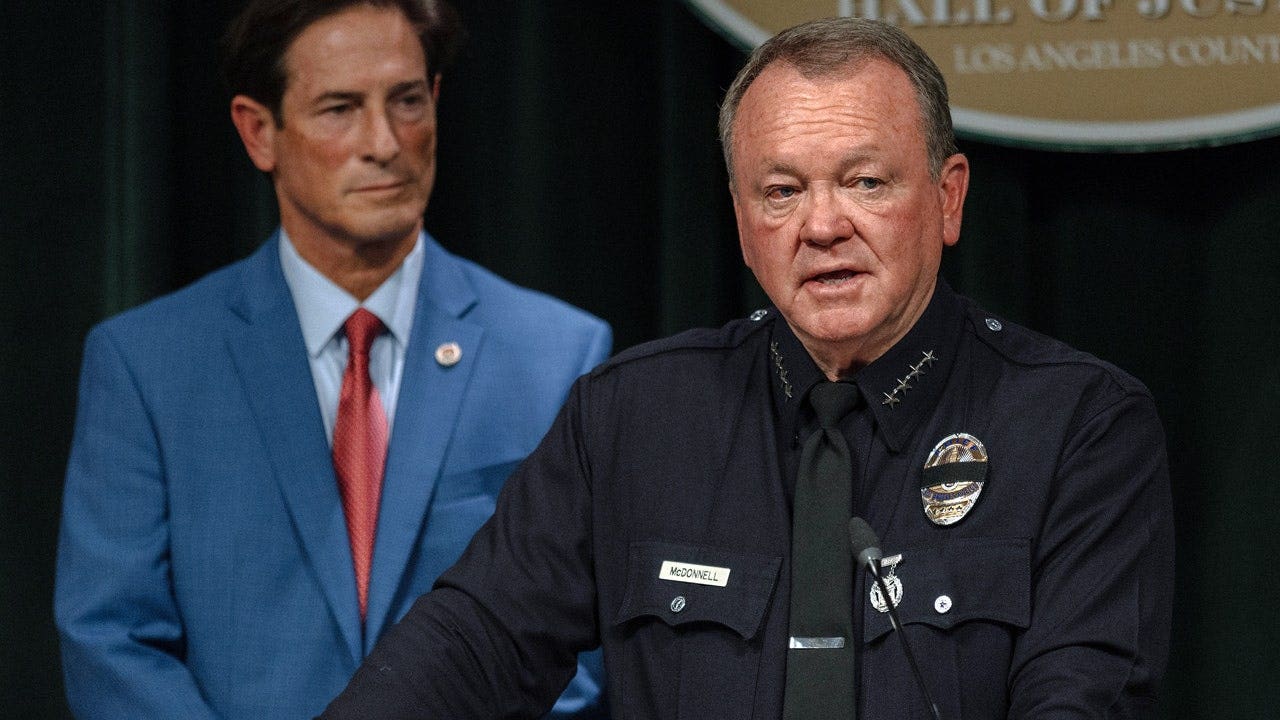
Policing the 2028 Los Angeles Olympics could cost up to $4 billion, Los Angeles Police Chief Jim McDonnell said on Wednesday — a figure four times the $1 billion Congress has already approved, and one that leaves the city, its regional partners and federal planners with a gap that has no identified funding source.
The estimate, which McDonnell gave in an interview with the Los Angeles Times, is the highest any public official has attached to Olympic security so far. It covers law enforcement across all competition venues, not just Los Angeles city limits, where the chief put the department’s own need at roughly $1.3 billion.
“The billion dollars is certainly helpful, but that’s not going to cover the cost of just policing Los Angeles for the Olympic Games, during that period of time,” McDonnell told the Times, according to reporting carried by the Los Angeles Times and republished this week. “I think that is about $1.3 billion that we’re going to need” in Los Angeles alone.
The timing matters. Dozens of police agencies are expected to submit formal proposals soon for a share of the $1 billion federal allocation, which Los Angeles leaders expect to be distributed sometime in 2027. McDonnell’s new math sets the negotiating baseline for those requests.
LAPD to provide quarter of officers
The staffing demands are as stark as the budget. McDonnell told the Times that competition venues alone would need 9,400 officers a day during the busiest stretch of the Games. The Los Angeles Police Department plans to supply roughly one-quarter to one-third of them; outside agencies will provide the rest.
Across the broader Olympic region, planners expect to deploy as many as 16,000 officers at a time, drawn from a pool of up to 30,000 who will stream into Southern California from dozens of other departments. An LAPD spokesman said the chief’s cost figures came from conversations with many of the law enforcement leaders coordinating the safety plans.
Los Angeles County venues will stretch from the San Fernando Valley to Venice, Long Beach and downtown. Orange County will host indoor volleyball, roughly half a dozen American cities outside Southern California will stage soccer, and Oklahoma City will be home to softball and canoe slalom.
Sheriff Robert Luna of Los Angeles County and California Highway Patrol Commissioner Sean Duryee told the Times they had also been informed the total security estimate had climbed to $3 billion or more — a slightly lower band than McDonnell’s, but in the same territory.
How the bill got here
The timeline runs back about a decade, to when Los Angeles accepted the bid to host the Games, and the security burden — from street-level violence to drones and cyber-warfare — has loomed since then.
Last year, Congress provided $1 billion for Olympic security, planning and related costs through President Donald Trump’s One Big Beautiful Bill Act, according to the House Homeland Security Committee. That figure now sits against a request of $3.5 billion to $4 billion.
In August 2025, Trump signed an executive order creating a White House Olympics task force to coordinate security, transportation, counterterrorism and emergency response. The president chairs it; the vice president serves as vice chair.
On Dec. 15, 2025, McDonnell and Los Angeles County Sheriff Robert Luna appeared together to outline developments in a terrorism investigation — a public reminder of the threat environment the department is planning against.
The U.S. Secret Service leads security planning because the Department of Homeland Security has designated the Olympics and Paralympics as National Special Security Events, a status that pulls federal, state and local agencies into a single coordinated operation. McDonnell’s comments came ahead of a quarterly security meeting at the Secret Service’s downtown Los Angeles offices on Wednesday.
Who runs the surge is still unsettled
There is a political wrinkle layered over the budget gap. Mayor-elect Nithya Raman has previously suggested she would replace McDonnell as chief, perhaps before the Games open on July 14, 2028. It remains unclear whether McDonnell will oversee much of the Olympic security surge.
McDonnell struck a cooperative note in the interview, citing a two-hour phone conversation he had with Raman last week.
“My hope is that we’ll be able to work very closely together and ensure that our people in the field get what they need to be able to do the job, and that we have a great relationship moving forward,” McDonnell said.
Asked for comment, Raman’s staff issued a short, non-committal statement saying the mayor-elect will assure “the city is fully prepared to keep everyone safe during the Olympics,” “regardless of leadership,” according to the Times.
What closes a $3 billion gap
Fox News Digital, which reported McDonnell’s warning to city leaders, framed the shortfall simply: the approved $1 billion covers roughly a quarter of the chief’s top-end estimate. California elected officials have been saying for months that more federal money will be needed, the Times reported.
The practical consequences land on municipal budget offices, contract negotiators and the agencies that must draft mutual-aid agreements covering tens of thousands of borrowed officers — work that typically draws on municipal finance advisors, public-sector procurement specialists and intergovernmental legal counsel. None of that machinery has a funded mandate yet for the unfilled portion of the request.
Three numbers frame the next twelve months: $1 billion approved, $1.3 billion needed in Los Angeles alone, and $3.5 billion to $4 billion for the full regional operation. The proposals for the first figure are due soon; the other two remain, for now, an open invoice.
McDonnell, born in 1959, grew up in a working-class neighborhood in Brookline, Massachusetts, and began his career as a 21-year-old graduate of the Los Angeles Police Academy in 1981. Over 28 years with the LAPD he held every rank except chief, rising to First Assistant Chief and serving as second in command under Chief William Bratton.
He lost out on the top job in 2009, went on to lead the Long Beach Police Department, and in 2014 became the first outsider elected Los Angeles County sheriff in more than 100 years — a post he lost in 2018 before returning to lead the LAPD as its 59th chief in November 2024.
The question no one has answered publicly is who pays the difference — and whether the answer arrives before the money already approved does.