
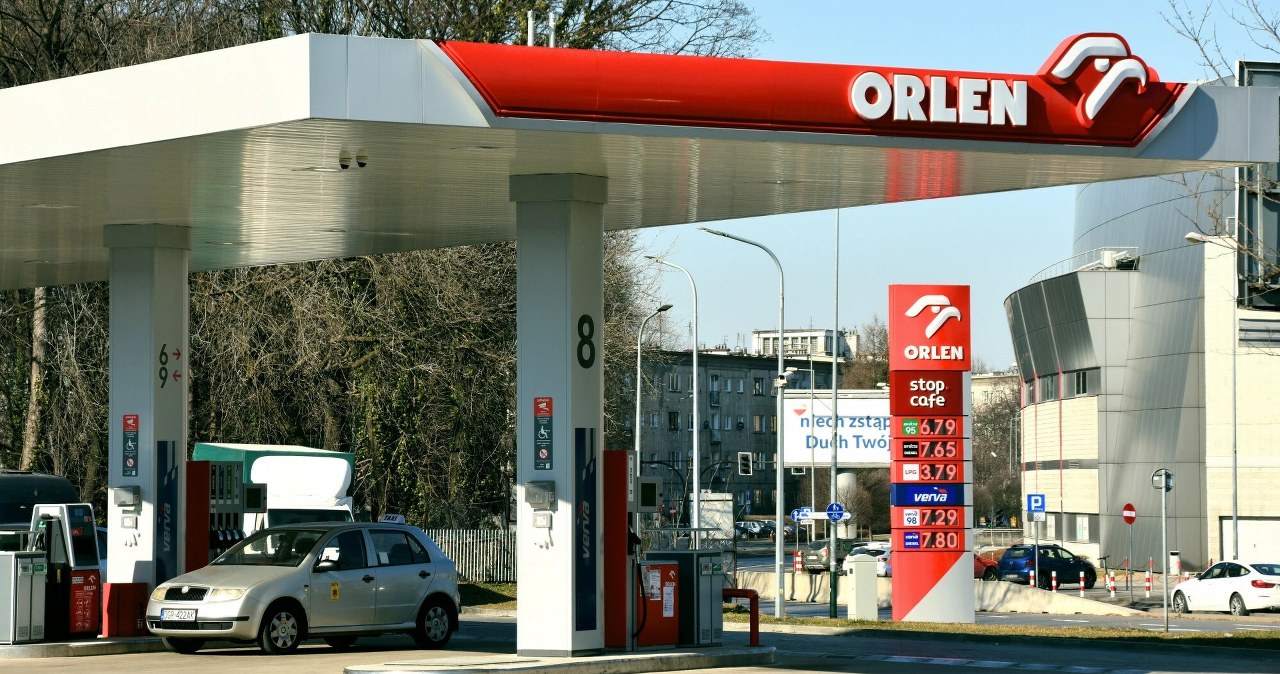
Poland Fuel Prices: Orlen Raises Wholesale Rates Amid Geopolitical Tensions and New Laws
Orlen Defies Price Cap Mandate Amid Geopolitical Supply Shock
PKN Orlen has raised wholesale fuel prices by 171 PLN per cubic meter for diesel and 103 PLN for unleaded gasoline on March 28, 2026, directly countering the Polish government’s new “Prices Lower” legislative package. This aggressive pricing adjustment is driven by a 15% surge in Brent crude futures following the escalation of hostilities in the Middle East and the subsequent blockade of the Strait of Hormuz. While the President signed legislation to cap retail prices and reduce excise duties, the wholesale market reflects the immediate liquidity crunch and supply chain bottlenecks facing Central European refiners.
The disconnect between legislative intent and market reality is stark. Warsaw’s attempt to artificially suppress retail costs ignores the fundamental input costs of the refining margin. When the cost of the barrel spikes to nearly $113, the refinery spread compresses, forcing integrated energy majors to pass costs upstream before they hit the pump. This creates a precarious environment for logistics fleets and industrial consumers who rely on stable energy inputs for their own P&L statements.
For CFOs and procurement officers, this volatility is not just a nuisance; it is a balance sheet risk. The sudden 2.5% jump in wholesale diesel costs overnight signals a breakdown in the stability of regional energy hedging. Companies that have not secured long-term fixed-price contracts or engaged with specialized energy risk management firms are now exposed to significant margin erosion in Q2. The “Prices Lower” package acts as a temporary palliative, but it does not solve the structural issue of supply chain fragility in a conflict zone.
Wholesale Price Volatility: The Q1 Breakdown
The magnitude of the price correction is best understood by examining the wholesale trajectory over the last four weeks. The data indicates a sharp decoupling from the February baseline, driven almost entirely by the geopolitical premium now baked into every barrel of crude entering the Gdańsk refinery.
| Product Type | End of Feb 2026 (PLN/m³) | March 28, 2026 (PLN/m³) | Delta (Change) | Implied Retail Impact |
|---|---|---|---|---|
| Unleaded 95 (Pb95) | 4,466 | 5,714 | +1,248 (+28%) | High |
| Ultra-Low Sulfur Diesel | 4,809 | 7,041 | +2,232 (+46%) | Critical |
| Heating Oil / Light Fuel | 4,950 (Est.) | 7,100 (Est.) | +2,150 (+43%) | Moderate |
The diesel spike is particularly concerning for the logistics sector. A 46% increase in wholesale input costs over a single month is unsustainable for transport operators operating on thin margins. While the government promises a retail cap that could lower pump prices by 1.20 PLN per liter, this mechanism relies on state subsidies that may strain the national fiscal deficit. If the conflict in the Middle East prolongs, the subsidy model becomes a fiscal drag, potentially leading to credit rating scrutiny for the sovereign debt.
Market analysts are watching the spread between Brent and WTI closely. With WTI touching $100 and Brent exceeding $113, the arbitrage opportunity for European refiners is narrowing. “We are seeing a classic supply shock scenario where inventory levels cannot buffer the geopolitical premium,” notes Marcus Thorne, Senior Energy Strategist at Horizon Capital. “The blockade of the Strait of Hormuz removes roughly 20% of global seaborne oil trade from the equation. No amount of domestic legislation can fix a global supply deficit.”
“The blockade of the Strait of Hormuz removes roughly 20% of global seaborne oil trade from the equation. No amount of domestic legislation can fix a global supply deficit.”
Orlen’s management has publicly supported the government’s intervention, likely to maintain political capital, but their wholesale actions tell a different story. By raising prices today, they are protecting their refining margins against the rising cost of crude imports. This is a defensive move to preserve EBITDA in a quarter that was already projected to be challenging. For B2B clients in the manufacturing and transport sectors, the lesson is clear: reliance on spot market pricing is a liability.
Smart capital allocation now requires a shift toward resilience. Enterprises should be auditing their supply chains for energy exposure. This is the precise moment to engage with supply chain consulting firms that specialize in energy diversification and alternative fuel transitions. The volatility we see today in diesel prices is a leading indicator for broader industrial input costs. If diesel remains elevated, the cost of moving goods across the EU will rise, triggering inflationary pressure that central banks will struggle to contain.
The Regulatory Lag and Fiscal Implications
The “Prices Lower” act, signed by the President, introduces a maximum price ceiling and temporary excise duty reductions. But, regulatory frameworks often suffer from implementation lag. The law enters into force the day after publication in the Journal of Laws, but the wholesale market reacts in milliseconds. This asymmetry creates a window of arbitrage that sophisticated traders exploit, often to the detriment of the end consumer.
the European Central Bank’s recent monetary policy statement hints at a pause in rate cuts if energy inflation re-accelerates. If fuel prices remain at these March 2026 levels through Q2, the ECB may be forced to maintain a restrictive stance, increasing the cost of capital for leveraged businesses. This creates a double-bind for companies: higher operating costs due to fuel, and higher financing costs due to monetary policy.
Legal teams and compliance officers must similarly prepare for the complexity of the new price cap regulations. Navigating the intersection of state-mandated pricing and EU competition law requires specialized counsel. Firms that fail to structure their contracts correctly risk falling afoul of both domestic penalties and EU antitrust scrutiny. Engaging with top-tier corporate law firms with energy sector expertise is no longer optional; it is a compliance necessity.
Outlook: Q2 Trajectory and Strategic Pivots
Looking ahead to the second quarter, the trajectory remains bearish for stability. Experts at e-petrol.pl had projected a stabilization around 6.00 PLN for Pb95 and 7.40 PLN for diesel by early April, but those forecasts predate the Orlen hike and the intensification of the Middle East conflict. Those numbers are now obsolete. We should expect retail prices to hover near the government-mandated caps, with the state absorbing the difference, or for a black market in fuel to emerge if the caps are set below the cost of production.
The strategic imperative for business leaders is to decouple from this volatility. Whether through on-site renewable generation, electrification of fleets, or robust hedging instruments, the era of cheap, stable fossil fuel inputs is paused. The market is signaling that risk management is the primary driver of value creation in 2026. Companies that treat this as a temporary blip will see their margins evaporate. Those that treat it as a structural shift will emerge leaner and more competitive.
As we move deeper into a period of geopolitical uncertainty, the World Today News Directory remains the essential resource for identifying the partners who can navigate this turbulence. From hedging strategies to legal compliance, the right B2B alliance is the only hedge against a chaotic market.