Point Nemo at Théâtre du Châtelet: A Review of FC Bergman’s Visual Poetry
The Belgian collective FC Bergman presented Point Nemo at the Théâtre du Châtelet in Paris from September 25 to September 29, 2026. The textless production utilizes Steve Reich’s minimalist composition Drumming to explore themes of control and disorder through a slow-motion visual installation and high-intensity sonic environments.
The Technical Architecture of Point Nemo
FC Bergman designed Point Nemo as a “textless” performance, eschewing a traditional script in favor of a symbiotic relationship between sound and sight. The production is anchored by the score Drumming, composed by American minimalist Steve Reich after his studies of African percussion in Ghana. Performed by the Ensemble intercontemporain and Synergy Vocals, the music relies on repetitive rhythmic motifs and phasing techniques. While the visual pace is intentionally glacial, the auditory experience is described by Sortiraparis as occasionally “deafening,” creating a tension between the stillness of the stage and the power of the sound.
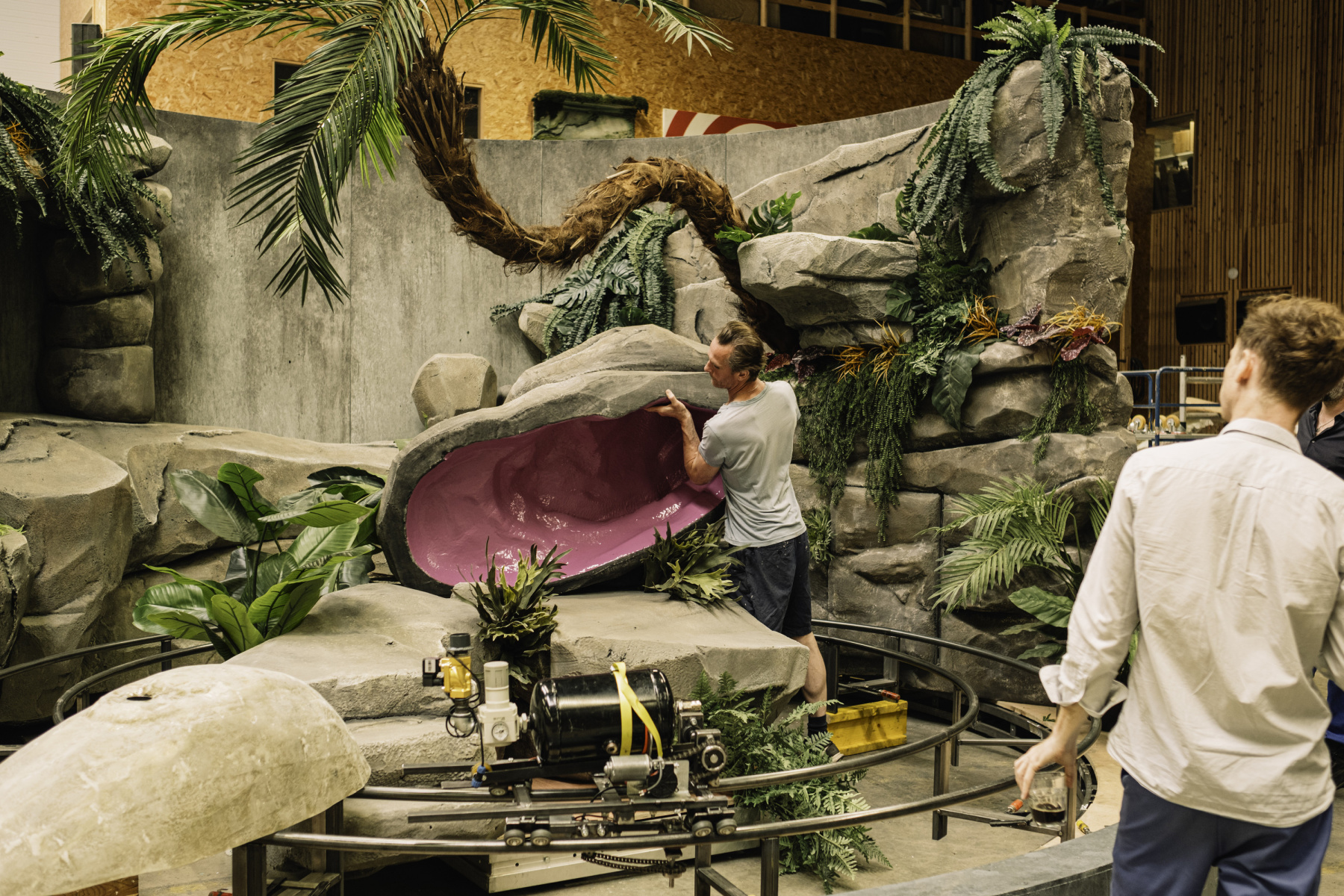
The stage design functions as a primary character, depicting a meticulously constructed artificial Eden. According to laffiche.co, the set transforms with a fluidity that allows a single environment to generate multiple distinct images and meanings. This evolving situation represents Point Nemo—the oceanic pole of inaccessibility furthest from any human habitation—used here to examine the human position within an uncontrollable environment.

Visual Poetry and the Role of Lighting
Lighting designer Bart Van Merode is cited by Sortiraparis as the production’s most successful element. The lighting does not merely illuminate the set but actively redefines the space, using color and shadow to alter the contours and perceived volume of the stage. This technique allows the production to maintain visual momentum even during periods where physical action is minimal.
The performance features a cast including Stef Aerts, Joé Agemans, Jonas Vermeulen, and Marie Vinck, with costumes by An D’Huys and dramatic direction by Bart Van den Eynde. However, Sortiraparis notes a disconnect between the visual beauty and the emotional resonance of the characters. Specifically, the “human-child” figure is described as evoking curiosity but failing to create a deep emotional bond with the audience, which reinforces the contemplative, distant nature of the work.
Comparative Critical Perspectives on Narrative
Critical reception of the production’s pacing and meaning varies between sources. Sortiraparis argues that the lack of dialogue and clear narrative guidance makes the invitation to “let go” difficult to grasp, suggesting that the connection between the observed actions and the underlying theme of relinquishing control is not always strong.
In contrast, laffiche.co describes the experience as more intuitive, comparing the visual flow to a life-sized kaleidoscope, a comic strip, or silent cinema. While Sortiraparis views the abstraction as a potential limitation that may alienate some viewers, laffiche.co interprets the gradual disintegration of the artificial garden as a pessimistic commentary on the decline of both nature and humanity. This is highlighted in the final tableau, where suspended rocks rotate in a manner compared to meat in a butcher shop, suggesting a “dance of stones” or the end of human reign.
Production Logistics and Artistic Collaboration
The production is a joint venture between FC Bergman and the Antwerp-based Toneelhuis. The scale of the set is noted by laffiche.co as having a budget comparable to a blockbuster film production, emphasizing the collective’s approach to theater as a visual medium similar to cinematography.