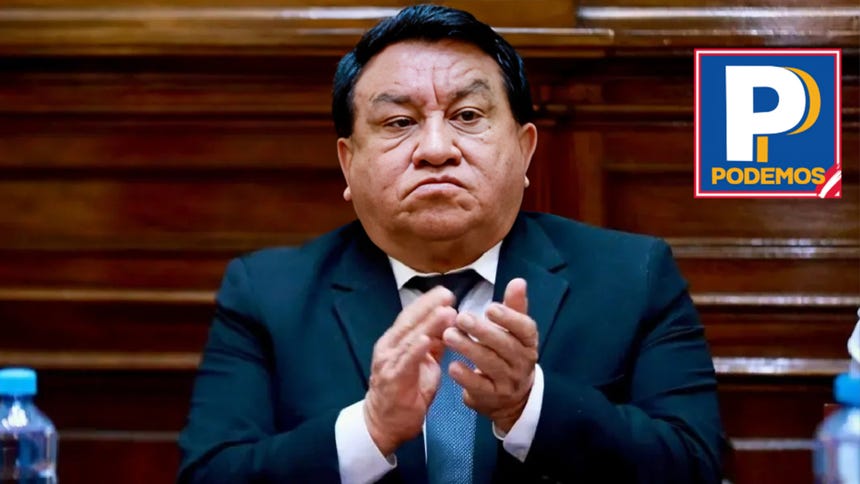
Podemos Perú Dissolves Congressional Group and Announces Total Restructuring
Podemos Perú has officially dissolved its parliamentary group in the Peruvian Congress, triggering a process of total internal restructuring. The decision follows a mounting corruption scandal, casting a shadow over the party’s legislative future. This move effectively decentralizes the party’s influence as it grapples with severe ethical and operational crises.
In the halls of the Legislative Palace in Lima, the atmosphere is one of profound instability. The dissolution of the Podemos Perú bench is not merely an administrative shuffle; it is a defensive maneuver by a political entity attempting to survive under the weight of serious allegations. As party leadership initiates what they term a “total restructuring,” the broader Peruvian political landscape is left to contend with the potential loss of a key voting bloc and the resulting vacuum in legislative power.
The Anatomy of a Political Collapse
The decision to disband the caucus, announced on May 21, 2026, marks a critical inflection point for the organization. José Luna, a central figure within the party, confirmed the shift, signaling that the party is attempting to distance itself from the immediate fallout of a corruption investigation. Such crises often necessitate immediate legal and forensic auditing to satisfy public scrutiny and regulatory requirements.
When parties face such existential threats, the need for transparent governance and rigorous legal defense becomes paramount. Organizations navigating these turbulent waters frequently rely on specialized administrative law firms to manage the complex reporting requirements that follow a dissolution of this magnitude. The internal audit process often requires the intervention of corporate governance experts to ensure that any “restructuring” complies with the strict standards set by the National Jury of Elections, which oversees political party compliance in Peru.
The dissolution is a clear admission that the party’s current structure is no longer tenable under the current legal pressure. It is a desperate attempt to reset the clock, though the public remains deeply skeptical of such maneuvers.
Legislative Fallout and the Question of Accountability
The move has been met with sharp criticism from peers in the legislature. María del Carmen Alva, a prominent voice in the Congress, characterized the dissolution as a cynical avoidance of legislative duty, stating that the move suggests a lack of commitment to the work the party was elected to perform. This sentiment resonates with a public increasingly frustrated by the perception of institutional decay.

The impact of this dissolution extends beyond the walls of Congress. It affects the legislative agenda, potentially stalling bills that required the support of the Podemos Perú bloc. For constituents, this means a temporary suspension of representation from a party that held significant sway in committee assignments and policy debates.
| Action | Immediate Consequence | Long-term Risk |
|---|---|---|
| Dissolution of Caucus | Loss of unified voting power | Permanent loss of party identity |
| Total Restructuring | Internal leadership vacuum | Electoral irrelevance in upcoming cycles |
| Corruption Inquiry | Legal exposure for party leaders | Potential dissolution of the party franchise |
The Broader Context of Institutional Instability
Peru has long faced challenges with political party volatility. The tendency for parties to fragment, dissolve, or rebrand in response to scandal is a recurring theme in the nation’s political history. This instability often hinders the development of long-term policy solutions for infrastructure and social welfare. As the party enters this period of transition, the focus shifts to whether this “restructuring” will lead to genuine reform or merely a change in branding to evade accountability.
The Congress of the Republic of Peru now faces the task of managing the fallout. With the caucus dissolved, individual members who were part of the group must now navigate their status as independent legislators or seek new alignments, further complicating the arithmetic of parliamentary majorities. This environment underscores the importance of robust internal ethics committees and the adherence to the Office of the Comptroller General guidelines regarding public funds and political financing.
Navigating the Legal and Ethical Minefield
For those involved in the party—and for the institutions monitoring them—the coming months will be defined by forensic investigations. The transition from a unified parliamentary bench to an independent or restructured entity is a logistical minefield. Ensuring that all financial records and legislative history are handled with transparency is not just a legal obligation; it is the only path toward restoring any semblance of public trust.
When institutions crumble under the weight of corruption allegations, the primary victims are the citizens who rely on those institutions to serve their interests. The search for accountability requires more than just internal restructuring; it requires a commitment to radical transparency. Securing the services of independent auditors and forensic investigators is often the first step for any organization attempting to prove its viability after a major ethical breach.
As the dust settles in Lima, the future of Podemos Perú remains uncertain. Whether this restructuring effort is a genuine attempt at renewal or a final curtain call for the party remains to be seen. In the volatile arena of Peruvian politics, one thing is certain: trust is the most difficult currency to earn and the easiest to lose. Political organizations that fail to address the fundamental causes of their crises—rather than merely rearranging their administrative structure—rarely survive the harsh judgment of the electorate. The trajectory of this party serves as a sobering reminder of the fragility of democratic institutions when they are not anchored in uncompromising ethical standards.