
PNG’s Tertiary Education Crisis: Challenges and Pathways to Reform
Papua New Guinea’s tertiary education system is at a crossroads, with enrollment stagnating, infrastructure crumbling, and a critical shortage of qualified faculty leaving the country’s future workforce at risk, according to a new analysis by the Development Policy Centre.
The report, published in the Devpolicy Blog, highlights a system struggling under decades of underfunding and neglect. While the government has set ambitious targets—including a 2030 goal of enrolling 20% of the eligible population in higher education—current enrollment stands at just 6% of the country’s 18- to 24-year-olds, a figure that has barely budged in a decade. The gap is starkest in rural provinces, where fewer than 2% of young people attend university or technical colleges, perpetuating cycles of poverty and limiting economic diversification beyond subsistence agriculture.
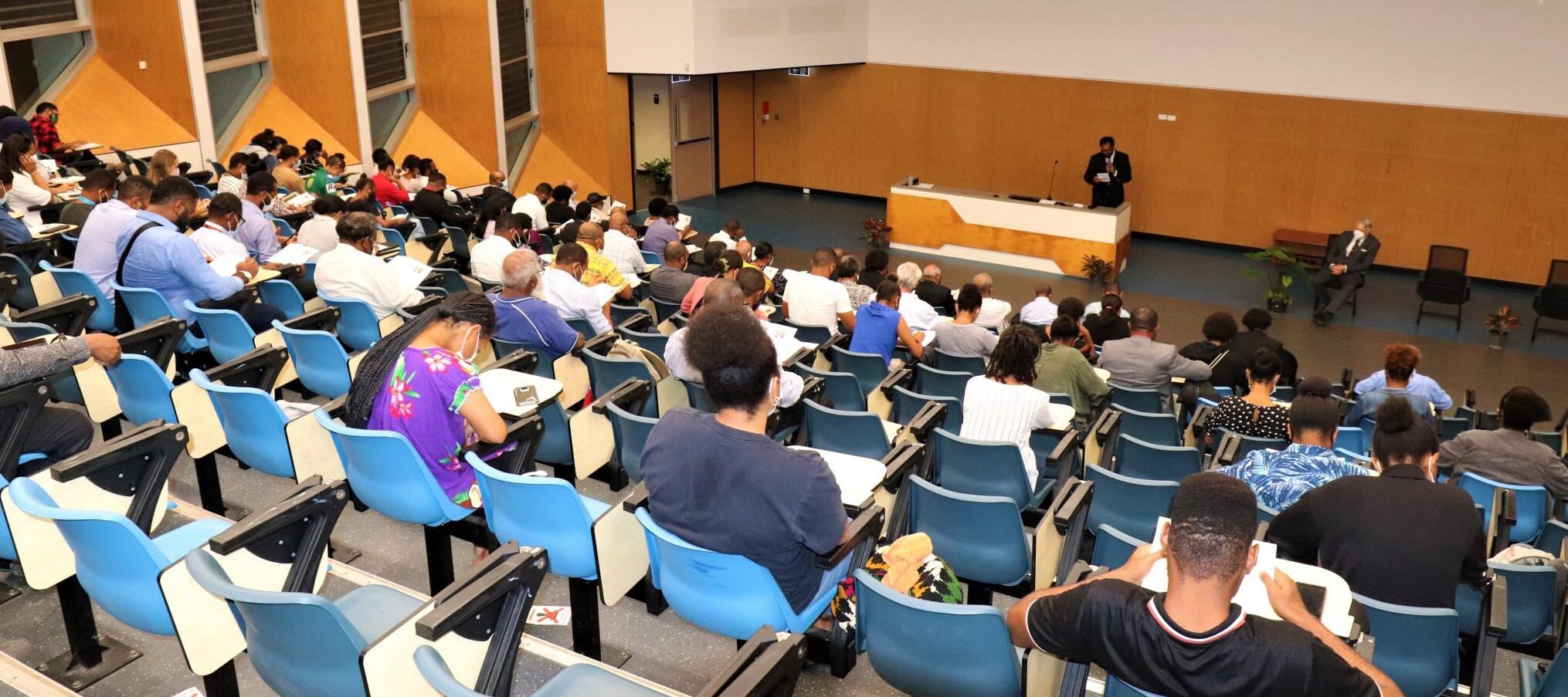
The bottleneck is not demand but capacity. Universities in Port Moresby and provincial hubs like Lae and Goroka operate at less than half their designed capacity, with classrooms often accommodating twice the intended number of students. The University of Papua New Guinea (UPNG), the country’s largest tertiary institution, has seen its student-to-faculty ratio balloon to 40:1—far exceeding the 15:1 benchmark recommended by the Association of Pacific Rim Universities. “The system is breaking under its own weight,” the report states, citing internal audits that found UPNG’s science laboratories equipped with equipment last calibrated in the 1990s and libraries with fewer than 10% of requested academic journals.

Financing remains the most intractable challenge. The national budget allocates less than 0.5% of GDP to higher education, a fraction of the 1.5% to 2% spent by comparable lower-middle-income nations. Private investment has not filled the void: tuition fees at public universities now account for over 80% of operating revenue, pricing out students from the 80% of households earning less than $2.50 a day. The government’s recent announcement of a 15% tuition fee hike—justified as a “cost-recovery measure”—has sparked protests in Port Moresby, with student unions warning of a “mass exodus” from tertiary education.
Yet the crisis extends beyond access. A 2025 survey of PNG’s 12 public universities, conducted by the National Department of Higher Education, revealed that 60% of academic staff lack advanced degrees in their fields. Many hold temporary contracts, with turnover rates exceeding 30% annually as qualified lecturers emigrate for better-paying roles in Australia or the Pacific Islands. “The brain drain is now a brain hemorrhage,” the report quotes an unnamed UPNG dean as saying. The exodus is most acute in STEM fields, where PNG graduates in engineering and medicine face median salaries of $8,000—less than half the regional average.
The political will to reform appears lacking. Prime Minister James Marape’s government has prioritized large-scale infrastructure projects—such as the $3.2 billion Ramu Nickel mine and the $1.8 billion national highway network—over social spending, despite repeated calls from opposition lawmakers to redirect funds. In a parliamentary debate last month, Opposition Leader Belden Namah accused the administration of “treating education like an afterthought,” citing a leaked cabinet memo that deprioritized tertiary education grants in favor of vocational training programs tied to corporate sponsors.

International donors have also grown frustrated. The World Bank’s latest Country Partnership Framework, released in April, explicitly tied future aid disbursements to structural reforms in higher education, including a mandatory 10% annual increase in university budgets and the establishment of an independent accreditation body. “PNG’s tertiary sector is at a tipping point,” the bank’s country director for the Pacific, Anna Malcontents, told reporters. “Without urgent action, the country risks producing an entire generation of underqualified workers just as its economy transitions to higher-value industries.”
The next critical test comes in September, when the National Executive Council is scheduled to review the Higher Education Act of 2012. Stakeholders, including the National Union of Students and the PNG Employers’ Federation, have submitted competing proposals: students demand fee caps and expanded scholarships, while industry groups push for curriculum overhauls aligned with labor market needs. The government has not yet signaled a preferred path, leaving the sector’s fate hanging on a legislative process that has stalled for years.