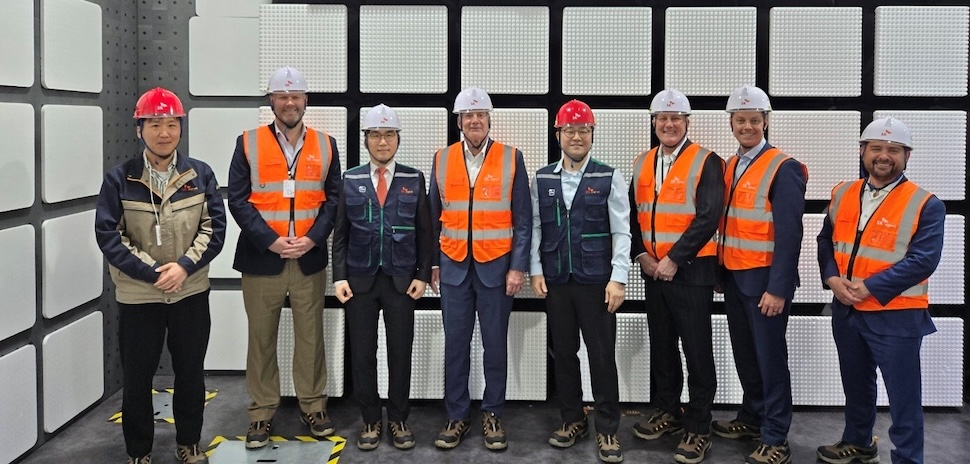
Plano Mayor John Muns Leads International Visit to Seoul
Plano Mayor John Muns led an official delegation to SK Signet’s headquarters in Seoul, South Korea, on April 2, 2026. The mission aimed to strengthen North American electric vehicle (EV) charging infrastructure and explore ultra-fast charging technologies to support the expansion of SK Signet’s production facility in Plano, Texas.
The transition to electric mobility is often stalled by a singular, stubborn hurdle: range anxiety. While battery technology improves, the real bottleneck is the speed and availability of the charging grid. When a city like Plano invests in a global partnership with a manufacturer like SK Signet, it isn’t just about adding a few plugs to a parking lot; It’s about securing the industrial pipeline required to retain a city moving in a post-combustion era.
This trade mission represents a strategic alignment between municipal leadership and industrial innovation. By traveling to the R&D heart of South Korea, Plano is ensuring that its local infrastructure doesn’t just meet today’s standards but anticipates the requirements of the next decade.
The Strategic Blueprint of the Seoul Mission
Mayor John Muns, accompanied by City Manager Mark Israelson and other key city officials, focused the visit on the intersection of research and scalability. The delegation met with SK Signet CEO Hyung-Ki Cho to discuss how the company’s South Korean innovations can be mirrored and expanded within the North American market. This is a critical relationship because SK Signet’s Plano facility serves as the strategic hub for their entire North American operation.

The goal is simple: localized production. By manufacturing in Plano, SK Signet can respond rapidly to local demand and shield the supply chain from the volatility of international shipping and geopolitical friction. This localized approach ensures that the deployment of charging stations is not delayed by overseas logistics.
The scale of this operation is already evident. Since opening its Plano production base in 2023, SK Signet has already supplied more than 3,000 ultra-fast chargers across the United States. This is not a pilot program; it is a full-scale industrial rollout.
Decoding the Ultra-Fast Charging Technology
During the tour of the Seoul R&D center, the Plano delegation observed the rigorous processes behind high-power charging. The focus was not just on the hardware, but on the validation and safety systems that allow these chargers to operate at extreme speeds without compromising the vehicle’s battery life or the city’s electrical grid.
A centerpiece of the visit was the introduction of the new 400kW all-in-one ultra-fast charger. This piece of technology is a significant leap forward in EV infrastructure due to several key factors:
- Modular Architecture: Allows for easier maintenance and scalable power delivery based on site-specific needs.
- Higher Output Density: Delivers more power in a smaller physical footprint, making it ideal for crowded urban environments.
- Improved Efficiency: Reduces the energy loss during the transfer from the grid to the vehicle.
- Lower Operating Costs: Designed to reduce the long-term overhead for the entities managing the charging stations.
The delegation also toured advanced testing facilities, including a large-scale electromagnetic compatibility (EMC) chamber and vehicle simulators. These tools are essential for ensuring that high-power chargers do not interfere with other electronic systems and that they integrate seamlessly with various vehicle models.
Implementing this level of technology requires more than just purchasing hardware. Municipalities must coordinate with specialized electrical engineering firms to ensure the local grid can handle the massive power draws associated with 400kW charging stations without triggering brownouts or equipment failure.
The Economic Bridge: Plano to Seoul
The relationship between the City of Plano and SK Signet is a blueprint for modern public-private partnerships. By fostering a direct line between the Mayor’s office and the company’s CEO, Plano is positioning itself as a leader in the “clean mobility” movement. This alignment is not accidental; it is designed to mirror broader clean mobility initiatives established by the state of Texas and the U.S. Federal government.
The economic impact extends beyond the 3,000 chargers already deployed. The continued expansion of the Plano facility means more high-tech manufacturing jobs and a stronger industrial base for the region. However, as these networks expand, the legal and regulatory landscape becomes more complex.
The visit highlights the growing importance of EV charging infrastructure in the U.S. And the role that public-private partnerships can play in accelerating its deployment.
Navigating the zoning laws and land-use permits for high-density charging hubs often creates a bureaucratic bottleneck. To accelerate this deployment, city planners are increasingly relying on municipal legal consultants to streamline the approval process for critical infrastructure projects.
Macro-Economic Implications for North America
This mission is a signal to other North American cities. The shift toward EV infrastructure is no longer a theoretical goal but a competitive necessity. Cities that fail to secure partnerships with global technology leaders will locate themselves with obsolete infrastructure as vehicle capabilities evolve.
The focus on “ultra-fast” charging is particularly vital for the U.S. Market, where long-distance travel is a cultural and economic staple. For EVs to truly replace internal combustion engines in the American heartland, the charging experience must mimic the speed and convenience of a traditional gas station visit. This is where the 400kW technology becomes a game-changer.
the alignment with the U.S. Department of Energy‘s goals for EV expansion suggests that Plano is positioning itself to capture federal funding and support for green energy transitions. This requires a sophisticated approach to urban design, often necessitating the expertise of urban planning services to integrate charging hubs into existing city layouts without disrupting traffic flow.
The collaboration also reinforces the importance of the State of Texas as a burgeoning hub for green technology manufacturing, challenging the notion that the energy transition is happening only in coastal hubs.
The road to a fully electrified transport system is paved with technical challenges and regulatory hurdles. From the EMC chambers of Seoul to the production lines of Plano, the goal is the same: a seamless, invisible transition to clean energy. As these high-power networks expand, the need for verified, expert professionals—from engineers to legal strategists—becomes the critical link in the chain. Finding these vetted specialists through a comprehensive directory is no longer optional; it is the only way to ensure that the infrastructure of tomorrow is built on a foundation of stability and precision.