
College Football’s Financial Playing Field Levels Up
Antitrust Settlement Reshapes NIL Landscape, Coaches Optimistic
A landmark $2.8 billion antitrust settlement, now in effect, promises to create a more equitable financial environment for college football programs across the nation. Coaches are anticipating a shift in competitive dynamics as the settlement allows schools to share revenue with athletes.
Arkansas Coach Sees Brighter Future
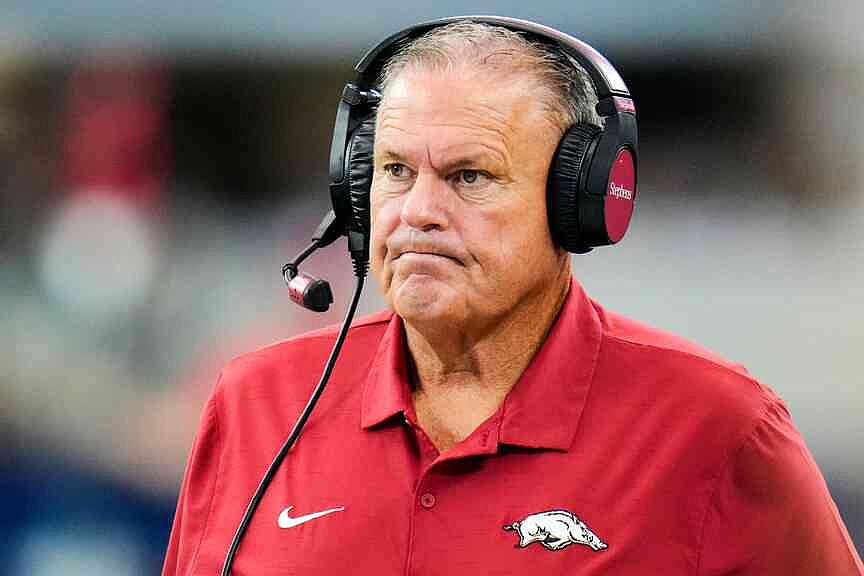
Sam Pittman, head coach of the Arkansas Razorbacks, believes the new financial structure will significantly benefit his team. He stated that programs like his have operated at a financial disadvantage against institutions with more robust Name, Image, and Likeness (NIL) collectives since NIL payments began in 2022.
Under the terms of the House settlement, each collegiate institution can now distribute approximately $20.5 million annually to its student-athletes. This move aims to standardize the financial resources available to all teams.
“Financially with revenue sharing I think we are finally back on even keel with everybody, which we weren’t. If I was going to make an excuse, it would be financially is why we haven’t done quite as well. … But I think now with it being even, look out, the Razorbacks are coming.”
—Sam Pittman, Head Coach, Arkansas Razorbacks
Transfer Portal Dynamics and NIL Influence
Pittman also touched upon player retention, noting that a significant factor luring players away from Arkansas has been more attractive NIL packages elsewhere. He emphasized that player treatment, development, and coaching were not the reasons for departures, but rather opportunities for playing time and, predominantly, financial incentives.
The settlement’s implementation follows recent communications from the new College Sports Commission. The commission has reportedly rejected payments to players sourced solely from collectives established to facilitate player compensation, distinguishing them from payments for actual name, image, and likeness usage.
Player Perspectives on NIL and Eligibility
Several seniors attending SEC media days shared their views on how NIL and the transfer portal impact their decisions to complete their college eligibility. Missouri offensive lineman Connor Tollison expressed optimism about the financial opportunities available.
“I would most definitely say so. Obviously, you know, you have a chance to make some money these days. … With the transfer portal, if you don’t have a necessarily a good opportunity at this place you’re at, you have the chance to go somewhere else and get a fresh start. It wasn’t necessarily something I experienced to my college career, but I’ve seen it. You know, it works for plenty of players. So yeah, I think it’s good for the players.”
—Connor Tollison, Offensive Lineman, Missouri
Kentucky Coach Mark Stoops acknowledged the financial aspect of college athletics. Defensive back Jordan Lovett, who plays for Stoops, highlighted his passion for the game as his primary motivation, despite acknowledging the allure of NIL earnings.
“Of course I love making money from name, image and likeness. But I love football first. You know, football was my first love. So I play for the game, not for money.”
—Jordan Lovett, Defensive Back, Kentucky
Lovett further stated that a key personal goal for returning was to achieve his first victory against the Georgia Bulldogs, a testament to the competitive drive that remains central to college sports.
The financial shifts in college sports are significant. For context, the average NIL valuation for a top college football player in 2024 is projected to be over $600,000, according to sports analytics firm On3.
