Pierce County Officials Investigate Disputed Ballot Cure Forms
Pierce County election officials are investigating roughly two dozen ballot cure forms that arrived with checkmarks or slashes instead of voter signatures. Most of the disputed documents originated in the 25th Legislative District, where an 80-vote margin separates the top two candidates ahead of a scheduled December recount.
Investigation Into Disputed Ballot Cure Forms
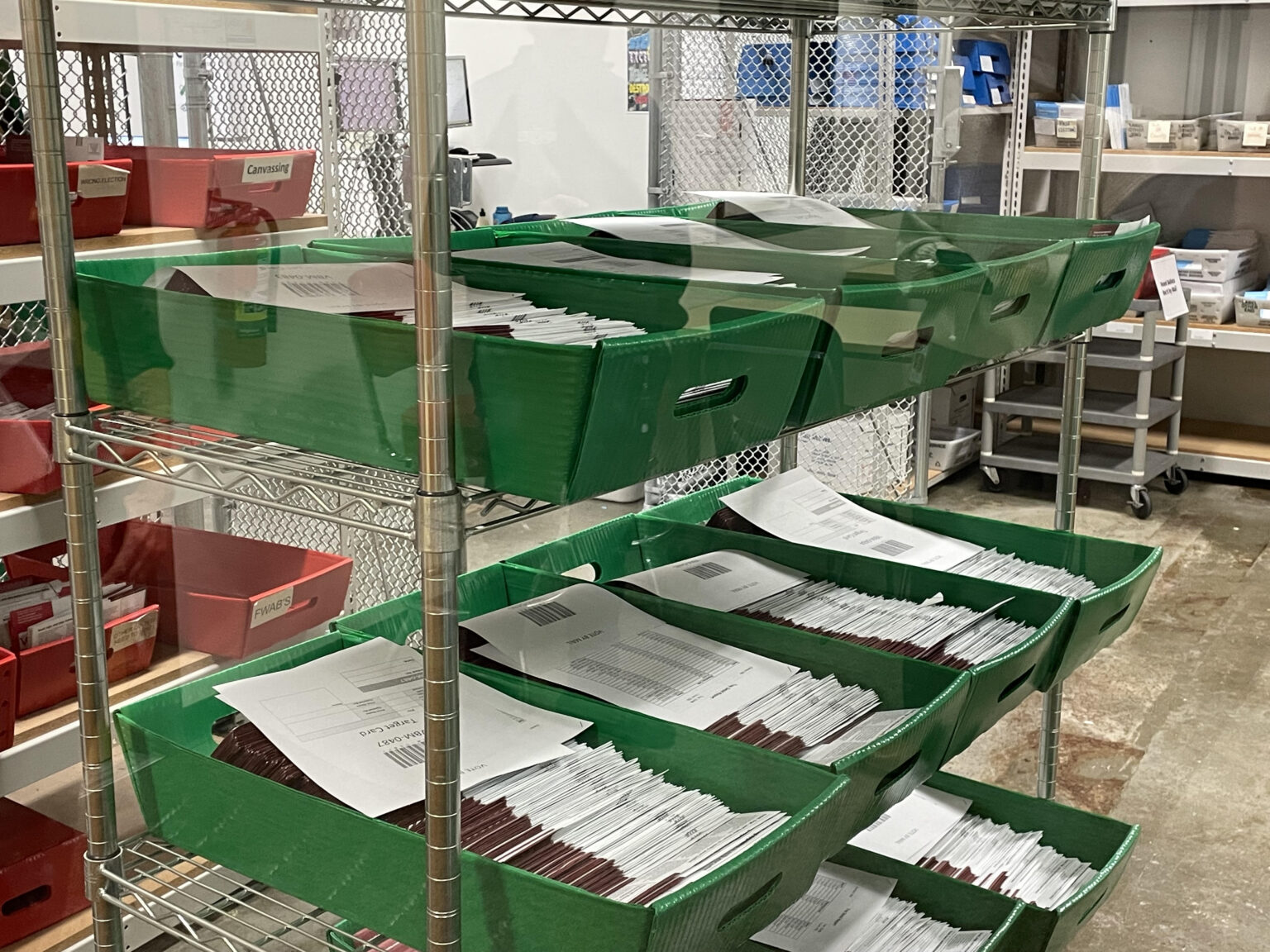
Roughly two dozen forms used to cure signature issues on ballots arrived on Monday. Most of the paperwork came from the 25th Legislative District. In that contest, Democrat Jenn Marie Strickling of Summit-Waller defeated Republican state Rep. Cyndy Jacobsen of Puyallup by 80 votes. Election officials said that results for that race, and every other race, remained unaffected. A hand recount for the legislative seat is scheduled for Dec. 4.
The auditor’s office is attempting to determine whether the submissions stem from an intentional effort to commit fraud or a widespread misunderstanding of the voting process. County officials withheld the names of individuals who submitted the forms or signed as witnesses.
They also declined to state whether anyone involved has ties to either political party or campaign.
“We’re still investigating,” Pierce County Auditor Linda Farmer said. “This is out of the ordinary. This is an anomaly. We held them aside because they did not follow our proper procedure.”
Washington Ballot Curing Rules
Under Washington law, voters who forget to sign their ballots or whose signatures do not match records are contacted by county election workers via phone and email. Those voters can fix the problem online, by mail, or in person up until election results are certified. Political parties, candidates, and interest groups frequently deploy teams to contact these voters and encourage compliance.
In the two batches received on Monday, however, each form contained a check mark or a slash in the signature box, accompanied by two witness signatures below. Farmer said that while state law permits a voter who is physically unable to sign due to a disability or other reason to make a mark witnessed by two people, such instances remain rare.
Election workers began calling affected voters to ask if anyone had contacted them regarding their unsigned ballots. In certain cases, workers found that cure forms had been submitted for voters who had already completed the curing process themselves.
Farmer said that election managers contacted both legislative campaigns alongside the Republican and Democratic parties to verify that everyone understood the correct procedure.
“It’s not normal to receive a whole bunch of these,” Farmer said.
Prior to the county canvassing board certifying the Nov. 3 election results, Elections Director Kyle Haugh briefed the panel on the situation. The canvassing board comprises representatives from the auditor’s office, the prosecuting attorney’s office, and the county council.
“When we get a cure form, we expect a signature,” Kyle Haugh said in an interview.
“We do not believe the voter completed the form.”
Adam Faber, communications manager for the prosecuting attorney’s department, said that the appearance of the cure forms looked unusual and warranted flagging. Authorities have not yet determined whether a prosecutable offense occurred.
Farmer said that if fraud is suspected, the office will file a police report and compile a summary for the county prosecutor once a case number is issued. Faber added that prosecutors will decide how to proceed based on evidence provided by law enforcement investigators.