Picosecond Pulses Push Superconductors Beyond Their Critical Current Limit
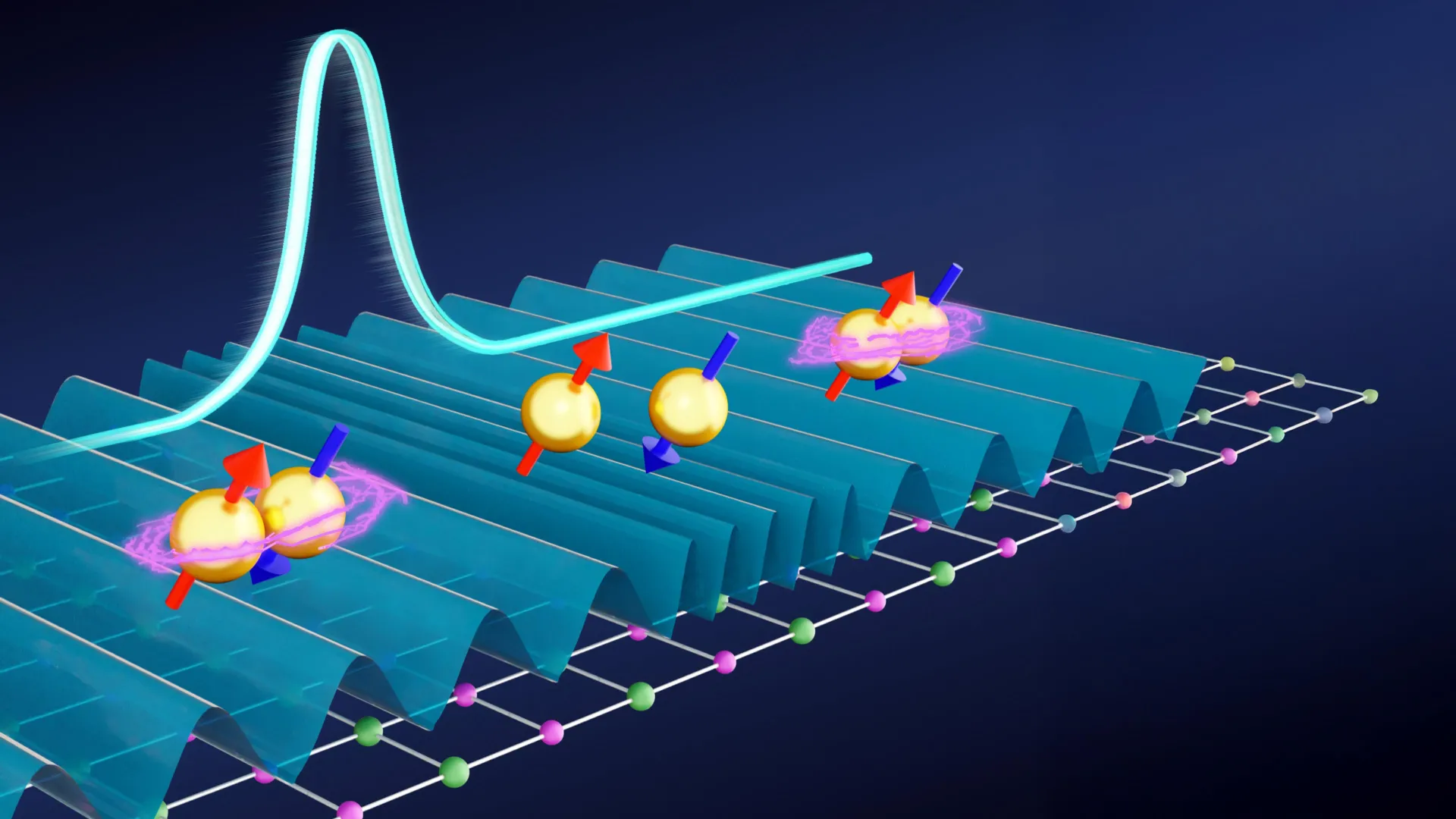
Scientists have pushed superconductors beyond their usual critical current limits by applying electrical pulses lasting just a few picoseconds, allowing researchers to study the fundamental depairing current. Physics researchers at the Max Planck Institute for the Structure and Dynamics of Matter (MPSD) published the findings, demonstrating how extremely short current bursts bypass vortex motion and material heating to reach deeper into the superconducting state.
Picosecond Pulses Exceed Critical Limits
- The Breakthrough: Ultrafast electrical pulses lasting picoseconds let researchers bypass vortex motion in Type-II superconductors.
- The Mechanism: Photoconductive switches triggered by 300-femtosecond green laser pulses deliver high current densities safely.
- Material Response: NbN exhibits a sharp collapse at its depairing threshold, whereas YBCO weakens progressively due to its anisotropic energy gap.
Why Superconductors Usually Break Down Early
Superconductors lose electrical resistance when cooled below a specific transition temperature, allowing current to flow without energy loss as heat through correlated pairs of electrons called Cooper pairs. However, this dissipationless state cannot withstand unlimited electrical current. Once current exceeds a specific threshold, the superconducting state fails. In Type-II superconductors, experimental critical current limits are typically governed not by the microscopic limit of superconductivity, but by the movement of vortices—tiny regions where magnetic flux penetrates the material. As current rises, these vortices move, generating resistance and heat that destroys the superconducting state.
Materials actually possess a higher fundamental limit known as the depairing current. Eryin Wang, lead author of the study, explained that the current twists the phase of the coherent quantum state of the superconductor, much like winding a spring. If the quantum state twists too far, it becomes unstable, causing the Cooper pairs to break apart. Conventional direct-current transport measurements rarely reach this intrinsic limit because moving vortices and heating disrupt superconductivity first.

Outrunning Vortex Dynamics With Picosecond Pulses
To overcome this experimental hurdle, the research team delivered extremely short bursts of electrical current to outrun vortex dynamics. While vortices can travel at speeds of tens of kilometers per second, they move only tens of nanometers over the span of a picosecond. Applying current for an extremely short period drives current density to very high levels before vortices have time to move significantly or generate destructive heat.
To produce these ultra-short currents, the team utilized an ultrafast electrical-transport platform developed at MPSD. Guido Meier, co-author of the study, noted that the system employs photoconductive switches triggered by 300-femtosecond green laser pulses with a wavelength of 515 nanometers. Once activated, the switches produce electrical pulses lasting just a few picoseconds. These pulses travel along a coplanar waveguide and pass through superconducting samples measuring only micrometers in size.
Contrasting Responses in NbN and YBCO Superconductors
The research team tested two distinct materials, niobium nitride (NbN) and yttrium barium copper oxide (YBCO), to analyze how microscopic structural differences affect superconductor breakdown under ultrafast currents. NbN features a relatively uniform s-wave energy gap, whereas YBCO features a d-wave energy gap that changes strongly depending on direction and disappears entirely along certain axes.
In NbN, the superconducting state persisted until the current reached a distinct threshold far higher than its conventional DC critical current, after which response changed suddenly as Cooper pairs began to break apart. By contrast, YBCO behaved very differently. Instead of remaining stable and failing abruptly, its superconducting state weakened progressively as the current increased. Researchers attribute this difference to YBCO’s anisotropic internal structure, which allows superconductivity to weaken gradually rather than collapsing at a single sharp threshold.