
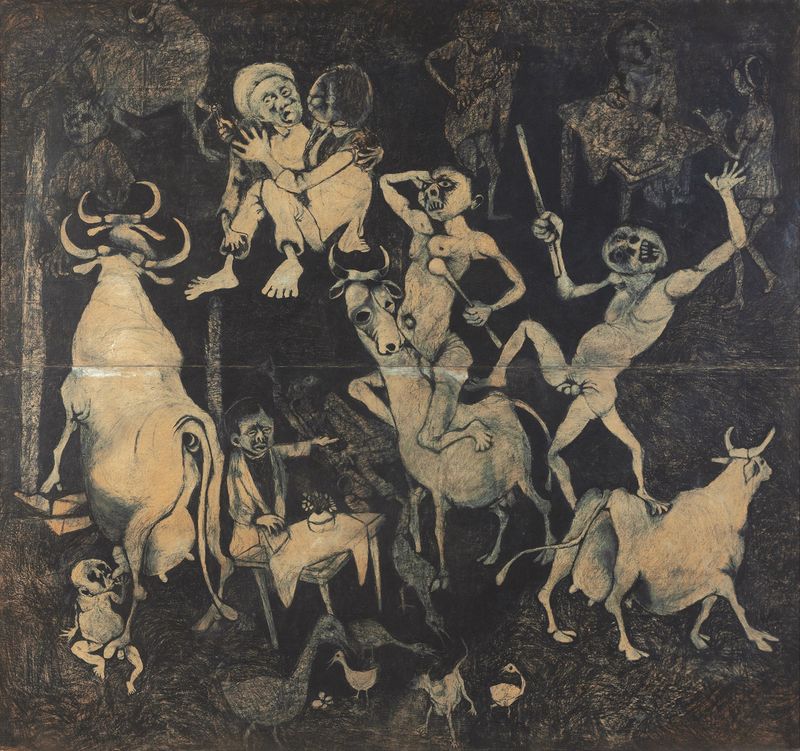
Picasso & Dumile Feni: ‘African Guernica’ Exhibition at Museo Reina Sofía
Picasso and Feni: A Dialogue on Guernica and the Scars of Modernity
Madrid’s Reina Sofía Museum is currently hosting a landmark exhibition pairing Pablo Picasso’s iconic Guernica with Dumile Feni’s monumental 1967 drawing, African Guernica. Curated by Tamar Garb, the reveal explores parallel artistic responses to trauma, specifically the horrors of war and apartheid, prompting a re-evaluation of artistic canons and the often-overlooked narratives of African modernity. The exhibition, open now through September 22, 2026, arrives at a moment when museums globally are grappling with decolonizing their collections and amplifying marginalized voices.
The Apocryphal Twain and the Echoes of History
The exhibition’s title, “History Doesn’t Repeat Itself, but It Does Rhyme,” is itself a fascinating point of origin. Whereas widely attributed to Mark Twain, the phrase appears to be apocryphal, never actually appearing in his published works. This ironic starting point—a false attribution used to frame a conversation about historical resonance—sets the tone for an exhibition that challenges conventional narratives. It’s a subtle but pointed commentary on the construction of historical memory and the selective nature of cultural canonization. The Reina Sofía’s director, Manuel Segade, emphasized that African Guernica “represents a significant time in the crisis of modernity, the time of Apartheid in South Africa, one of the limits of the modern project.”
Feni’s Monumental Response to Apartheid
Dumile Feni’s African Guernica is not merely an imitation of Picasso’s masterpiece; it’s a visceral response to the specific brutality of apartheid. Created in 1967, the drawing depicts a harrowing scene of suffering and oppression, reflecting the systemic racism and violence inflicted upon the Black population of South Africa. Curator Tamar Garb highlights the scale of Feni’s work, noting that “If we observe drawing practices globally in the 1960s, very few artists worked on such an epic, monumental scale as Dumile in that period.” This ambition underscores the urgency and importance Feni placed on conveying the gravity of the situation. The work, initially exhibited at Gallery 101, was a direct confrontation with the horrors of apartheid, a visual testament to the daily existence of those living under its oppressive regime.
The Logistics of Cultural Exchange and Institutional Collaboration
Bringing together works from major South African institutions—the University of Fort Hare, the Norval Foundation, and the Wits Art Museum—alongside Picasso’s preparatory drawings represents a significant logistical undertaking. The exhibition required meticulous planning and coordination, navigating international art transport regulations, insurance requirements, and the delicate handling of culturally significant artifacts. Such large-scale cultural exchanges often rely on specialized art logistics and insurance providers to ensure the safe and secure movement of valuable artworks. The University of Fort Hare’s participation is particularly noteworthy, demonstrating a commitment to sharing its cultural heritage with a global audience.
Beyond Picasso: Reclaiming African Modernity
The pairing of Guernica and African Guernica isn’t about establishing a hierarchy of artistic merit. Instead, it’s about expanding the conversation around modernism and acknowledging the contributions of artists who have historically been excluded from the dominant narrative. Feni’s work, born from a specific socio-political context, offers a powerful counterpoint to Picasso’s depiction of the Spanish Civil War. It challenges viewers to consider the universality of suffering while recognizing the unique manifestations of trauma in different parts of the world. This re-evaluation of artistic canons is increasingly important as museums strive to diversify their collections and engage with a broader range of perspectives.
The Artist in Exile: A Life Marked by Trauma
Dumile Feni’s life story is inextricably linked to his art. Forced into exile after being imprisoned for violating apartheid-era laws prohibiting relationships between people of different ethnic groups, Feni experienced firsthand the pain of displacement and oppression. He eventually settled in Modern York, where he continued to create art while grappling with depression and a longing for his homeland. His personal experiences profoundly shaped his artistic vision, imbuing his work with a sense of urgency and emotional depth. The complexities of an artist’s biography often necessitate careful management of their estate and intellectual property. Entertainment law firms specializing in artist estates are crucial in navigating these sensitive issues and protecting the artist’s legacy.
The Market for Socially Conscious Art
The renewed attention on Dumile Feni’s work is likely to have a significant impact on the art market. While his work was known within academic circles, this exhibition at the Reina Sofía will undoubtedly raise his profile among collectors and investors. The increasing demand for art that addresses social and political issues is driving up prices for works by artists like Feni. Auction houses are already anticipating increased interest in his pieces, and galleries are likely to seek out opportunities to represent his estate. This surge in demand highlights the growing recognition of the value of art as a form of social commentary and a catalyst for change. According to Artprice, sales of works by African artists have increased by 25% in the last year, demonstrating a broader trend towards greater inclusivity in the art market.
“There’s a real appetite right now for art that tells a story, that has a message. Collectors are increasingly looking for works that reflect their values and contribute to a more equitable and just world.”
– Anya Sharma, Senior Art Market Analyst, Artprice
The Future of the Dialogue: Expanding the Canon
The Reina Sofía’s exhibition series, “History Doesn’t Repeat Itself, but It Does Rhyme,” promises to be a groundbreaking initiative, fostering a more nuanced and inclusive understanding of art history. By juxtaposing Picasso’s Guernica with works from different cultural contexts, the museum is challenging viewers to reconsider their assumptions about artistic influence and the universality of human experience. The success of this exhibition will likely inspire other institutions to follow suit, leading to a broader re-evaluation of the art historical canon and a greater appreciation for the contributions of artists from marginalized communities. The logistical challenges of mounting such exhibitions often require the expertise of experienced museum exhibition planning and management companies to ensure seamless execution.
As the art world continues to grapple with issues of representation and decolonization, exhibitions like this one are essential. They not only shed light on overlooked artists but similarly encourage a more critical and self-reflective approach to the study and appreciation of art. The dialogue between Picasso and Feni is a powerful reminder that art has the capacity to transcend cultural boundaries and speak to the shared human experience, even in the face of unimaginable suffering.
Disclaimer: The views and cultural analyses presented in this article are for informational and entertainment purposes only. Information regarding legal disputes or financial data is based on available public records.