
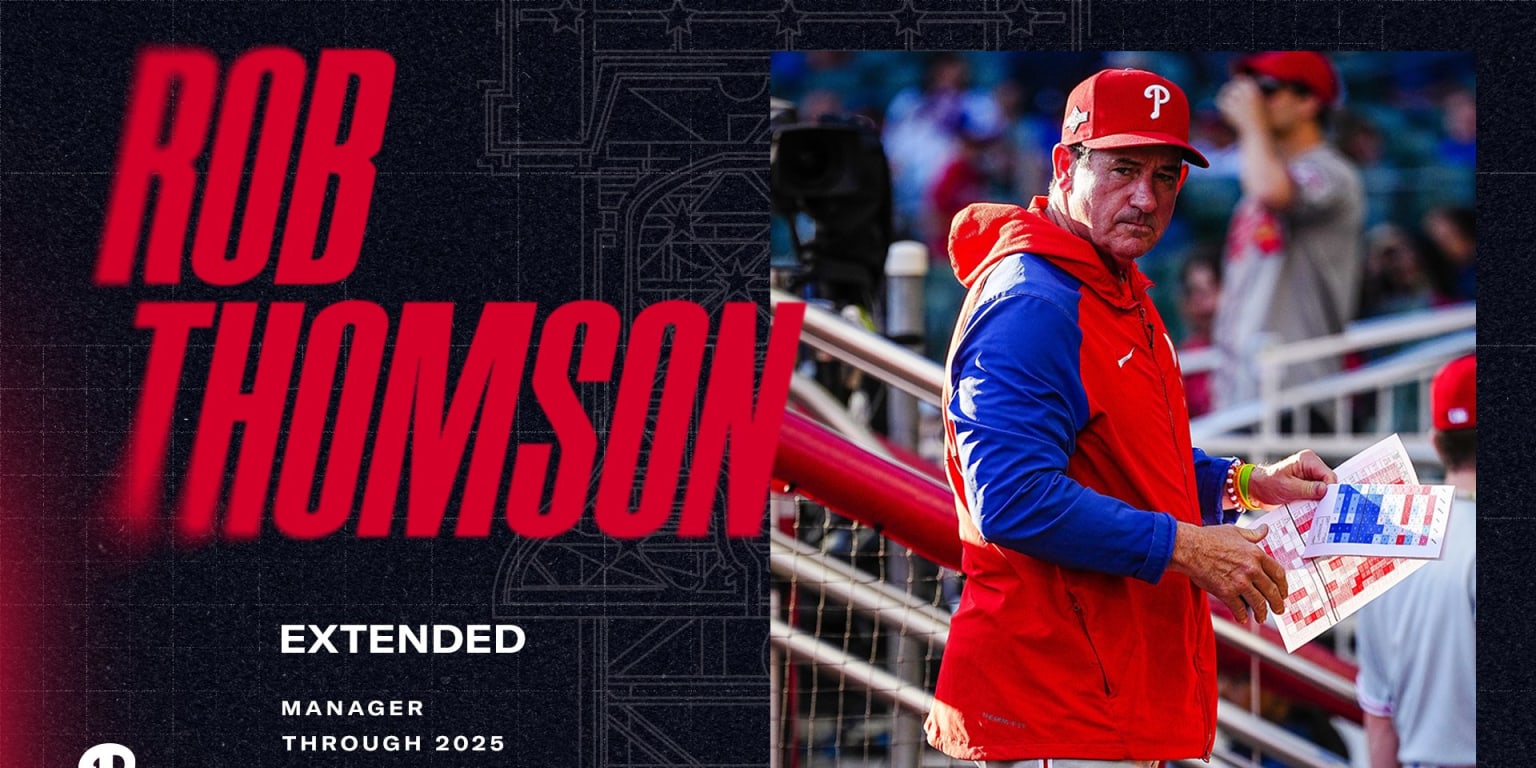
Phillies fire Rob Thomson after 9-19 start, name Don Mattingly interim manager
The Phillies’ Managerial Math: When Success Isn’t Enough
Rob Thomson’s office at Citizens Bank Park was packed before the game ended. Boxes of lineup cards, a framed 2022 National League pennant, and a stack of scouting reports—all the remnants of a manager who had just been dismissed after leading the Phillies to four consecutive postseason appearances. His winning percentage ranked among the highest in franchise history. However, the team’s recent performance overshadowed those accomplishments, including a 10-game losing streak, the longest since 1999.
The Phillies did not fire Thomson because he was the primary issue. Instead, the decision reflected frustration with a roster that had underperformed from the start. The move was swift, particularly compared to 2022, when Joe Girardi was fired after 51 games. At that time, Thomson took over as interim manager and guided the team to the World Series. This year, the front office acted after just 28 games, signaling urgency about the team’s direction.
Dave Dombrowski, the team’s president of baseball operations, has historically favored decisive action. The message was unmistakable: the Phillies’ expectations for the season were not being met. Thomson himself acknowledged the uncertainty surrounding his role, describing it as an expected part of the job. His response to questions about job security was measured, reflecting years of experience in player development rather than a focus on managing at the major league level.
Thomson’s tenure began unexpectedly in 2022 when he replaced Girardi. His steady leadership helped transform a struggling team into a pennant winner. Yet baseball prioritizes results, and the 2026 season’s early struggles were impossible to ignore. The offense, which had been a strength in recent years, struggled to produce. The starting rotation, assembled with significant investments, failed to meet expectations. Defensive inconsistencies further compounded the team’s difficulties.
The Roster’s Cracks: Where the Phillies’ Plan Fell Apart
The Phillies entered the season with the highest payroll in franchise history, a reflection of their ambition rather than a guarantee of success. Recent roster decisions have not yielded the intended results. Two high-profile free-agent signings, Nick Castellanos and Taijuan Walker, were released earlier this year after disappointing performances. Their departures left the organization with financial commitments that no longer contributed to on-field success.
The issues extended beyond financial considerations. The roster’s construction relied heavily on veteran players and pitchers with injury histories, assuming that Thomson’s leadership could mitigate those risks. Instead, the vulnerabilities became apparent early in the season. The offense, which had led the National League in runs in 2022 and 2023, ranked near the bottom of the league by April. The starting rotation, anchored by Zack Wheeler and Aaron Nola, struggled to deliver consistent results. The bullpen, once a strength, showed signs of instability.
Thomson’s firing addressed a symptom rather than the underlying problem. The Phillies’ challenges stem from a front office strategy that placed significant value on past performance while overlooking potential warning signs. The 2022 World Series run was intended to mark the beginning of sustained success, but it now appears to have been the peak of this core’s capabilities.
The pursuit of Alex Cora, the former Red Sox manager, underscored the front office’s urgency. Cora, known for his tactical acumen and World Series experience with Dombrowski in Boston, was seen as an ideal candidate to stabilize the team. However, he declined the opportunity, citing personal reasons. The Phillies then turned to Don Mattingly, a respected but less dynamic choice, whose son, Preston, serves as the team’s general manager. The decision reflected a preference for familiarity over bold change.
Mattingly’s Gamble: Can a New Voice Salvage a Lost Season?
Don Mattingly inherits a team in need of more than a motivational boost. His managerial career has been marked by mixed results. He led the Dodgers to three consecutive National League West titles from 2013 to 2015 but struggled in Miami, where the Marlins finished in last place during his tenure. The Phillies present a different set of challenges, though their current trajectory raises questions about the roster’s long-term viability.
The immediate concerns are evident. The Phillies’ roster features several underperforming contracts and aging stars. Bryce Harper, the franchise’s cornerstone, is still recovering from Tommy John surgery. Kyle Schwarber, known for his power, has struggled with strikeouts. The bullpen, once a reliable asset, has been weakened by injuries and ineffectiveness.
Mattingly’s appointment appears to be a temporary solution rather than a long-term fix. The Phillies’ issues are systemic, requiring more than a change in leadership. However, Dombrowski has shown little inclination toward a full rebuild. Instead, the front office seems to be betting that a managerial shift will provide breathing room—time to adjust the roster, await Harper’s return, and hope the offense regains its form.
The Phillies’ 9-19 start is among the worst in recent memory for a team with World Series aspirations. The last comparable collapse occurred in 2022, when the Angels fired Joe Maddon after an equally dismal beginning. The Angels never recovered, and the Phillies face a similar risk. The front office’s strategy hinges on short-term adjustments, but the team’s struggles suggest deeper problems may persist.
The Cora Factor: What His Rejection Reveals About the Phillies’ Future
Alex Cora’s decision to decline the Phillies’ managerial offer was not solely about personal reasons. It also reflected concerns about the organization’s direction. Cora, a manager with a World Series ring and a reputation for maximizing player potential, likely saw challenges in Philadelphia that extended beyond the dugout. Whether those concerns stemmed from roster limitations, front office decisions, or broader strategic issues remains unclear, but his rejection left the Phillies with limited options.
Dombrowski could have pursued other high-profile managers, such as Bruce Bochy or Buck Showalter, but both would likely have demanded long-term commitments. The Phillies’ roster, however, is not positioned for sustained success. Instead, the front office opted for Mattingly, a familiar and low-risk choice. The decision underscores a lack of bold vision rather than a clear path forward.
The managerial carousel is symptomatic of a larger issue: a front office that has exhausted its playbook. Dombrowski’s strategy of aggressive free-agent spending has not delivered the expected results. The team’s core is aging, and the farm system, once a strength, has been depleted by trades and graduations. The Phillies now face two unappealing options: embark on a rebuild or double down on a flawed roster.
Neither path is straightforward. A rebuild would require acknowledging past missteps, something Dombrowski has rarely done. Doubling down would mean further investment in a roster that has already fallen short. The Phillies are at a crossroads, and Mattingly’s interim role serves as a reminder that the front office lacks a definitive plan.
The Open Question: Can a Manager Fix What’s Broken?
The Phillies’ decision to fire Rob Thomson was driven by desperation rather than a clear strategic shift. Thomson was not the root cause of the team’s struggles; the roster was. In baseball, however, it is often easier to replace a manager than to confront deeper organizational issues. The Phillies entered the season with the highest payroll in franchise history and World Series expectations. After just 28 games, those expectations have not been met.
Don Mattingly steps into a difficult position. He is not a savior but a placeholder, brought in to provide stability during a turbulent period. Yet stability alone may not be enough. The Phillies’ challenges require more than a change in leadership—they demand a reevaluation of the team’s direction. Whether the organization is prepared for that remains an open question.
The outcome will shape the franchise’s future. The question is not whether Mattingly can win games but whether the Phillies can address their underlying issues before it’s too late.