Philippines: ASEAN, China Miss 2026 South China Sea Code Deadline; Talks Continue 2027
Manila's foreign secretary said on Sunday that ASEAN and China will miss the South China Sea code of conduct (CoC) deadline because negotiations failed to resolve key issues, with about 70 percent of the CoC agreed but essential provisions unresolved.
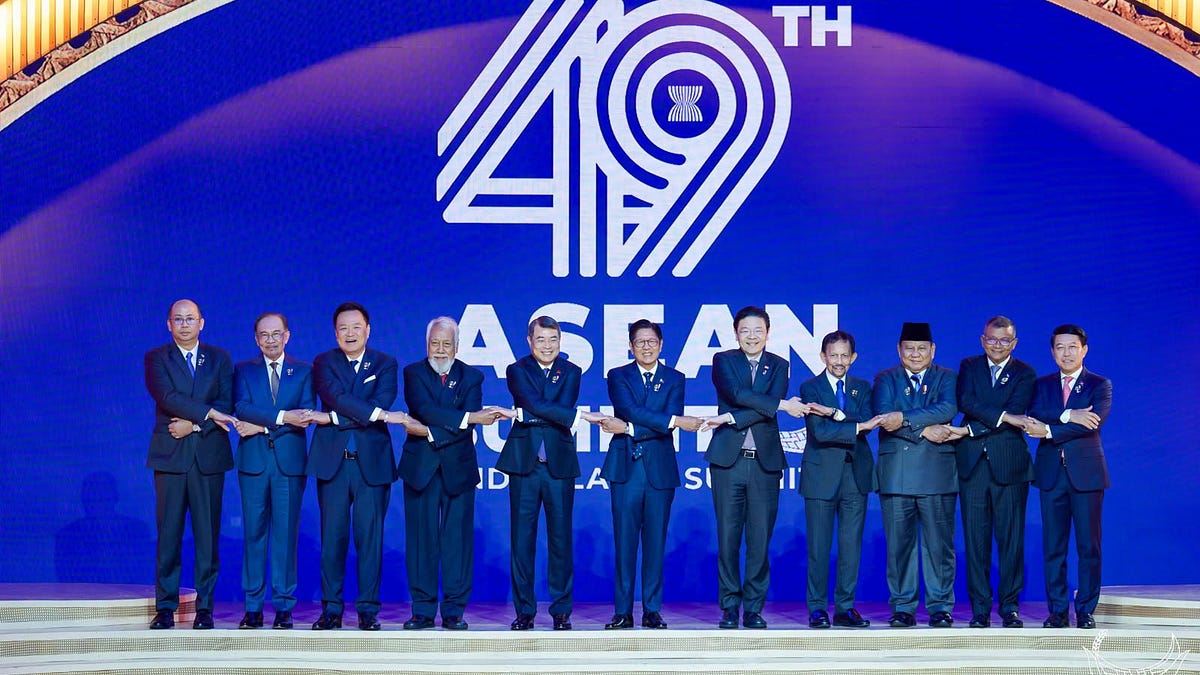
The statement was made on the opening day of the 49th ASEAN Summit in the Philippine capital. Philippine Foreign Secretary Ma. Theresa Lazaro said that both parties agreed on about 70 percent of the CoC, but unresolved provisions caused the parties to miss the deadline set three years ago. Negotiations will continue during Singapore’s ASEAN Chairmanship in 2027.
South China Sea COC negotiations 70 percent complete – DFA MANILA – Negotiations for a Code of Conduct (COC) in the South China Sea are now 70 percent complete, the Department of Foreign Affairs (DFA) said on Friday. Foreign Affairs Spokesperson for ASEAN Affairs Dax Imperial… pic.twitter.com/gmfV41x2DH
While Lazaro had previously said negotiations were “80 percent complete,” she said on November 15 that about 70 percent of the CoC had been agreed.
Lazaro said she trusted that Singapore would be able to finish the discussions next year.
The 2002 Declaration on the Conduct of Parties (DoC) is non-legally binding, so it lacks a mechanism to impose sanctions and stop aggression in the contested waters. Incidents between the Philippines and China occur on a near-monthly basis, and one study from a Vietnamese research institute said that by the end of 2025, at least 15 incidents occurred between the two parties across multiple locations within the South China Sea.
Two provisions kept the code from closing
Lazaro identified four key issues causing the missed deadline, two of which are highlighted as critical: The Legal Status, as a non-legally binding commitment could potentially change little of the current situation, and The Geographical Scope, as many contested areas in the South China Sea are claimed by different ASEAN member states and China.
Collin Koh, a senior fellow at Singapore’s S. Rajaratnam School of International Studies, said that divisions among ASEAN members, including over the geographical scope of the code, had also slowed negotiations.
Lazaro, born in 1959, is a career diplomat who joined the Department of Foreign Affairs in 1984 and served as the Philippines’ top negotiator with China on South China Sea disputes before becoming foreign secretary in 2025.
While undersecretary for bilateral relations and ASEAN affairs, she negotiated a provisional arrangement with China for Philippine supply missions to Ayungin Shoal. A lawyer trained at the University of the Philippines Diliman, she earlier served as ambassador to Switzerland, France and Monaco.
“Other than Beijing, intramural divergences within ASEAN also play a significant role,” Koh said. He added that the remaining differences would be difficult to resolve and would require “major concessions” from the various parties.

What the incident data shows
| Event type | Reported incidents |
|---|---|
| Military exercises involving maritime activity | 176 |
| Movements of forces | 134 |
| Harassments | 56 |
| Confrontations | 16 |
| Collisions | 3 |
Myanmar’s seat stays empty again
Singapore inherits an unfinished text
The 29th ASEAN-China Summit was held today in Manila, the Philippines, attended by the Leaders of ASEAN Member States, the Premier of the State Council of China, H. E. Li Qiang, and Secretary-General of ASEAN, Dr. Kao Kim Hourn. In light of the fifth anniversary of the… pic.twitter.com/ZztLS2AA7d