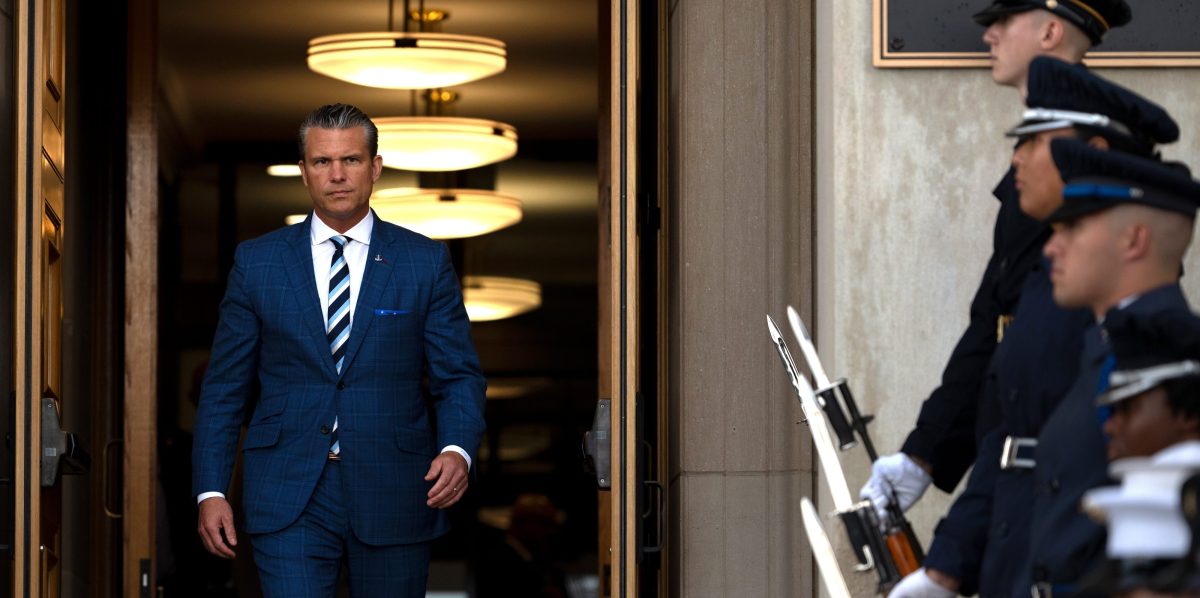
Pete Hegseth and the Dangerous Theology of Christian Nationalism
Pete Hegseth faced widespread derision and condemnation from religious leaders in March 2026 for hosting monthly Pentagon prayer services that deploy violent, extremist rhetoric. According to reporting from TomDispatch, Hegseth utilizes these gatherings to promote a militant brand of Christian nationalism, culminating in a March 2026 prayer asking God to grant U.S. soldiers the “overwhelming violence of action against those who deserve no mercy.”
The Theology of Force Inside the Pentagon
Pentagon officials have frequently criticized self-styled War Secretary Pete Hegseth for a tenure defined by unconventional administrative priorities. Beyond a 2025 dressing-down of America’s admirals and generals and an ongoing fixation on troops’ testosterone levels, scorn has increasingly centered on his monthly prayer services. As noted by TomDispatch editor Nick Turse, Hegseth utilizes these gatherings to preach an unholy brand of Christianity rooted in rage and bloodlust.
Hegseth belongs to the Communion of Reformed Evangelical Churches, a conservative network co-founded by Christian nationalist Doug Wilson. During his worship services, Hegseth has reportedly recited altered or fabricated biblical texts to inspire martial fervor. At one service, he read an altered version of Ezekiel 25:17 popularized by Quentin Tarantino’s 1994 film Pulp Fiction, attributing the violent film quote to combat search and rescue missions in Iran. At another service preceding the invasion of Venezuela, Hegseth prayed for God to grant the military task force clear targets for violence and to deliver wicked souls to eternal damnation.
These services mark a distinct departure from traditional Christian teachings. Hegseth has effectively replaced a turn-the-other-cheek Jesus with a punishing Christ who brays for war. This muscular evangelical framework mirrors arguments made in his 2024 book The War on Warriors, where he asserted that diversity, equity, and inclusion initiatives had ruined the military and left white men ashamed to serve.
Broad Condemnation From Religious and Secular Authorities
The defense secretary’s fusion of military might with sectarian religious language has triggered intense backlash across the globe. Secular Americans and non-Christian service members have sharply criticized the services for violating long-standing prohibitions against proselytizing in public institutions.
Religious leaders have publicly dismantled the theological premises of Hegseth’s rhetoric. During a Palm Sunday Mass, Pope Leo XIV strongly condemned the weaponization of faith, stating in his homily that Jesus is a King of Peace who rejects war and does not listen to the prayers of those who wage it. Similarly, TomDispatch regular Liz Theoharis, director of the Kairos Center for Religions, Rights, and Social Justice, argued that Hegseth’s ideology fundamentally subverts the teachings of Jesus, who consistently centered his ministry on the poor, the unhoused, and the marginalized rather than imperial might.
Iranian leadership has weaponized Hegseth’s rhetoric to bolster claims that the United States is waging a modern crusade against the Muslim world. This environment complicates regional diplomacy, leaving traditional allies such as Qatar and Oman questioning American reliability while U.S. bases and embassies remain under heightened security threat across the Middle East.
Navigating Institutional and Legal Crises
When public institutions adopt exclusionary frameworks, affected individuals frequently require specialized guidance to protect their rights and safeguard institutional integrity.

For municipal leaders and community networks grappling with the fallout of aggressive federal rhetoric, maintaining operational transparency is paramount.
The friction between martial theology and foundational democratic norms shows no sign of abating. As long as state power wraps its ambitions in sacred language, the core question raised by religious scholars remains unavoidable: whether a nation can justify violence in the name of faith without losing its moral foundation entirely.