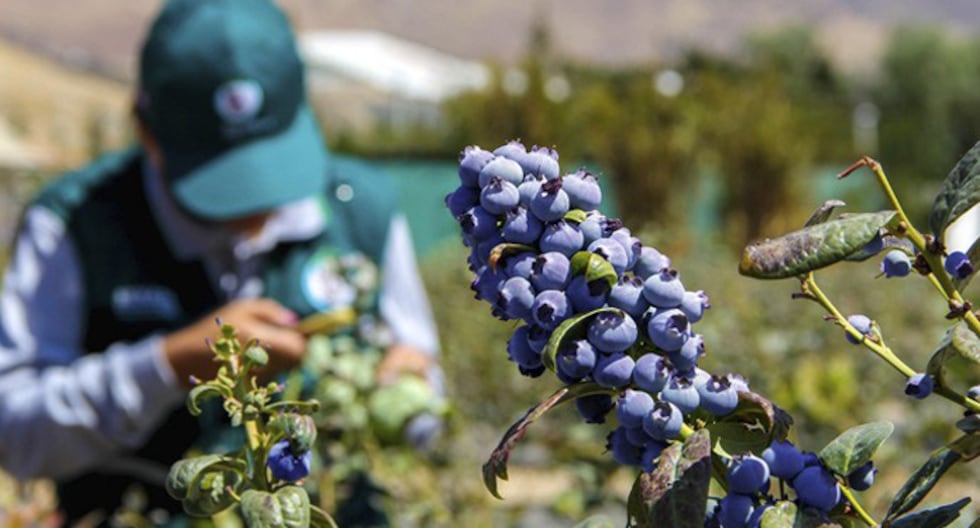
Peru’s Blueberry Boom: Industry Growth and Market Dominance
Five major exporters currently control over 50% of Peru’s blueberry market, a sector now referred to as “blue gold” due to its rapid expansion in arid regions. This concentration reflects a maturing industry that exported approximately 383,000 tons in the most recent campaign, signaling a shift toward large-scale industrial farming and heightened capital requirements for market incumbents.
Market Concentration and the Shift to Industrial Scale
The Peruvian blueberry sector has transitioned from a fragmented agricultural pursuit into a highly consolidated export powerhouse. Data from industry tracking indicates that just five firms now command more than half of the total export volume. This consolidation is not merely a byproduct of land acquisition; it is the result of massive capital expenditure in irrigation infrastructure that transformed some of the world’s most arid deserts into high-yield agricultural hubs.

According to recent reports, firms like Inka’s Berries are scaling operations to exceed 1,000 containers per season. This growth trajectory requires sophisticated supply chain management to maintain margins, particularly as global supply increases and downward pressure on prices becomes a structural reality. For mid-market players, this concentration creates an immediate need for specialized agricultural M&A advisory services to navigate potential buyouts or defensive consolidation strategies.
Capital Intensity and Supply Chain Bottlenecks
Success in the “blue gold” market is increasingly tied to the ability to manage water rights and logistics. Large-scale producers face significant operational risks, including potential climate-induced yield volatility and the high cost of cold-chain logistics. As these firms expand, they often encounter liquidity constraints during the transition between harvest seasons, such as the shift observed at AgroMIGIVA between their grape and blueberry cycles.
The reliance on massive export volumes necessitates robust financial oversight. Firms must manage exposure to currency fluctuations and fluctuating global demand, which often requires the intervention of institutional corporate finance and treasury management firms to ensure steady cash flow. Without these financial safeguards, even dominant players risk margin compression during periods of peak supply.
Operational Metrics in a Competitive Landscape
The following table outlines the operational focus areas for the current market leaders as they prepare for the upcoming fiscal quarters:
| Focus Area | Financial/Operational Impact |
|---|---|
| Infrastructure Scaling | High CAPEX; required for irrigation in arid zones. |
| Export Logistics | Volume-dependent; susceptible to freight rate spikes. |
| Seasonal Transition | Risk of liquidity gaps between crop harvest cycles. |
Investment in proprietary genetics and climate-resilient crop varieties serves as a primary barrier to entry for new competitors. As established firms leverage economies of scale, smaller operators find it increasingly difficult to achieve the EBITDA margins necessary to remain competitive. This fiscal reality forces a reliance on specialized agribusiness legal counsel to manage complex land-use contracts and international trade compliance.
Future Market Trajectory
The “blue gold” market is entering a phase of stabilization. Investors are shifting focus from pure volume growth to margin optimization and supply chain integration. As the industry matures, expect further M&A activity as the five dominant firms look to secure their supply chains against smaller, acquisition-ready targets.
For firms looking to maintain a competitive edge in this high-stakes environment, access to institutional-grade business intelligence and structural financial support is no longer optional. Navigating the complexities of global agricultural trade requires a partner who understands the intersection of commodity volatility and corporate governance. Organizations seeking to fortify their position in the Peruvian market should explore the vetted network of service providers available through the World Today News Directory to ensure their operational infrastructure matches the scale of their ambitions.
Related reading