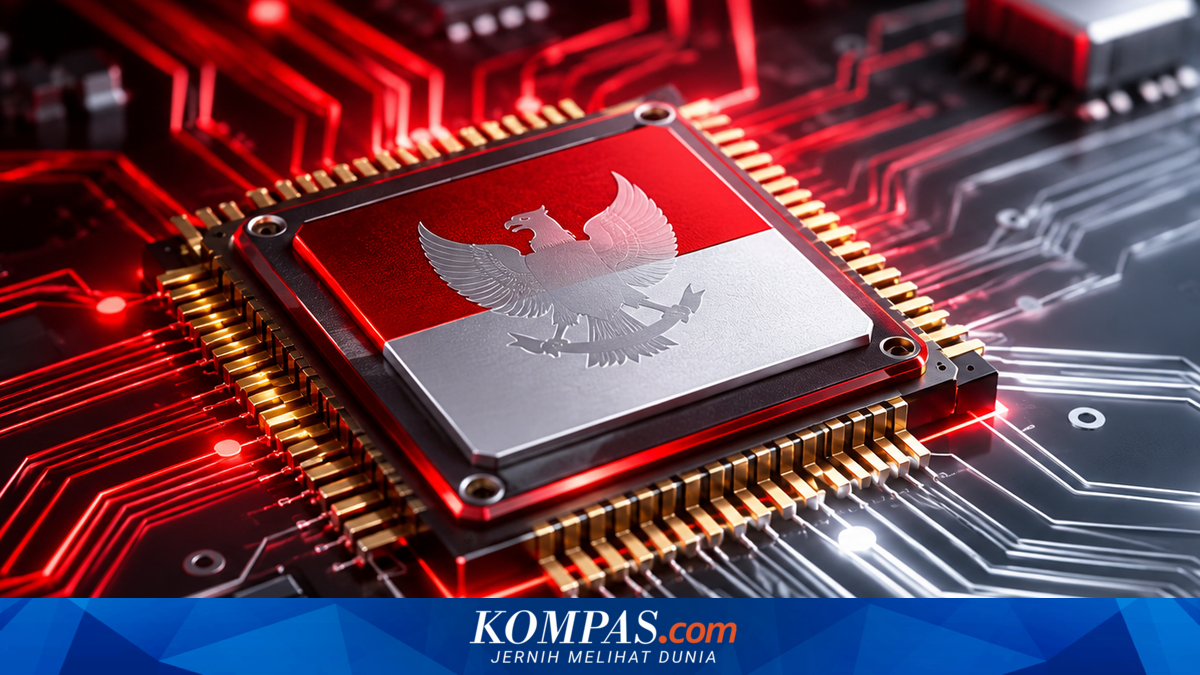
Peruri Develops ‘Chip Merah Putih’ Prototype Using 130 Nm Technology
Peruri developed a "Chip Merah Putih" prototype using 130 nm technology, a legacy node TSMC still produces according to tekno.kompas.com.
The number matters because of what it sits next to. Leading-edge chipmakers such as TSMC have moved to 2-nanometer fabrication, and 3-nanometer processes already power today’s smartphones and high-performance computing, tekno.kompas.com reported.
The gap is deliberate, not a shortfall. An e-passport chip stores identity data, runs authentication and performs cryptographic operations when a reader scans the document. It does not run apps, video or AI models, so it needs far less computing muscle than a phone.
Older fabrication nodes still carry real business. According to tekno.kompas.com, citing TSMC’s own manufacturing information, the Taiwanese foundry continues to produce chips on legacy nodes including 130 nm.
What the prototype signals is direction rather than volume. Peruri, the state printing company that produces Indonesia’s currency and secure documents, has spent more than five decades guarding the authenticity of state papers; the chip extends that mandate into silicon.
“Selama lebih dari lima dekade, Peruri telah dipercaya untuk menjaga keamanan dan keaslian berbagai instrumen atau dokumen penting negara” — for more than five decades, Peruri has been trusted to guard the security and authenticity of important state instruments and documents — “now we continue that commitment by strengthening our command of digital security technology, including the Merah Putih chip,” said Teguh Arief Indratmoko, President Director of Peruri, as quoted by CNN Indonesia.
Specifications remain thin. The ITS website lists the 130 nm fabrication process, tekno.kompas.com reported. Neither outlet published details on memory, security certification or the chip’s software stack.

Why 130 nm still sells
The economics explain the choice. Mature fabrication nodes are cheap, well-understood and widely available, which suits a low-volume, high-assurance product like a passport chip. Chasing 2 nm would add cost with no security benefit, since the chip’s job is tamper resistance and cryptography, not raw speed.
That logic only holds if the design is truly sovereign. A widely read ANTARA News column said that Indonesia already controls the cryptographic keys behind its e-passports: the Immigration Directorate General manages the signing key, and its public key has been listed in the International Civil Aviation Organization’s directory since 2019, so border scanners worldwide can verify an Indonesian passport is genuine.
The column’s question is what the chip adds. Its answer, in part: the prototype arrived in Indonesia in mid-July and has since undergone reliability testing in laboratories, and in October 2026 an ITB student team won first place in Peruri’s chip design competition with an anti-cloning safeguard for e-passport chips.
The same column flags the unfinished edges. Some design components may still be licensed from abroad, and the prototype was fabricated at a foreign plant — which matters, because malicious circuitry can hide in a few hundred logic gates among millions and is expensive to hunt without holding the design.
Chip Merah Putih Resmi Diluncurkan, PERURI dan ITB Kembangkan Teknologi untuk e-Paspor Klik untuk baca:https://t.co/X5YNi3VBYw
From prototype to production
Peruri calls the chip a prototype and says it must pass further refinement, testing and validation against strict industry standards before any rollout, the company told reporters. No production date or cost figure has been released.
Higher Education, Science and Technology Minister Brian Yuliarto framed the project as research commercialization. “We hope this achievement becomes the start of more homegrown technologies developed to answer industry needs and strengthen Indonesia’s self-reliance,” he said in a written statement on Monday, November 16, as reported by detikFinance.

Tatacipta Dirgantara pointed to the talent pipeline behind the silicon. “This collaboration bridges university research results with industry needs, while opening space for sustained development of Indonesian semiconductor technology and talent,” he said, according to remarks carried by ANTARA on Wednesday, November 18.
Peruri has been building that pipeline since before the chip existed. Its “Sandbox Chip Merah Putih” platform serves as an open learning and experimentation space for semiconductor work, and its Chip Hackathon 2026 drew 98 teams, 338 students and 41 universities, according to Kompas.
The next phase widens the table. Peruri plans to bring in the Higher Education, Science and Technology Ministry, the Industry Ministry, the Coordinating Ministry for Economic Affairs, the sovereign wealth fund Danantara and the state-enterprise regulator BP BUMN to strengthen the national semiconductor base, CNN Indonesia reported.
For suppliers of secure-document components, the message lands in two ways. A buyer that can design its own security chip gains bargaining power on price and delivery — as the ANTARA column noted, a supplier who knows its customer can build the part itself will think twice before raising prices or delaying shipments.
And certification bodies, embedded-security consultancies and specialized testing labs stand to gain work as the prototype moves through industrial validation.

Indonesia is entering a market dominated elsewhere: Asia supplied 91.3 percent of the world’s $1.27 trillion in electronic circuit exports in 2025, according to trade data cited by bataviapos. The prototype is a small step against that scale.
Peruri’s move into silicon follows a longer expansion beyond ink and paper. The company was created in 1971 through Government Regulation Number 60 of 1971, merging the banknote printer Perkeba — originally set up with help from the Dutch printer Joh. Enschedé — with the coin maker PN Arta Yasa.
Its work is not limited to Indonesia: it has also printed security documents for Malaysia, Sri Lanka, Nepal, the Philippines and Peru. In 2019 it moved into digital security services such as electronic signatures and secure QR codes, and in 2023 the government gave it an additional mandate as a GovTech agency to integrate state digital services.
“Together with ITB and the support of various stakeholders, we want to prove that Indonesia has the ability to develop strategic technology that is secure, trusted and suited to the nation’s needs,” said Teguh.