Peru Constitution Committee grants executive powers on security and El Niño
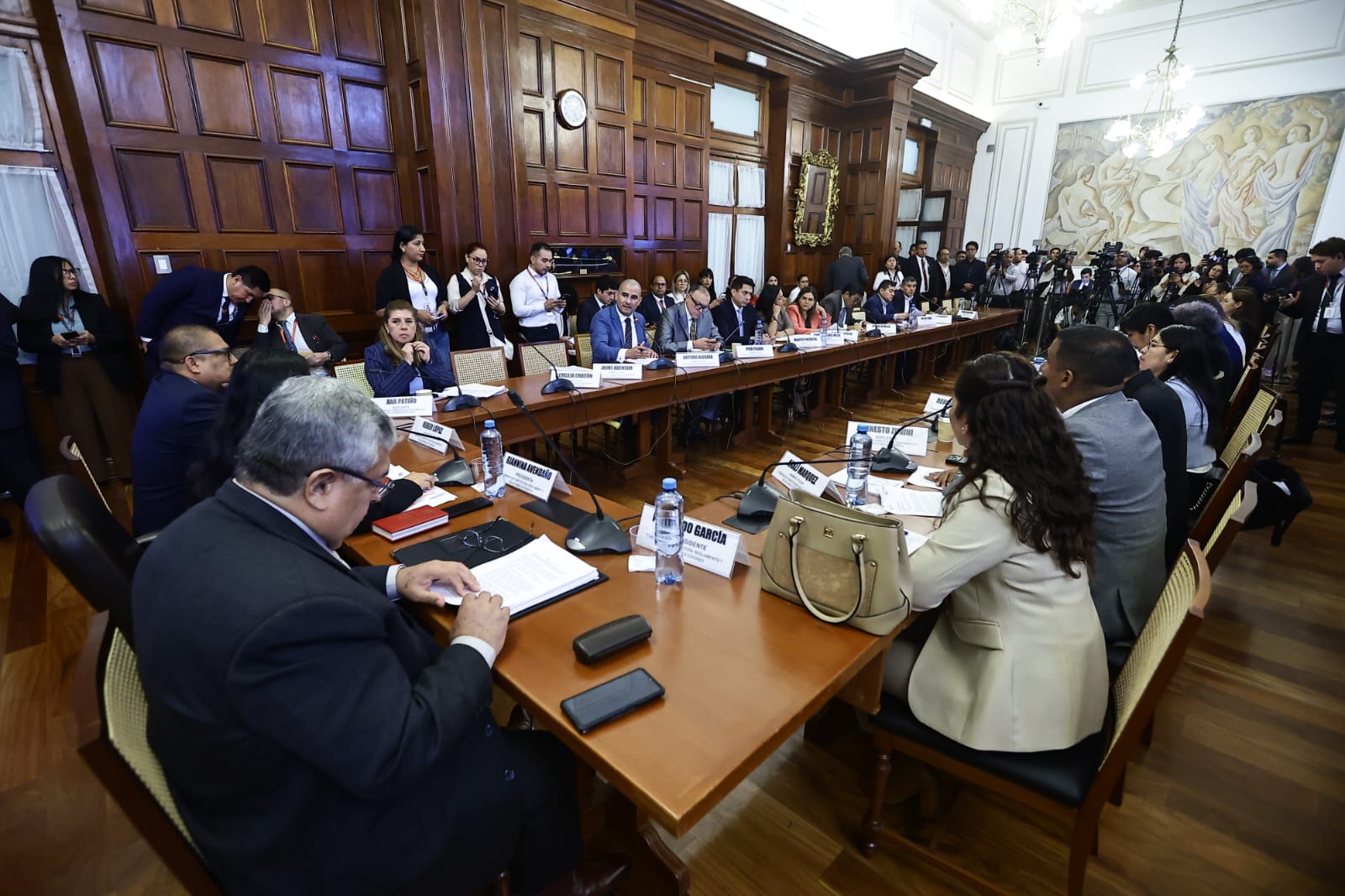
The Chamber of Deputies’ Constitution Committee in Peru approved a legislative proposal on October 1, 2026, granting President Keiko Fujimori’s administration 90 days of executive legislative powers restricted strictly to public security and the El Niño weather phenomenon, after earlier expectations centered on a broader eight-topic package. La Comisión de Constitución, Reglamento y Relaciones Exteriores de la Cámara de Diputados voted 13 to 5 with 2 abstentions to pass the substitute text, communications.congreso.gob.pe reported.
Consensus Reached After Rejecting Archival Request
Lawmakers first rejected a preliminary draft that recommended shelving the executive branch’s request entirely, defeating the motion with 5 votes in favor and 15 against. Following that rejection, technical teams from Renovación Popular, Partido Cívico Obras, Ahora Nación, and Partido del Buen Gobierno shaped a consensus formula alongside committee president Giannina Avendaño of Juntos por el Perú. Committee members ultimately passed the narrowed text by a 13-5 vote with 2 abstentions, according to communications.congreso.gob.pe.
Infobae reported that the final vote count registered 15 votes in favor, 5 against, and 2 abstentions during the session. Legislative representatives from Juntos por el Perú cast the five opposing votes, while Jaime Abensur and Arturo Alegría of Fuerza Popular registered the abstentions.

Contrasting Positions Across Congressional Benches
Political blocs divided sharply over the depth and reach of the newly approved powers. Infobae and Peruinforma noted that the five opposing votes came exclusively from Juntos por el Perú, whose legislators warned that the administration’s initial request was excessively broad and vowed to oppose any measure resembling a blank check. Conversely, Fuerza Popular deputies Arturo Alegría, Cecilia Chacón, and Pier Figari argued that the narrowed text fell short of addressing insecurity, expressing frustration that lawmakers omitted broader authorities for intelligence, military deployment, and prison administration, as reported by communications.congreso.gob.pe.
Meanwhile, representatives from Renovación Popular, Ahora Nación, Partido Cívico Obras, and Partido del Buen Gobierno defended the consensus text as a necessary middle ground. They emphasized preserving parliamentary oversight while moving concrete responses forward.
Executive Branch May Modify Security and Environmental Regulations
The approved framework authorizes the executive branch to modify regulations across specific security and environmental domains without violating constitutional rights, due process, or the autonomy of regional and local governments. Infobae and Peruinforma detailed that security provisions permit the administration to alter laws governing migration, telecommunications tracking, firearm oversight, the penitentiary system, juvenile justice, and the fight against extortion, contract killing, kidnapping, illegal mining, and cybercrime. The text explicitly prohibits creating new criminal offenses.
For El Niño disaster management, Peruinforma and Infobae reported that the National Civil Defense Institute (Indeci) receives explicit authorization to distribute humanitarian aid directly during the first 15 days following an emergency. The text also streamlines infrastructure, water, sanitation, and housing projects through Public-Private Partnerships and Works for Taxes, alongside agricultural credits, insurance, and technical assistance for rural and indigenous farmers.

Substitute Text Moves to Chamber of Deputies for Vote
The approved substitute text now moves directly to the Pleno of the Chamber of Deputies for final debate and a definitive vote. Infobae and Peruinforma highlighted that the legislative friction followed remarks from President Keiko Fujimori, who stated earlier in the week that parliamentary delays were testing her patience—comments interpreted by some political sectors as a risk for the democratic order. Officialist representatives acknowledged the restricted scope of the final bill as a frustrating compromise, yet accepted it as an initial step to advance the government’s agenda.