Pentagon Weighs $15B Loan to Hadrian for Munitions Production
The proposed loan would finance a network of factories to scale up production of munitions, submarine components, and other critical defense equipment, according to the report. Hadrian disputed the characterization of the negotiations, stating the discussions involve a consortium of manufacturers to solve America’s munitions shortage.
Pentagon Weighs Massive Loan
The $15 billion loan would be one of the largest ever made by the U.S. government and ten times the size of the largest OSC loan under the Trump administration, which was $1.5B to Wolfspeed. The spokesperson added that other multibillion-dollar deals have been agreed but remain unannounced.
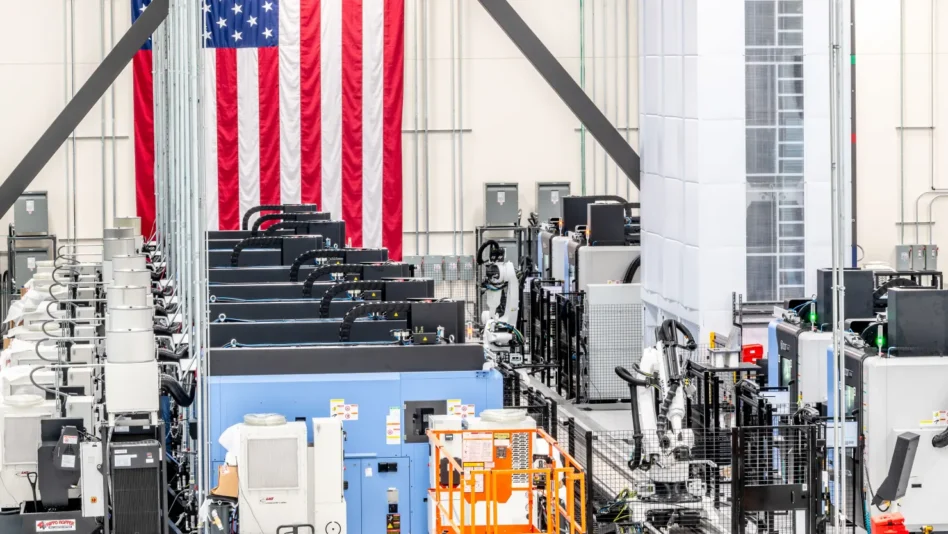
The loan would go toward building a dozen automated facilities focused on defense and dual-use technologies, the outlets reported. It would not be Hadrian’s first major partnership with the Pentagon; in March, the startup announced a $2.4B deal with the U.S. Navy to produce submarine components.
Scrutiny Over Ties to 1789 Capital
Rep. Jamie Raskin (D-MD), the incoming chairman of the House Judiciary Committee, has asked Hadrian for records of its dealings with 1789 Capital. He requested records of communications with the firm by 5 p.m. on Dec. 7, according to Battle Policy. On Nov. 20, the Pentagon Inspector General launched an audit into OSC contracts and loans, prioritizing high-dollar awards and including those to companies in rare earth minerals, drones, super intelligence, and rocketry.
Valuation and Congressional Constraints
The proposed $15 billion loan would be nearly twice the value of Hadrian Automation, which was valued at $7.87 billion after a $1.37 billion funding round in August, according to Value Add VC. The Pentagon’s Office of Strategic Capital is barred by Congress from financing projects with only military applications, a constraint that could complicate the deal for a dozen automated factories focused on defense equipment.
A Pentagon spokesperson disputed the $15 billion figure, calling the talks “early stages,” and noted other multibillion-dollar deals have been agreed but remain unannounced, according to Battle Policy.
Recent Defense Partnerships
In March, Hadrian announced a $2.4 billion partnership with the U.S. Navy to produce components for Virginia- and Columbia-class submarines, funded by $1.5 billion in private capital and $900 million in government funding, per Tectonic Defense. The deal supports the company’s 2.2 million square-foot facility in Cherokee, Alabama.
The OSC has also issued other large loans this year, including a $450 million conditional loan to drone company Neros and an $820 million loan to its rival Performance Drone Works (PDW), according to Tectonic Defense. Additionally, the Pentagon has provided $150 million to MP Materials, $500 million to Phoenix Tailings, and $620 million to rare earth magnet startup Vulcan Elements, which faces scrutiny for its ties to 1789 Capital.
Hadrian Automation, an American manufacturing company founded in 2021, designs and operates automated, software-driven factories to produce precision components for the aerospace and defense sectors, as well as other industries like autonomous drones.
The company builds modular, AI-enabled production systems covering the entire production chain, from raw material sourcing to completed military-grade systems. Beyond defense, Hadrian has expanded its focus to dual-use technologies, evident in its Factory-as-a-Service model, which operates like a “big computer” with interconnected systems to autonomously complete manufacturing processes across various sectors.
In a statement, Hadrian disputed Tectonic Defense’s account of the negotiations. “ProPublica’s story mischaracterizes the status of these preliminary discussions. This was never about one company,” a company spokesperson told Tectonic Defense. “The proposed loan contemplated the creation of a consortium of manufacturers.”
Politico Pro later reported that Hadrian initiated the negotiations as the face of a group called the “Arsenal Acceleration Network,” which began pitching the Pentagon in August on the $15B loan. An investor pitch viewed by Politico said the loan would also be partially matched by $10B in private capital.