Penn State Researchers Develop Soft Droplet Networks for Brain-Inspired Computing
Penn State Researchers Build Synthetic Neuromorphic Tissue from Water Droplets and Lipids
Scientists have engineered soft networks of water-based droplets connected by lipid membranes to mimic the brain’s information processing capabilities, Mirage News reported. By immersing tiny lipid-containing droplets in oil, a team at Penn State created structures that use ions instead of electrons to process signals at low energy costs.
The Tech TL;DR:
- Researchers created synthetic “neuromorphic tissue” using aqueous droplets and lipid membranes suspended in oil.
- The soft network processes signals using charged ions across voltage-sensitive channels, mimicking biological neural pathways.
- This ionic computing architecture bypasses the energy-heavy translation barriers required when traditional silicon electronics interface with biological tissue.
Ionic Signaling Replaces Traditional Electron Flow
Inside the human brain, billions of individual neurons connect in a vast network to process signals rapidly. Replicating this biological efficiency in synthetic devices has historically required complex engineering interfaces. Conventional electronics rely on charge carriers like electrons moving through metal wires. Conversely, biological systems route electrical signaling through ions moving across cell membranes and fluid environments.

“Scientists and developers must create interfaces in devices that use traditional silicon computing to process and translate between electronic and ionic signals,” said Joseph Najem, associate professor of mechanical engineering and associate director of the Convergence Center for Living Multifunctional Materials System at Penn State, as detailed in both Mirage News and PSU News. Najem noted that these translation interfaces routinely delay and distort signals while driving up energy consumption.
Lipid Droplets Create Reservoir Computing Network
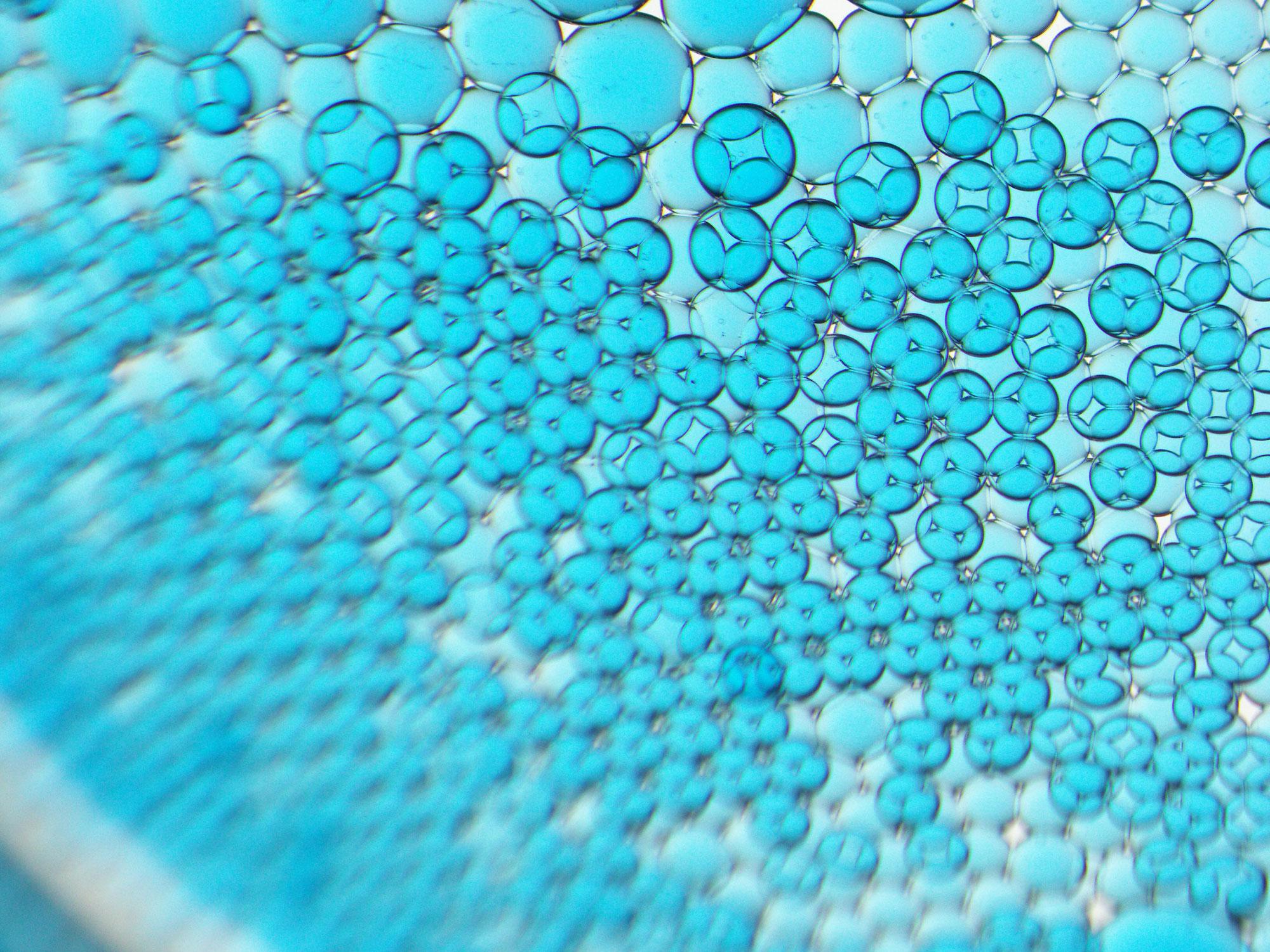
To eliminate translation overhead, the Penn State research team built an architecture using aqueous compartments, lipid molecules, and peptide ion channels. When lipid-coated droplets touch in an oil medium, they form a thin two-layer membrane equipped with voltage-sensitive channels.
These membranes store electrical charge while channels react to immediate and recent inputs. This setup allows individual droplets to connect with up to six neighbors in a honeycomb-like lattice. The resulting network executes reservoir computing, where changing inputs generate a series of responses that retain traces of prior data. Membrane charging and ion-channel activity allow coupled nodes to accumulate and pass electric charges down the chain without losing overall signal clarity, mirroring short-term fading memory found in biological neurons.
Laboratory Measurements Validate Computational Models
The team detailed the properties of these synthetic tissues in a paper published in Science Advances. Researchers applied electrical currents and recorded voltages at individual nodes within droplet chains. Comparing these physical measurements against a physics-based computer simulation demonstrated that interconnecting droplet membranes significantly improves the material’s capacity to handle complex, unpredictable signals.
By housing information processing and memory in the same physical location—similar to organic nervous systems—the architecture reduces the operational energy penalties typical of traditional computing setups where processing and memory remain physically separated.