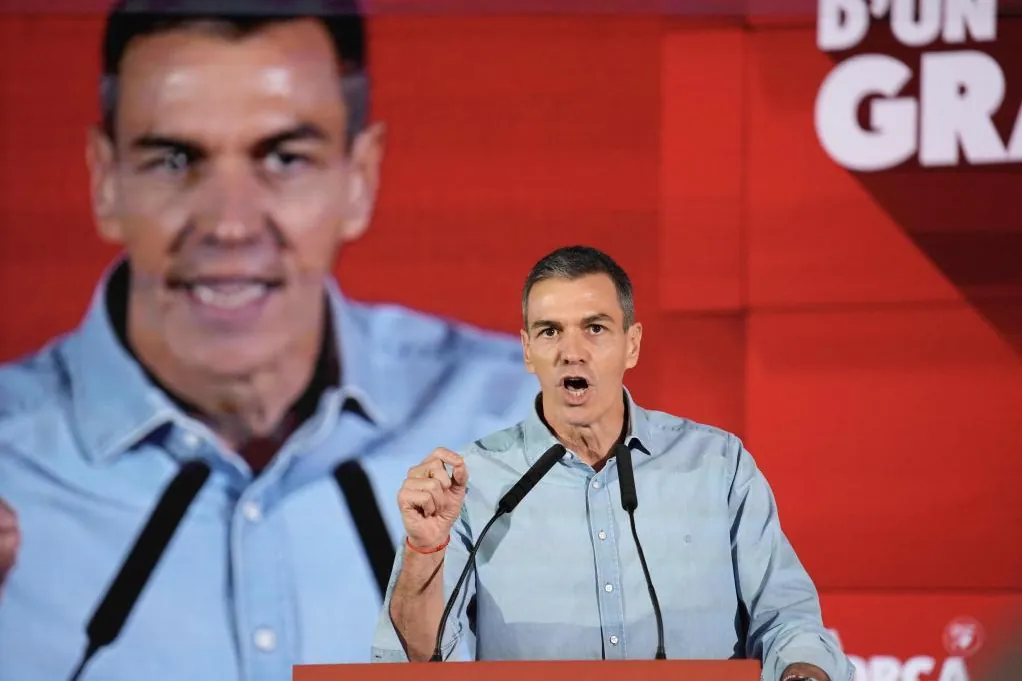
Pedro Sánchez Vows to Dismantle Far-Right Wave in Spain
Spanish Prime Minister Pedro Sánchez cited Donald Trump’s midterm defeat in the United States and Luiz Inácio Lula da Silva’s reelection in Brazil to rally voters for the November 29, 2026, general election, vowing to dismantle the radical right in Spain.
Electoral Stakes Ahead of November 29
Sánchez is campaigning to secure a four-year term as prime minister. He warned that the right-wing opposition led by Alberto Núñez Feijóo of the People’s Party and Santiago Abascal of Vox would drag the country backward. Sánchez framed mass voter mobilization as the best defense against regression. España necesita avance y la mejor receta contra la involución se llama movilización. Si votamos en masa, mandamos a casa a Feijóo y Abascal,
Sánchez predicted.

Foreign Minister José Manuel Albares reinforced that narrative during a meeting of foreign ministers in Madrid, linking the Brazilian and American election results to shifting international momentum. Meanwhile, Salvador Illa, president of the Generalitat, pointed to Tarragona as the starting point of what he termed the People’s Party’s surrender to Vox, noting that the conservative party withdrew its Senate candidate there under a coalition agreement to control the upper house.
International Parallels and Political Reactions
The global alignment of conservative and populist movements formed a core pillar of the socialist campaign messaging. He also positioned his administration as a bulwark against international conflicts, rejecting defense spending pressures and foreign military alignments, stating that Spain told Trump and the warmongers that it would not spend 5% of GDP on defense and would not be the backyard of the ultraright international. The message was presented by reporting as a jab at Flávio and Eduardo Bolsonaro, who are in the United States, with Eduardo living in Texas where Democrats won both the gubernatorial race with Gina Hinojosa and the Senate election with James Talarico.
International reactions to the American and Brazilian outcomes echoed heavily across digital platforms. Democratic political activist Isaiah Martin thanked Brazilian voters on social media for charting a path forward, while African Renaissance Podcast host Mbuyiseni Ndlozi argued that the defeat of American Republicans stemmed from economic pressures, immigration enforcement, and unauthorized military actions. Political scientist Pippa Norris categorized the Brazilian and American results as evidence of democratic self-correction.
Pledging to Constitutionalize Abortion Rights and Increase Pensions
Sánchez warned voters that a conservative victory would jeopardize existing legal protections for abortion and euthanasia. In response, he pledged to constitutionalize abortion rights, increase the minimum wage, and raise pensions. Beyond social policy, the prime minister addressed the recent railway accident in Urda that resulted in 69 fatalities. He blamed the opposition for failing to maintain infrastructure funding during previous terms, asserting that reversing those cuts required a fifteen-year effort.
