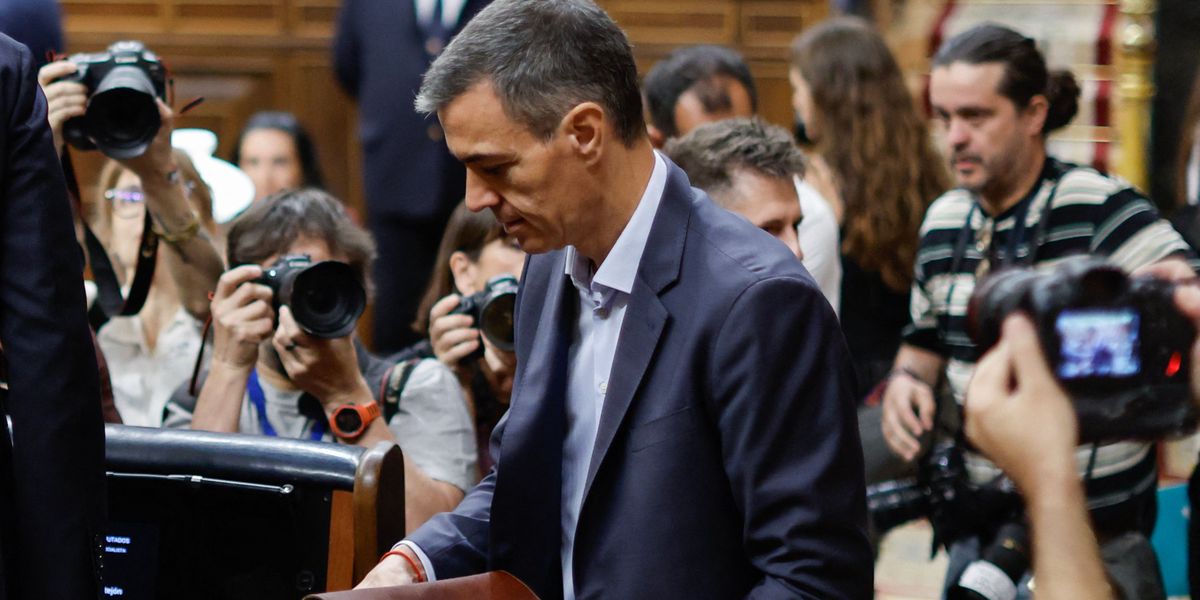
Pedro Sánchez Denies Widespread Corruption Amid Spain Scandal Investigations
Spanish Prime Minister Pedro Sánchez faces mounting political instability as multiple corruption scandals involving his administration and the Socialist Party (PSOE) emerge. While Sánchez denies systematic wrongdoing, the imprisonment of former minister José Luis Abalos and the ongoing legal investigation into his wife’s business dealings have triggered a severe domestic crisis, threatening Spain’s legislative agenda and attracting scrutiny from European investors.
The Erosion of Executive Stability
The legal pressure surrounding the Moncloa Palace has intensified throughout June 2026. According to reports from Le Monde, the Prime Minister has formally rejected allegations of “generalized corruption” within his government. However, these denials stand in sharp contrast to the concrete legal outcomes unfolding in the Spanish judiciary.

The conviction of José Luis Abalos—a former transport minister and once a key architect of Sánchez’s political rise—to 24 years in prison serves as a landmark development, as noted by Boursorama. This is not merely a political embarrassment; it is a structural failure of the executive’s internal vetting processes. When a cabinet member of that stature is removed by the courts rather than by political oversight, the resulting power vacuum creates immediate risks for corporate stakeholders relying on government contracts.
For multinational firms operating in the Iberian Peninsula, this volatility signals a shift in risk profiles. Corporations currently engaged in public-private partnerships should be re-evaluating their contractual safeguards. Organizations in this position often find it necessary to consult with International Risk Mitigation Consultants to stress-test their existing agreements against sudden shifts in regulatory leadership or policy reversals.
Macro-Economic Ripples and the Investor Perspective
Spain is a primary gateway for Mediterranean trade and a significant recipient of European Union recovery funds. Political paralysis in Madrid has tangible consequences for Foreign Direct Investment (FDI). According to data from the World Bank, political stability is a primary metric for long-term capital allocation in the Eurozone.

The current situation mirrors the “institutional fatigue” seen in other parliamentary democracies where the executive branch is perceived to be shielding itself from judicial oversight. “When a government is preoccupied with defending its own legitimacy, legislative efficiency drops to near zero,” says Dr. Elena Vance, a senior fellow at the Institute for Global Policy. “For the private sector, this means stalled infrastructure projects and an unpredictable tax environment.”
The uncertainty is compounded by the legal proceedings involving the Prime Minister’s wife, which Le Parisien describes as a central point of the current “scandal-ridden” environment. This personal dimension of the crisis complicates the Prime Minister’s ability to negotiate with coalition partners or maintain a unified front in Brussels.
Navigating the Legal and Compliance Fallout
As the administration struggles to contain the narrative, the risk of “regulatory drift” increases. When a government is under fire, it often resorts to populist economic measures to distract from scandals, or conversely, suffers from complete policy paralysis. Either outcome creates a high-stakes environment for firms with significant exposure to Spanish public procurement.
Global firms are often forced to adjust their compliance frameworks when a host government faces systemic corruption allegations. This is the moment where legal due diligence becomes a survival mechanism. Companies that fail to update their internal audit procedures risk being caught in the crossfire of shifting anti-corruption enforcement. It is standard practice in such climates for firms to engage Global Corporate Compliance Attorneys to ensure that their operations remain insulated from any potential fallout related to past government dealings.
Furthermore, the volatility extends to the banking and energy sectors, where long-term concessions are common. The potential for a change in government—or a forced early election—means that long-term project finance agreements should be reviewed for “change of law” clauses and political risk insurance coverage.
The Geopolitical Chessboard
Spain’s influence within the European Union and NATO remains tethered to the stability of its leadership. If the current administration becomes incapacitated by scandal, the Iberian voice on crucial issues—such as the EU’s Common Agricultural Policy and defense spending targets—could be muted.

The pattern is clear: in modern European governance, the intersection of judicial independence and political survival is the new frontier of risk. While the Prime Minister maintains his innocence, the accumulation of evidence suggests a prolonged period of domestic friction. For those managing transnational portfolios, the message is clear: the era of stability in Madrid has entered a period of transition.
Smart capital does not wait for the dust to settle; it prepares for the shift before it is fully realized. Whether you are navigating complex cross-border regulatory changes or seeking to protect your assets from political volatility, connecting with the right experts is the only way to maintain a competitive advantage. Explore our curated network of Geopolitical Strategy Advisors to ensure your firm is positioned for the long term, regardless of the shifting tides in European politics.